
Reskinning Freeport
GMs talk all the time about reskinning creatures. While this sounds painful for the creature, it just means taking the game mechanics from one creature and putting them in another. Have the stats for a lion, but not a jaguar? Copy the lion's stats, describe the jaguar to your players, and done. When I started my current campaign, I got feedback that my players want more intrigue. To me, intrigue says urban. People and factions you see over and over. But a great city is a ton of work, and I have other things to do. So I decided to reskin one of the great cities of roleplaying games: Freeport, City of Adventure.
 I'm running a 13th Age / Dramasystem mashup (and testing Gods and Icons), and I want my city to be a treaty city. A city-state where the treaties that created the 13th Age were signed. And now the treaties and the age is unraveling.
So, not really a pirate city. Sure, a few pirates, but not the swashbuckling sea lords of Freeport. I put in my own ruling class to fit my plans for intrigue. The Faceless Council in place of Freeport's Captain's Council.
The Drac family's legacy of generations of pirate leaders had to go, but a ton of places in Freeport are named Drac. Spelled, backwards, Drac is Card. So Drac's End, is Card's End. That works.
 My city is on a river. So I put a bridge over the river (The Glass Bridge, an ancient relic of elven glory). I take the 9 neighborhoods of Freeport (including Drac's End) and add more intrigue. Using 13th Age, I have agents of the all the Icons walking the city streets, so I look for cool NPCs and use them as Icon agents.
In this campaign, everyone knows the peace is unraveling, and all the icons are hoping to come out on top. Freeport comes with built in conflict between classes, guilds, and races. So the 13th Age Icons are trying to use those conflicts.
Even if I wanted to build your own city from the ground up (and I might), Freeport shows how to make a fantasy city work. There are many great cities in rpgs too look at for inspiration. Freeport, Ptolus, The Citystate of the Invincible Overlord, and many others.
Need your own? Try reskinning one you like.
Security Notice Affecting Customers
I'm very sorry to report there has been a breach with stored credit card numbers at DriveThruRPG.com. If you stored your credit card there, please read the following from DriveThru: http://support.drivethrurpg.com/entries/69850204-Credit-Card-Data-Breach-Q-A
Sleeping Lady Art Preview 2!
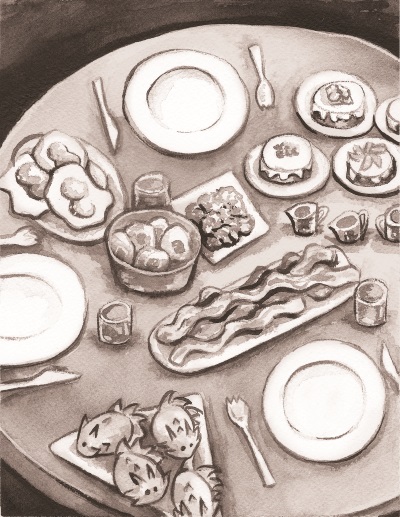
Mmmmm! Seskii puppies and aneen bacon!

Can we be friends?
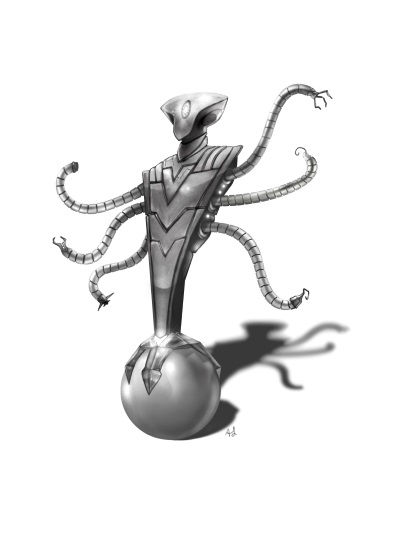
Rolling around
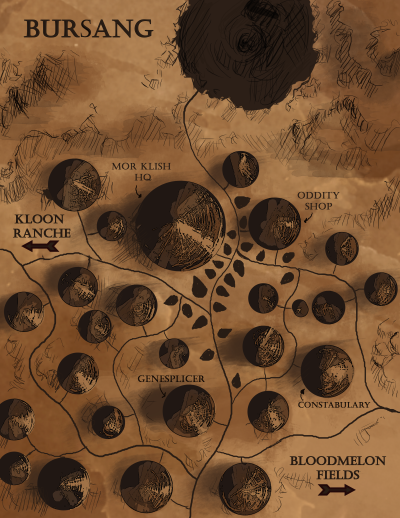
Bursang, on Orb Mountain
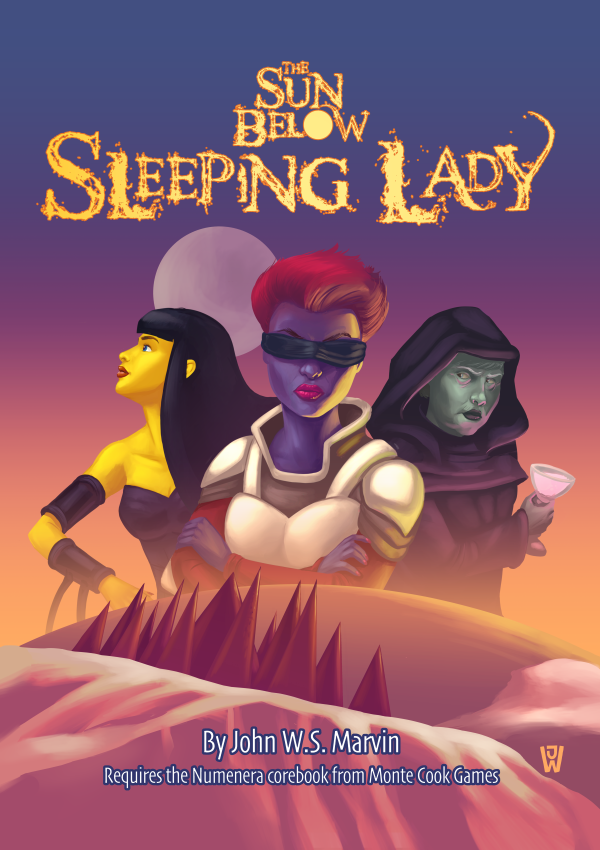
Fail Forward, Cypher System Style
What is a Fail Forward?
 Here's a callout from my upcoming Numenera adventure, The Sun Below: Sleeping Lady:
When you fail forward, a bad die roll means things go wrong instead of the PC isn’t good enough. This way the game doesn’t stall because a player rolled a 2, but there is a consequence.
So What Went Wrong?
Anything that complicates the situation. If you are running out of time, you might have succeeded, but you lost quite a bit of time doing so. You opened the locked door, but the alarm went off. You found the clue, but the clue implicates you in the crime. And so on.
Note: You use Fail Forward in non-combat situations. Combat is a string of successes and failures. Outside of combat, often a single bad roll is all it takes to block progress.
Who Decides?
The GM can make up the consequence, or, better yet, she can ask the player.
"You're a hero, you obviously didn't miss your stealth roll because you're not stealthy. That's just not what your character does. So what went wrong?"
Then you run with the player's complication and let the story continue.
Isn't that like a GM Intrusion?
Yes. But instead of getting two xp, one to keep, one to give away, you get a success. You find the secret door. You open the lock. You find your way to your goal. The story continues.
As the GM, you can choose. Give them a a GM Intrusion, let them fail, or Fail Forward. A GM Intrusion is great fun in combat and is key to giving your players experience. If failure is interesting in and of itself, you might want to let it stand. When failure bogs the game down, that's the perfect time to Fail Forward.
Doing Both
If a player missed a roll and you give them both a success and xp, make sure the consequences are dire. If your players have regularly been spending xp to reject GM Intrusions, this makes their decision that much harder.
"You can't open the door, unless you wouldn't mind setting off the trap?" You wave two xp cards and smile at the player.
"It wasn't easy, but you open the door. Unfortunalty, you trigger the trap and fall down into the pit with the hungry creature. Speaking of creatures, the rest of you see a swarm of nasty ones leaping over the pit right at you. Everyone roll for initiative."
Tell Me More!
No. But listen to this 13th Age podcast from Iconic Podcast on how to Fail Forward in 13th Age. It's the same idea in any game.
It's Christmas in July! The Sun Below: City on the Edge is On Sale!
It's Christmas in July! From now through July 30th, this title has been marked down by 25%!
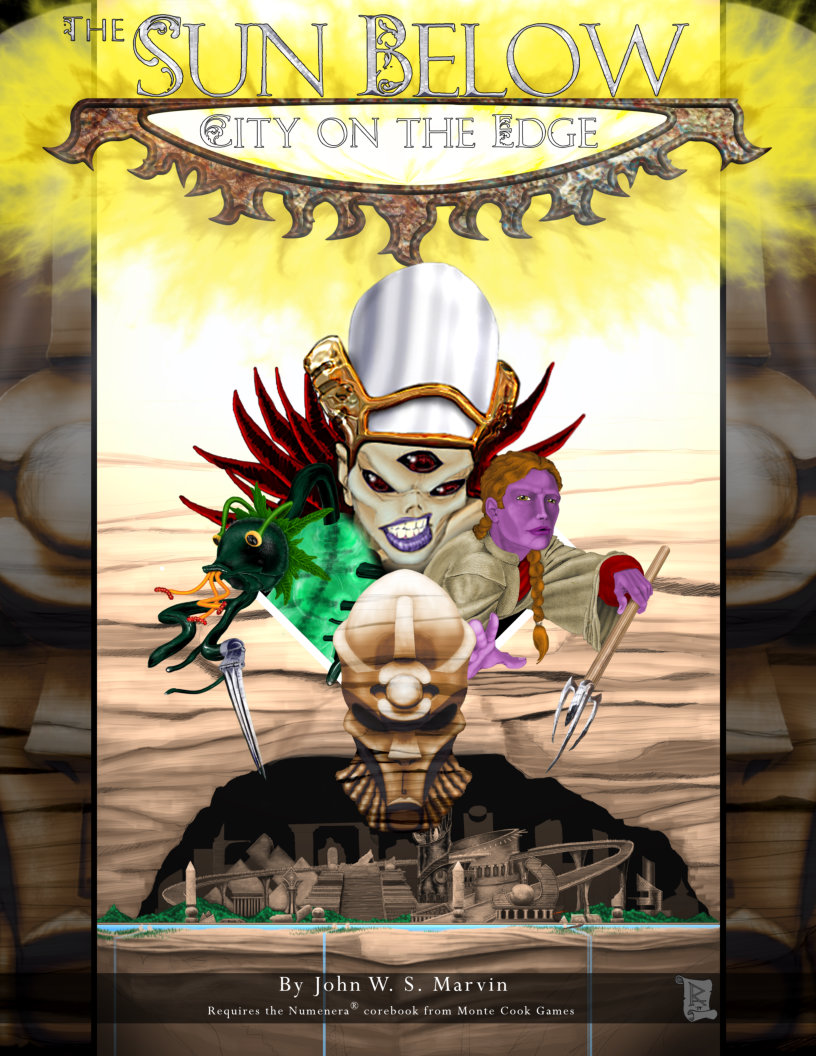 The highly reviewed epic Numenera adventure from Dread Unicorn Games is available at rock bottom prices. Get yours now while the sale lasts.

Horror on the Cypher System Express
I've always enjoyed a great eldritch horror game: Call of Cthulhu or more recently, Trail of Cthulhu. And I really enjoy the Cypher System, the core rules used in Numenera and The Strange. Now, with the publication of the Cypher System Rulebook, I can mix my shuggoths and my GM Intrusions.
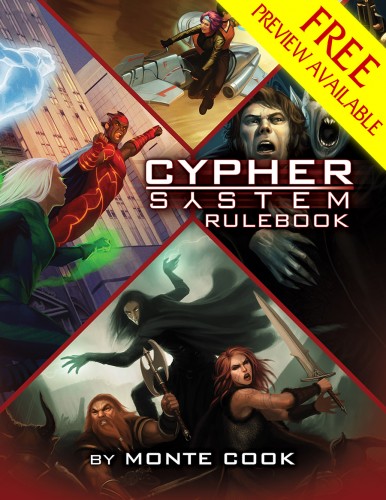 So, how does horror work in the Cypher System? First, I should explain a little about how the Cypher System Rulebook works. It's a menu of rules a GM (and players) can chose from to create their own game. Besides horror, there are rules for science fiction, fantasy, modern, and superheros. Within each genre, you get more choices. Lots of optional rules to tailor the game to just the right kind of horror.
The rulebook has a big bestiary of creatures to choose from and the horror section lists the ones that best fit a horror campaign, including Deep Ones and Mi-Go. It also includes 3 horror artifacts, so if you want more, you're going to have to make some yourself.
The horror rules are all optional rules. Madness will be familiar to Cthulhu players. Cypher System madness grew out of the madness rules found in In Strange Aeons: Lovecraftian Numenera. In this case madness puts a hurt on your Intellect pool and can even change your descriptor. I do something similar in The Sun Below: Sleeping Lady, which has a seriously eldrtich horror vibe.
Shock is another optional rule, more for short term effects like losing control of your character and running away or sitting down to sob rather than fight. Trail of Cthulhu players will find it very similar to Stability losses. Different mechanics, but going for the same effect.
Combine both Madness and Shock if you want a game like Trail of Cthulhu, or just Madness if you want a Call of Cthulhuish experience.
I've saved the most interesting for last. Horror Mode. Horror mode is a great way to ramp up tension, as the range for a GM Intrusion (the dice fail kind, not the 2xp kind) goes up to a 1-2 on a d20 roll. Then 1-3. And so on. You can get to 1-10 fairly quickly. Each GM Intrusion brings new horror AND widens the GM Intrusion range by one.
After the horror mode is over, you reset the GM Intrusion range to 1. Until the next time...
Which has me thinking of a Cypher Cthulhu adventure. I'm sure my players would love it!
GMs Roundtable of Doom #7: Scaling Encounters for Small and Large Groups
This month's topic courtesy of +John Marvin: Oh, that's me! How do you scale encounters for a smaller or larger group than you had planned on. Or than the published adventure planned on? What works, and what does not? Do different systems affect how you scale? And what about fish? They have scales.

Does this ever happen to you?
"Hey, can my girlfriend and her sisters game with us tonight? I'll help make characters for them!"
OR
"Sorry, we're sick tonight. Have fun with the boss monster!"
So, you might have planned on 4 or 5 players, but now you have 8. Or 2.
So time to scale encounters. If you are running a published adventure, the scaling might be done for you. Or it might not. Let's look at scaling encounters.
Universal Truths
It's All in the Numbers
More PCs or NPCs means more dice which means more chances to succeed and fail. If you have a combat with 2 NPCs that mostly miss, you might get 0 hits. With 6 NPCs, you might get 2. If they mostly hit, they might get 2 or 5 hits. The more dice you roll, the more likely you'll succeed at about the chance to hit. So if you have 2 critters with a 30% chance to hit, they both will probably miss. If you have 10 such critters, about 3 will hit.
Obviously, adding more creatures makes things take longer, as you need to make those rolls.
When I'm planning my own encounters, I often make a note that the encounter will have N creatures, where N is the number of PCs who show up. Yup, I'm a pre-scaler. I do this in adventures I sell, like The Sun Below: City on the Edge, because I appreciate that in adventures I purchase.
Crunch and Scaling
Lots of people like games with very detailed rules for monsters and NPCs. These are called "high crunch" games, because rules are the "crunchy bits." Or something.
In a high crunch game, if I have 1 creature with a bunch of special abilities (can do this 3 times a day, this other thing once a day, and these other five things when it feels like it), that can be enough to overwhelm my little brain in combat. If I have 3 such beasts, I'm hosed.
Changing the power of a creature (including social power) in a low crunch game can be so easy you can do it even after the encounter has started. For example, bumping a Numenera creature up or down a level or two is something you can do on the fly.
13th Age gives me some choices in creature leveling. I stick with the core book for on-the-fly changes and use 13 True Ways when I have time.
As we go up in game system complexity, eventually I hit a wall where I need a few minutes before each encounter for scaling. For 5E or Pathfinder, I can do simple hacks to hit points or AC on the fly, but if I have time, I'll take it.
Small Party
I always scale for a small party. If I don't, there is a great chance that the few people who did show up for the game have a terrible time. They fail at everything and feel punished for even coming to the game. I might go so far as to improv a totally different adventure, which you could think of as an extreme version of scaling.
The first thing I do with a small party is get rid of any niche protection I might have in an encounter. If I added a musical duel to let the Bard shine, and the Bard is a no-show, I drop that and replace it with something anyone can do, maybe an arm wrestling contest. If they need to hack the starship computer and the AI specialist is missing, I let them fool the computer Captain Kirk style, by confusing it with BS.
Or, I might drop a magic/tech one-shot item that gives the PCs that ability they need to succeed, and make it an automatic success. You find the face-melting trap, even though Zogmorr isn't with you tonight!
And I'll fail forward all over the place. No dead-ends.
When I have a bunch of NPCs, I scale the number down. I might cut the number in half if half the expected PCs showed up to the game.
With fewer players, their dice can be more swingy. If they fight a creature that is hard to hit, it's easy to have many rounds where the players all miss. I often make it easier to succeed for small parties. I can lower AC, defenses, whatever the system uses to make things easier.
I drop effects that take players out of the game, or make it super easy to resist and recover from them. 2 players paralyzed in a 2 player group is a real problem. Best to skip that power.
In games with mook rules, I might swap in a mook version of a creature for a normal version. Mooks are easy to kill, but are dangerous until they are taken out.
Large Party
I find it less important to scale for a large party. If I don't, the players might even enjoy a night of success after unchallenging success. And meager rewards. Kinda boring, but not awful. Most of the time, I do scale.
Here I might add more niche protection. I'll try to have something for everyone to shine at. What new type of characters are at the table? Add that musical contest, archery competition, computer hackery, or trap finding. And I'll fail forward, so it's still a spotlight moment.
A large number of players already slows down the game, so I'll only increase the number of easier monsters. Mooks, for sure.
Lots of players make it easier to take down solo monsters. Upping the difficulty to hit (AC, defense, whatever...) seems like a good idea, but if 5 out of 8 players miss, that's annoying to the players who miss round after round. I like to double the hit points or something like that.
Creatures with area of effect attacks (dragons!) are great for bigger parties, because everyone still is in danger. I bump up the chance to hit or the difficulty of the PCs to avoid the area attack. If the creature doesn't have an area attack, I'll add a second attack per round.
The worst thing is watching your 8 player group fight a boss that never hits them. Extra attacks and harder to avoid attacks help you avoid that fate.
And the Fish?
Sahuagin should be in all game systems. And/Or deep ones. That is all.
The Game Masters’ Roundtable of Doom is a meeting of the minds of tabletop RPG bloggers and GMs. We endeavor to transcend a particular system or game and discuss topics that are relevant to GMs and players of all roleplaying games.
See what the other Doom Heads have to say:
How can you submit topics or become a participant blogger? by emailing gamemastersjourney@gmail.com
Announcing Gods and Icons
 Gods and Icons: for The 13th Age Roleplaying Game.
Never be at a loss for a great Icon Relationship result again!
Gods and Icons: for The 13th Age Roleplaying Game.
Never be at a loss for a great Icon Relationship result again!
Gods that work with, or against the icons.
Icons that change you game.
In development now!
Preview: The Sun Below: Sleeping Lady
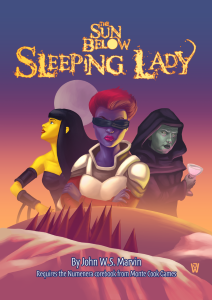 Coming soon, The Sun Below: Sleeping Lady, another epic adventure for Numenera.
From the Synopsis
Mor-Klish needs help. He left his team down in the numenera mines, and he asks the characters to bring them out. He waxes poetic about the wonderful new chambers they just unlocked – vast spaces full of numenera and pulsing with energy and perhaps intelligence.
On the way, the PCs encounter a sleep-walking young woman (Storm, manifesting as Sun Storm), and her daughter Lebby. Lebby tells the characters “You really should leave now, or find me another sleeper.” The pair vanish before the party can find out more. As the PCs explore the interior of Orb Mountain, they have more encounters with Storm in her various manifestations, often with her daughter Lebby. Lebby wants to wake Storm and will try and get a character to agree to take her place. What all this means is not immediately clear.
The PCs also find the crow-like murken skulking around and may find a broken automaton who has a story to tell if the characters repair it.
At this point, two forces have been set in motion. First, Orb Mountain is repairing itself and if not stopped, will take flight and become the lost moon Liluna, destroying the slithik town of Bursang. Second, Gothnor is slowly gaining control of the data nodes inside the moon and, if not stopped, will return to the world and put an end to both reality and sanity.
An adventure for all tiers, with new creatures, cyphers, and artifacts.
Cooperative World Building
I'm so busy editing The Sun Below: Sleeping Lady, plus two other soon to be announced games, I don't have much time for blogging. But I read a great blog on Cooperative World Building, so that counts, right? I thought I'd share what the Roleplayer's Guild had to say.
What's extra cool is that as an example of this group worldbuilding, you get to watch a great video with Wil Wheaton and friends. And beer.
[youtube https://www.youtube.com/watch?v=VJdi9SDlVhU]
Run Away! or Always Win? Game Masters' Roundtable of Doom #6
 This month's topic comes to us courtesy of Lex Starwalker:
At one end of the spectrum is the style and belief that the PCs should be able to overcome any challenge that comes their way, that challenges should be “appropriate”. On the other end of the spectrum is the style and belief that the world should be realistic, that every fight shouldn’t be able to be won, and that one of the requisite skills of the game is knowing when to fight and when to run.
This month's topic comes to us courtesy of Lex Starwalker:
At one end of the spectrum is the style and belief that the PCs should be able to overcome any challenge that comes their way, that challenges should be “appropriate”. On the other end of the spectrum is the style and belief that the world should be realistic, that every fight shouldn’t be able to be won, and that one of the requisite skills of the game is knowing when to fight and when to run.
Where do you, as a GM, fall on this spectrum, and why? Should the PCs always be able to win?
Games should be fun. That's kind of the point, isn't it?
While you might think a constant stream of "winable" encounters would be fun, I haven't found that to be true. Why is that?
My guess it that it's too predictable. The only challenge becomes how well you win, not if. Why not play on autopilot?
In a great story you always see the protagonist on the brink of defeat. And sometimes they lose. I'm looking at you, George RR Martin!
A great gaming experience can do do the same.
Defeat can be in combat, intrigue, or social. The risk of defeat wakes up the player behind the character, gets the adrenaline flowing, and creates a memorable session.
At the same time, setting up a trap where the PCs will be killed no matter what they do isn't likely to be fun either. Remember the discussion around TPKs?
 So in a combat encounter where the PCs are overmatched, I'll always leave a way out. It might not be obvious at first, but they can always retreat. 13th Age has a rule that lets the PCs always retreat from any fight, but if they do, they suffer a story defeat. The kidnapped victim gets sacrificed, the cultists summon their demon, the nice alchemist who used to sell healing potions to the PCs just got his shop burned down.
Intrigue defeats tend to be temporary and the PCs can just keep on going, perhaps on a different playing field. Your faction is down, the opponent's is up, but tomorrow is another day.
Social defeats are similar. Games like Hillfolk have rules that force a PC to accept defeats every so often. How the character deals with the defeat becomes part of the story.
The Game Masters’ Roundtable of Doom is a meeting of the minds of tabletop RPG bloggers and GMs. We endeavor to transcend a particular system or game and discuss topics that are relevant to GMs and players of all roleplaying games.
See what the other Doom Heads have to say:
How can you submit topics or become a participant blogger? by emailing gamemastersjourney@gmail.com
Remembering to Ask
Back on Wait! Something Important, I talked about not remembering to do things I know I should do as a GM.
 I just finished a 14 month campaign, and asked everyone what they thought about it. I got a ton of great feedback: More images/drawings for visual types, less combat for more investigative types, more character advancement,intrigue would be great. Next campaign could we have intrigue?
Great feedback. So what's the problem?
I got this at the end of the campaign. If I had asked a half a year earlier, I would have gotten very similar feedback. And could have made that six month more fun for everyone.
Now, some players will give you feedback unasked. But most of mine will not.
OK, new rule. First game of the month, I ask for feedback on the campaign.
What do you think? Do you have methods to get feedback regularly?
Art Preview -- The Sun Below: Sleeping Lady
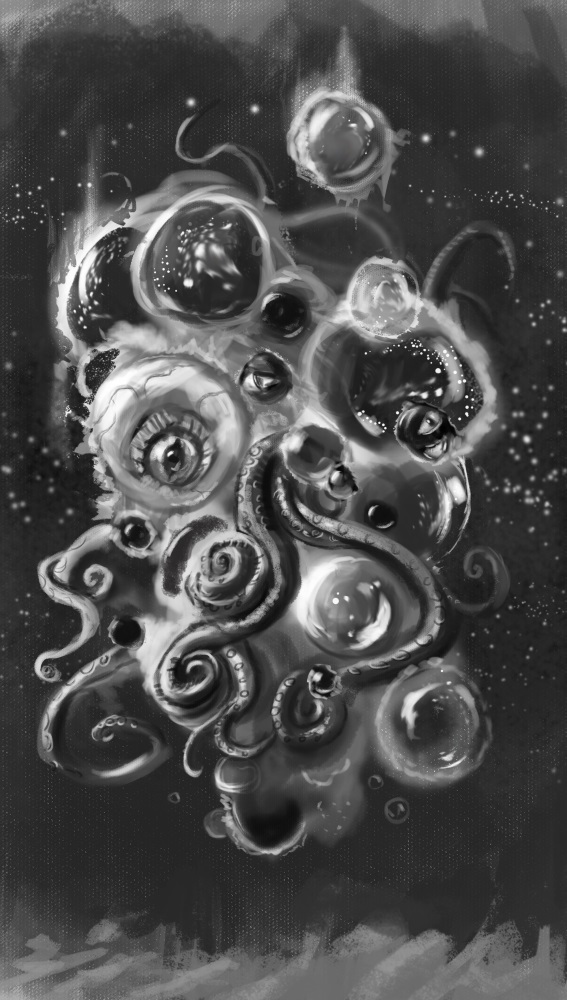
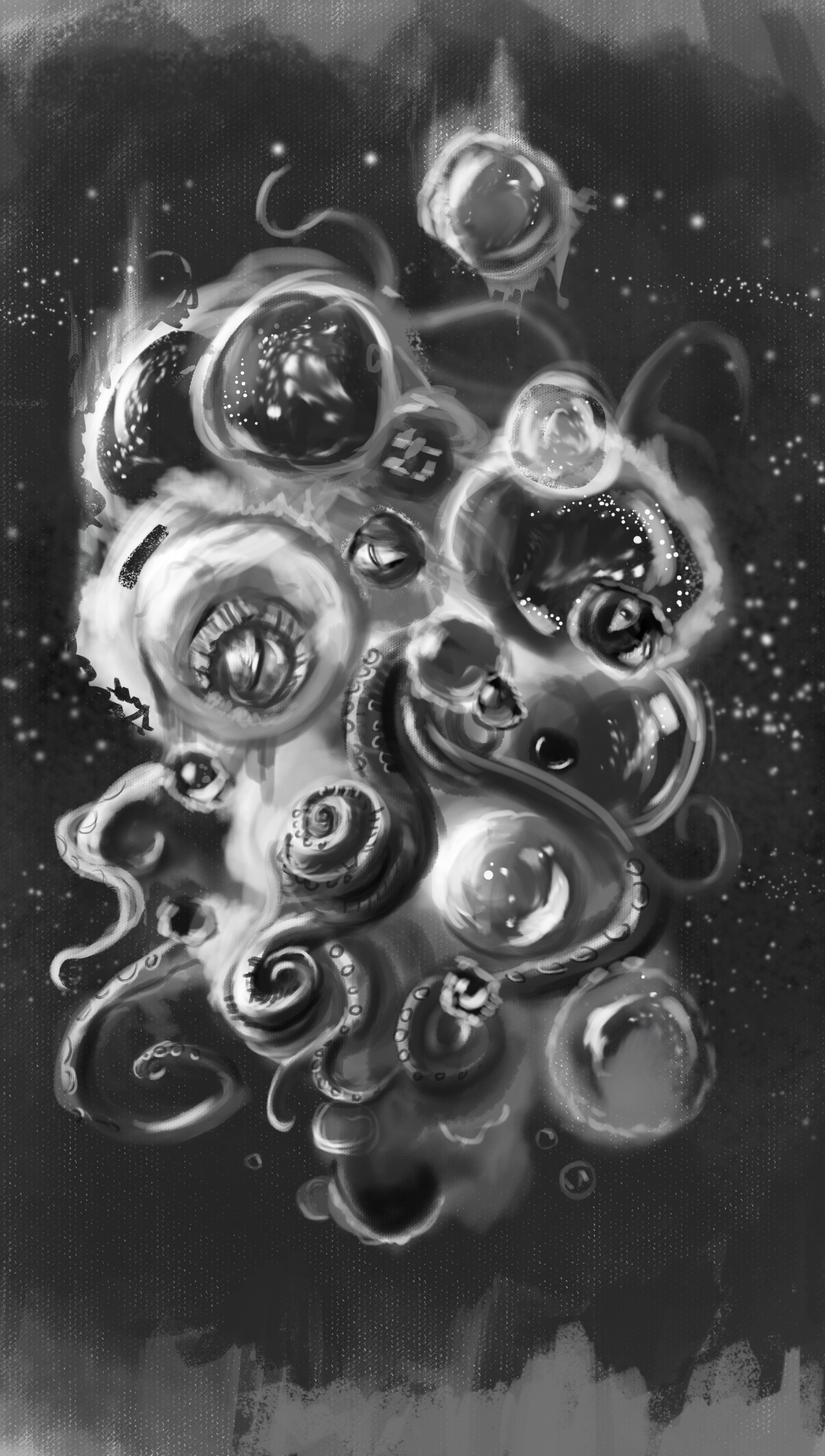
Some people might get the impression there is a horror component to this Numenera adventure. We have no idea what they mean. ;) Artist Doug Scott gives us a little peak into the challenges to be faced in The Sun Below: Sleeping Lady. These are preliminary sketches. The final art will be steeped in even more cosmic horror.

Sneak Preview: The Sun Below: Sleeping Lady
Like The Sun Below: City on the Edge, The Sun Below: Sleeping Lady is another adventure for Numenera. They are both set far below the surface of the Ninth World in the world of The Sun Below. Like City on the Edge, Sleeping Lady is an adventure for all tiers of characters, contains plenty of new creatures and numenera, and devilish plot twists to keep your players guessing.

Sleeping Lady is a great sequel to City on the Edge, but can be run standalone or even prior to City on the Edge. It begins with machines going mad in a town of blood-sucking green slime creatures. These creatures, slithiks, will pay handsomely if the madness of the machines can be stopped. From there the players are thrust into the mysteries of the numenera mines, underground ruins stuffed with weird echos of past ages.
Two disasters in the making confront your players. Can they save the town of the slithiks from being torn apart? Can they stop an ancient evil from entering their world? Can your players handle both crises? Or even one?
Includes two new descriptors: Slithik and Gibbering, and a new focus: Burns Blood.
Get ready for minds to shatter when your players enter the numenera mines of Orb Mountain and find the secrets of the Sleeping Lady.
Guest Blog: Getting Started with Fantasy Grounds
Guest Blog by Eric Lamoureux, Fantasy Grounds user for over six years. Previously we talked about gaming over Google Hangouts and in Roll20 (Part I and Part II). The other big Virtual Tabletop (VTT) is Fantasy Grounds. I wanted to include that onto our list, but I have no experience with it. Luckily, Eric volunteer to write a guest blog. Thank you Eric!
 Fantasy Grounds is a virtual tabletop application developed by Smiteworks. It’s been around for over ten years and is currently under its second ownership.
Fantasy Grounds features map sharing with miniatures, automated character sheets, chat emotes, reference material, 3D die rolls, a macro/hotkey bar, mood lighting and a powerful combat tracker that helps you keep track of the initiative order, effects and conditions and automate die results freeing the GM up from most bookkeeping.
To run a session for one of your friends you can download and install the client here: https://www.fantasygrounds.com/filelibrary/FGWebInstall.exe
Once installed, select the “Create Demo Campaign”, give it a name and select from one of the rulesets already included. You can choose from 3.5, 4E, 5E, Pathfinder, Fate Core and Numenera. If the game you wish to play isn’t in that list you can select CoreRpg which is a generic table where you can edit the character sheet with a few clicks of the mouse and populate it with the fields and values you need. Note that without a license you are restricted to hosting one other player only and that anything you’ve created on the table will not save when you close it out. It’s a limitation of the demo.
To unlock the full potential of Fantasy Grounds you need to purchase or subscribe to a license. The Full license currently at $39 (or $4/month) will let you host a game for an unlimited number of players that also own the same license. The Ultimate license at a hefty $149 (or $10/month) allows you to host a game for an unlimited number of players with no license or a full license. So your group could try it out for one month and split the $10.
More rulesets are available from the store but aren’t needed unless you wish to take advantage of the full automation. If you fancy yourself a coder and know xml and lua you can build your own rulesets. Offered in the store are Rolemaster Classic, Savage Worlds, Castles and Crusades, Call of Cthulhu and Basic Roleplaying. There are also many community developed rulesets like Trail of Cthulhu, Star Wars: Edge of the Empire, GURPS, Dresden Files, The One Ring, Warhammer 1st, 2nd and 3rd, Shadowrun and Warhammer 40k just to name a few. They are available for free.
Once you’ve created your campaign you need to give your address to your players so they can connect to the game. You’ll find that information on the right panel. Upon connection your players will begin to download the necessary files from your client to theirs. Depending on the traffic and your internet connection speed this shouldn’t take more than a few minutes.
Upon entry your players will be greeted by a Character Selection window. They can create a new character, pick one up you had previously created for them or import a character they had also previously created from the Manage Character option located on the splash page. By double clicking on the fields they generate die rolls that will appear on the chat window with their results. With a paid license you have some character portraits and tokens available to you but you can always make your own by using any image you find on the internet and edit it with the image editor of your choice. You drop the file in the appropriate folder and you’re ready to go.
As the GM you have many tools available to you. They are located on the right-hand side panel. You can enter stat blocks for your NPCs, share maps you made or purchased, draw on a blank canvas and prepare an encounter that will auto-populate the map and combat tracker at the click of a button, create treasure parcels, offer a list of modifiers and conditions to your players to use, set mood lighting, change the color of your dice, use a calendar to manage your campaign or travel logs, create and use rollable tables and set various options to help run the game the way you want to run it.
You can also create or adapt an adventure module by using the Story feature. Type in the description or notes for a particular encounter and link up image props, maps, stat block, chat bubbles, tables and loot. This will act as your cue card during the session. You can also put pins on a map to access the information you need to run your game.
Also accessible from that panel is the library. In the library you’ll find reference material. In most cases it’s the actual corebook or companions encrypted in a language Fantasy Grounds understand. You can then share that content (or part of) with your players. They will have access to that material while logged in to your table only. Most of the rulesets will then allow your players to drag content from this reference module straight into their character sheet. Feats, skills, gear, weapons, spells, special abilities, hindrances, etc. become drag and drop saving your players a lot of time. These modules can also be created if you have the time and perseverance but are not needed to have a successful experience with Fantasy Grounds. Or, you can purchase them from the store as is the case with the D&D material.
Fantasy Grounds is a powerful and complex software constantly in development. There is a learning curve to it but the community is one of the best and most active out there and will be happy to assist you with any problem you may have. Come check it out at https://www.fantasygrounds.com/forums/index.php . This is where you’ll also find other users looking to form a group.
While Fantasy Grounds is natively for Windows you can take advantage of the wrapper provided by a purchase on Steam for your Mac or Linux. One more tip, when you don’t know what to do next during your game on Fantasy Grounds, right-click!
Wait! Something Important!
Note, we'll return to gaming over the internet with a guest blog by Eric Lamoureux on Fantasy Grounds next post. But now, it's time for the Game Masters Roundtable of DOOM!
Our question comes from Marc Plourde:
There are many different skills that come together to make up a GM. The ability to think on the fly, knowledge of the rules, plotting, etc. What skill do you think is your weakest? What have you done to try and improve that skill? What advice do you have to offer others trying to improve that skill set?
I'd like to say I can't remember my weakest skill. But that's it, not remembering. Not remembering what I said last game. Not remembering the demon's special attacks. Not remembering what the heck I had planned for this evenings gaming.
Everyone has to deal with the issue of information explosion as a gamemaster, and what works for me might not be the solution for you.
My solutions revolve around lightweight tools, repetition, and avoiding the issue.
Lightweight Tools
I've known for a long time managing all this information is an issue for me, so I've tried a lot of tools. I've found is that if the tool takes too much effort to maintain, I'll drop it.
Tools I've tried and which work for a lot of people (maybe you!) are wikis, spreadsheets, vast notebooks, and databases. I Kickstarted Realm Works, found it impressive, and used it twice. These all turned out to be too heavy weight for me.
 Two lightweight tools I use are note cards and mind maps.
A stack of note cards is sometimes called a Hipster PDA. I use note cards to remember to hit every player with the spotlight and bring back people, places, and things from previous adventures. They jog my memory just enough to keep the game going. Read all about it!
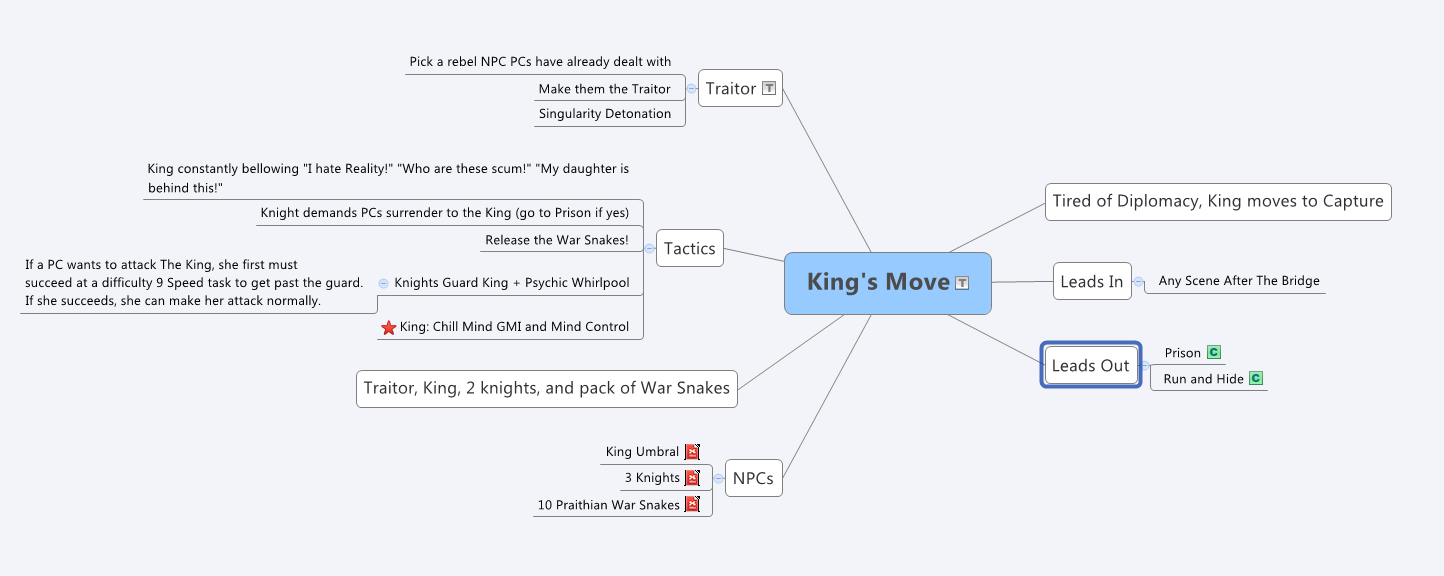
The other is mind-maps. Unless I'm playtesting an adventure I hope to publish, I keep everything in mind maps and run the game from there. XMind is a nice free mind mapper and that's what I use. When I do write for publication, I start with mind maps.
Repetition
Do the same thing over and over again and it become second nature. While you don't want to overdo it, a certain amount of repetition works for me. Not only does it help you remember things, it aids in world building. If the PCs meet the a new race every week, everything the PCs and the GM learned in the past isn't useful. If you mix in some races that reoccur, it builds your world and you master that new race.
Star Trek was known for the "planet of the week" model, but who remembers most of them? Who can forget the Borg?
Avoiding the Issue
My favorite problem solving method! I prefer to either run games with less mental footprint or to steal from simpler games and apply their rules to more complex games.
Take creature complexity. If you play D&D type games, you may have noticed 3.5 and Pathfinder have more complicated monsters than the new 5E versions of the same monster. And 13th Age has even simpler versions. The demon Vrock is a great example, with Pathfinder's version being almost double the word count of 5E's and 5E's almost double the word count of 13th Age's. Too bad Numenera doesn't have a Vrock.
13th Age gives us another interesting simplification of monster powers. Instead of remembering a bunch of optional powers (this power 3 times a day, this power if it doesn't use this other power, and so on), 13th Age uses the GM's attack dice to decide if a special power "procs." No deciding on the fly, or forgetting all about the special abilities until after the battle.
For example, the 13th Age Vrock has a filth-covered claw attack. If it hits with a natural even hit, it uses its demonic screech. The complexity has been pushed from the game table to the creature design. I like that.
If your favorite game is complex and you don't keep forgetting rules at the table, then play it and have fun! If you are playing a game where the complexity is getting in the way of your fun, you might want to take a look at simpler games.
The Game Masters’ Roundtable of Doom is a meeting of the minds of tabletop RPG bloggers and GMs. We endeavor to transcend a particular system or game and discuss topics that are relevant to GMs and players of all roleplaying games.
If you’d like to submit a topic for our future discussions, or if you’re a blogger who’d like to participate in the Game Master’s Roundtable of Doom, send an email to Lex Starwalker at gamemastersjourney@gmail.com.
The rest of the Roundtable has great things to say about their biggest issues GMing. Read on.
Marc Plourde – http://inspstrikes.blogspot.com/2015/05/nuts-bolts-31-game-masters-roundtable.html
James August Walls – http://ilive4crits.blogspot.com/2015/05/successfully-offing-your-favorite.html
Scott Robinson – http://strangeenc.blogspot.com/2015/05/encoding-improvisation.html
Lex Starwalker – http://www.starwalkerstudios.com/blog/2015/5/8/game-masters-roundtable-of-doom-5-the-weakest-link-in-my-gm-toolbox
Peter Smits – http://planeataryexpress.blogspot.com/2015/05/roundtable-5-gming-weakness.html
Evan Franke – http://asageamonghisbooks.blogspot.com/2015/05/game-masters-roundtable-of-doom-5-your.html?m=1
John Clayton -- http://blog.filesandrecords.com/2015/05/preparation-is-not-a-dirty-word/
Getting Started with Playing Tabletop RPGs over Roll20.net, Part II
 Last time, in Part I, we talked about setting up an account, creating a campaign, and creating character sheets. This time we'll talk about creatures, maps, and running a game.
Creatures
Last time, in Part I, we talked about setting up an account, creating a campaign, and creating character sheets. This time we'll talk about creatures, maps, and running a game.
Creatures
To start, we'll create a page not to use in play, but just to park all our creatures on. From there we can copy and paste creatures into encounter maps.
 Launch your campaign (if needed), click the Page Toolbar, and click Create New Page. Rename the page Creatures and click on that page to go to it. Another blank map. Yay!
If you have way more time than I do, you can create NPC character sheets for all your creatures and attach them to a token. That way madness lies. I just use a token and hit points. I have the book or SRD open to the creature when gaming.
You can upload a token from your own fantasy art (Pinterest and DeviantArt are great sources) or search the Roll20 art library. If you use your own art, you'll want to crop the image in an art program to be square. I'll use the art library and search for gargoyle and grab the first free one I find and drag it onto the map.
 To set hit points, I click on the token, then click on the gear icon and up pops the Edit Token dialog window. Red for blood, red for hit points. I set it to 60 / 60. (13th Age gargolyles have 60 hp). To make the red hit point bar visible to the players, I click the Advanced tab and click See for Bar 3.
Put "Gargoyle" in the Name box and click Save Changes.
Maps
Now let's create an encounter map to put our gargoyle on. Make a new map and call it Gargoyle Lair. On the Page Toolbar, click the gear for this map and change the size to 50 x 50. Go there. Gargoyles might be found in ruins, so let's pick a ruins map. Switch to the Map & Background layer by clicking on the second icon in the toolbar on the top left of your map. It switches from a block to a pushin.
On the right, click on the Art Library and choose Maps, Tiles, Textures. I'll type ruin and scroll down, pick a nice one, and drag it onto the map. Oh great, a 1 square map. I'll drag a corner out until it looks like it almost matches Roll20's grid.
Right click on the map, click Advanced->Align to Grid. Hold down the alt key and with the mouse move the map so that the grid is aligned. There's a great video on the Roll20 wiki explaining aligning your map. Making an exact match isn't that important for range band systems like 13th Age or Numenera, but people like to use the measure tool and create auras, so it's worth some effort.
Now, switch back to the Objects and Tokens lair, go back to your Creatures map, select and copy the gargoyle, and return to the gargoyle lair map and paste a few onto the map.
 Then go back to the start map. Be sure to let the players control their tokens. Click on each icon, and use Represents Character to link it to the character sheet. Go to Bar 3 and associate it with hit points if you can. If the hit points are 30, you want it to say 30/30. Click the Advanced tab and click See for Bar 3 so all the players can see the bar. Save and Copy the PCs and paste them on to the Gargoyle Lair map as well.
Time to Play
Invite your players, have them join in. They will see their characters on the Start map. Later you can replace this with a friendly inn or lava pit, but for now blank is fine.
Drag the red Player ribbon over to the Gargoyle Lair map, and everyone will see that. Ready for action!
If your game uses a character sheet with an initiative button, have each player first select their token, then click the button. That will put them in the Turn Order. Otherwise, open the Turn Order window (the clock icon in the left toolbar) and follow the instructions to add everyone to the initiative list. Give everyone a number, then click the gear and Sort Descending.
Better yet, create an initiative macro if your character sheet doesn't have them. All about macros -> https://wiki.roll20.net/Macros.
You roll dice by using the d20 icon in the left toolbar. Results show up in the Chat (speech bubbles on top right toolbar) window on the right. Many character sheets have buttons that do rolls and apply modifiers. The player clicks, and sees the results in the Chat Window.

 Click the arrow to move to the next initiative. When someone takes damage, select their token, click in the red circle, and type -10 if they took 10 points of damage. Notice how the red bar shows they have taken damage. +10 (or whatever) will heal the selected character.
More information can be found on the wiki -> https://wiki.roll20.net/Main_Page
Play around and have fun!
Getting Started with Playing Tabletop RPGs over Roll20.net, Part I
Last time we looked at Google Hangouts roleplaying. This time we're looking at Roll20.net.
The big difference is Roll20 is a Virtual TableTop (VTT). You can put a map up, with an optional grid, and you and your players can move minis (tokens) around on the map. It has a very robust built in dice roller. You can build macros for rolls you do often. Roll20.net has character sheets for tons of rpgs, and you can roll dice right from your character sheet.
And, like Hangouts, you can use video and see your players. Unlike Hangouts, the big screen is always the map and not your players. Which is why I prefer Hangouts for less complicated games, it feels more like being there.
However, when I play D&D (including 5E), 13th Age, or anything where I want to have minis on a map, I prefer Roll20. And, if you like, you can play Numenera or other less complex games in Roll20, lots of people do. It's a matter of preference.
Creating a Campaign
To get started, go to Roll20.net and create a free account. Then log in and click Create New Campaign.
On the next page, give your campaign a name. I'll name mine Demo 13. You could use tags for your rule system if you want to have strangers find your game. I'll skip this as I tend to play with friends. I always choose a character sheet, based on the system I'm using. I'll use the 13th Age character sheet. 13th Age comes first (it's alphabetical) and I like 13th Age, so I'll pick that. You pick the game you want to ref.
Then click-> I'm ready, Create Campaign!
This puts you on the Start Map. It's blank. Click the little blue Page Toolbar toggle up top and you can create new maps. Players only see the map with the red Player's ribbon. Once you create new maps, you can drag the ribbon around and the map you put the ribbon on is the one and only map your players can see.
When I first started using Roll20, I kept forgetting to drag the ribbon. I'd be describing things on the "Scary Cave Map" and my players would be staring at the "Safe Inn Map." Confused everyone. When you change scene, drag the Players ribbon to the new map.
Before we get into running a game, a word of advice: having a safe neutral map to park your players in between games is a very good idea. Maybe an inn. Because your players can jump onto Roll20 when you aren't there. They can futz with their character sheets, reread any handouts you've shown them, and lurk. If you don't want them seeing stuff, park them in that safe map.
Inviting Players
Exit your session by clicking the My Settings (gear) icon in the upper right. Scroll down and click Exit Game.
Click View Details, then Invite Players.
Character Sheets
To get back into your campaign, click Launch Campaign.
Your players can't make their own characters. You have to make one and share the editing permissions to the player. To do that, click on the Journal (newspaper) icon in the upper right. Click Add->Character. In the Can be edited and controlled by dropdown choose the player. Yes, the player will need to have created an account and joined your game first.

You, the GM, has to click Edit and give the character a token, which acts like a mini during the game. Players can email you images, or you can search for tokens by going to the Art Library (picture) in the upper right. Some are free, some cost money. I want a cleric, so I'll choose Tokens and search on Cleric.
Scroll down for the free ones From the Web. Drag the token to your Start map, select it, then click Edit on the character sheet. Then click Use Selected Token.
Once you've done that, they can log in and create their own character. It's a good idea to check over the character sheet to see they made it properly.
That's enough! Next time I'll talk about creating creatures and maps. Then well talk about running a game.
In the meantime, here's a great tutorial from Starwalker Studios -> https://youtu.be/5rH8bpRMTGs?list=PLUGTtv2RH-6G-mc55STfzEh06y1uD6NVR
Getting Started with Playing Tabletop RPGs over Google Hangouts
I prefer playing face to face. But sometimes it's not possible. Or you want to play in a campaign where your GM is in Pennsylvania, and you live in Oregon. Google Hangouts is simple. Players have their printed character sheets, a computer, video and audio, and off you go.
Edit June 29th, 2017: Dice Stream doesn't work on Google Hangouts anymore, because Google dropped all support for the Hangouts API. :( You'll need to roll dice by hand or use a second window with a dice rolling app. I use https://rolz.org/.
 I'm talking Google Hangouts with the DiceStream App. This is one of my favorite ways to play online. You see everyone's smiling faces, and whoever is talking gets their video feed plastered on the big screen, while everyone else is down in little windows at the bottom. It's almost like being together, though you can't share drinks and snacks.
The GM can switch windows to show maps and other handouts. Use the green Screenshare button on the left side of hangout.
Running a game over Hangouts with DiceStream works well for theater of the mind type games, where you run without minis and just describe everything. DiceStream is perfect for games with fairly simple dice rolling mechanics. For example, Numenera, Trail of Cthulhu, Fate Accelerated, or Basic Roleplaying all work well in this setup.
Click on the Dice Stream icon on the left of the Hangout and start rolling dice. If you roll the same numbers of dice often, I like to go into Dice Stream's Settings tab and uncheck Clear Dice Selection After Roll. I usually check Clear Dice Before New Roll, so my screen doesn't get filled up with old dice rolls.
You can add the Hangout to a Google Calendar event, which will send reminders to your players.
Google Hangouts is free and can be found here -> https://tools.google.com/dlpage/hangoutplugin/
DiceStream is also free and can be found here -> https://plus.google.com/107354344238067073375/about
Click on the Start a Hangout with Dicestream link. From now on, you'll have DiceStream in Hangouts.
Here's how to create a Hangout for your game in a Google Calendar event -> https://support.google.com/calendar/answer/2690797?hl=en
Here's a great Tutorial Video from Starwalker Studios -> https://youtu.be/AcGXJVrjml0?list=PLUGTtv2RH-6G-mc55STfzEh06y1uD6NVR
Next I'll talk about using the Roll20 virtual tabletop. This is great when you want more powerful dice rolling and/or a virtual tabletop.
And don't miss -> Getting Started with Fantasy Grounds
Fun in Phandalin
I'm still in boxes from my recent home move, but took the time to play in a roll20 5E game. Like pretty much every rpg game I've played, we had the most fun roleplaying. The combat had tactical interest, but the banter and imagination of the roleplay segments were great.
 I'm the idiot on the right.
It's one thing to play a D&D Cleric. It's another to have 2 heal spells and then have to rest for 8 hours. First level is a bit too old school for me.
If you want to see the unedited* recordings from Starwalker Studio, go here: https://www.youtube.com/user/StarwalkerStudios. It's D&D Lost Mine of Phandelver. Part I starts at 13:15.
If watching someone else play doesn't do it for you, I understand. It's way more fun to play than watch. For those who like to watch, enjoy!
*Not picking on Starwalker Studios here, just setting expectations. Almost all Actual Play recordings are unedited. Editing is a ton of work, and no one is paying for these.