
TableTop Day Sale All Week!
5o% OFF THE SUN BELOW: CITY ON THE EDGE, PDF EDITION!
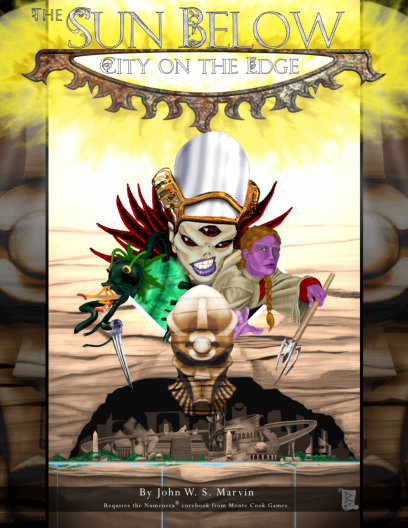
$4 OFF THE SUN BELOW: CITY ON THE EDGE, PRINT EDITION!

Game Masters' Roundtable of Doom #4. TPK Anyone?
 This month's musical question is:
There is a wide spectrum of lethality in RPGs, and there are GMs who fall on every possible point within it. These range from GMs who run campaigns where PCs can never die to the other extreme—GMs who delight in killing PCs. Where do you fall on this spectrum? How lethal are your games and why? How do you handle PC death if and when it happens?
This month's musical question is:
There is a wide spectrum of lethality in RPGs, and there are GMs who fall on every possible point within it. These range from GMs who run campaigns where PCs can never die to the other extreme—GMs who delight in killing PCs. Where do you fall on this spectrum? How lethal are your games and why? How do you handle PC death if and when it happens?
As fun as it is to kill PCs, I don't do it often. A few deaths a campaign, and that's gritty for me. I don't kill them enough. I used to kill them too much. Now it's rare. And that really bothers me.
So I maim them.
Of course, every system is different. In Call of Cthulhu or Dark Heresy players expect very bad things to happen. I maim them a lot. In one Dark Heresy game I had a group of killers break into the PCs bedrooms and burn the characters with plasma rifles. The PCs woke up screaming and melting.
But no deaths. Eyeballs melted out of skulls? Check. Limbs exploded in fatty flames? Check. Players freaking out? Check.
I miss that game.
 I really miss Warhammer Fantasy Roleplay v2, now out of print. Those crit tables were to a maimer's dream come true. Luckily you can see the same kind of terrible effects in FFG's 40k books. Limbs gone, faces burned off, eyes melted (didn't I mention that already?), and more.
Besides maiming, one-shotting NPCs allies helps create a sense of threat. The players know they are tougher than an NPC, but when they see their ally transformed into a stain on the floor in the blink of an eye, it does set the mood. And when you get to the maiming, the player doesn't feel so bad.
A Song of Ice and Fire RPG is another maimer's playground. When my character (see, I don't always GM!) wouldn't yield, and my captors held my hand down on a stump, you can't say I didn't know what was coming. Jamie isn't the only lackhand in Westeros.
In games like Numenera, it's more about exploring a weird and dangerous world, and the system gives the PCs control over how they manage that danger. I knock them down and they find a way to get back up. Somebody always pulls out just the right cypher.
The Numenera core book includes a rule for maiming instead of death: Lasting or Permanent Damage as a Death Replacement. In place of a good maiming I often mutate the PCs. Love those mutants. And those knights who like to hunt them down!
D&D and similar games have mechanics to always keep the players ahead of the monsters. Even a hard fight doesn't have a significant chance of death if you follow the guidelines. These games are about heroes, and maiming them doesn't stick in a high magic story. I at least want the replacement bits to look alien and frightful. Kind of takes the fun out it when some cleric chants and the hand grows back, no scars or nothing!
If you want gritty stories, then exceed the safety limits. Use threats of a higher level than normal.
I appreciate 13th Age's battle building advice: "We've provided balanced monsters so that you can choose interesting ways to make most all battles unfair..." Then it goes on to list entertaining ways to make things unfair to the players, and encourages you to use them in every single battle. You've got to cheat a bit to maim and kill.
 I also like something else from 13th Age: the Meaningful Death Rule (stolen from 7th Sea): Bad dice can't kill you, only named villains can fully slay a PC. Nameless monsters can only put you in a coma, carry you back to their master, who is of course a named villain, and prepare you for sacrifice. Scary stuff, but this provides plenty of opportunity for daring rescues.
Hillfolk and other story heavy games might have very little or no violence. Player death might only happen if everyone at the table agrees it makes a better story.
Of course, Fiasco can be a bloodbath, but people expect that. Fiasco is also always a one shot, not a campaign, and players are more accepting of death when they know their is no next game to worry about.
For me, it comes down to the story we're collectively telling at the table. Ask your players, what kind of story do they want?
And check out this post on Run Away or Always Win.
The Game Masters’ Roundtable of Doom is a meeting of the minds of tabletop RPG bloggers and GMs. We endeavor to transcend a particular system or game and discuss topics that are relevant to GMs and players of all roleplaying games.
If you’d like to submit a topic for our future discussions, or if you’re a blogger who’d like to participate in the Game Master’s Roundtable of Doom, send an email to Lex Starwalker at gamemastersjourney@gmail.com.
This month's topic comes to us courtesy of Lex Starwalker.
The rest of the Roundtable has great things to say about player death. Read on!
Marc Plourde - The Mortality of the Situation at http://inspstrikes.blogspot.com/2015/04/nuts-bolts-27-game-masters-roundtable.html
James August Walls - Dead and Loving It - My Evening as a DCC Player at http://ilive4crits.blogspot.com/
Scott Robinson - Lethality and the RPG as a Relativistic Game at http://strangeenc.blogspot.com/2015/04/lethality-and-rpg-as-game.html
Lex Starwalker - How Lethal Are Your Campaigns? at http://www.starwalkerstudios.com/blog/2015/4/6/game-masters-roundtable-of-doom-4-how-lethal-are-your-campaigns
John Clayton Fatality! at http://blog.filesandrecords.com/2015/04/fatality/
Peter Smits - PCs and the killing thereof at http://planeataryexpress.blogspot.com/2015/04/pcs-and-killing-there-of.html
Arnold K. at http://goblinpunch.blogspot.com/
Evan Franke - To be or not to be . . . a Killer GM at http://asageamonghisbooks.blogspot.com/2015/04/game-masters-roundtable-of-doom-4-to-be.html
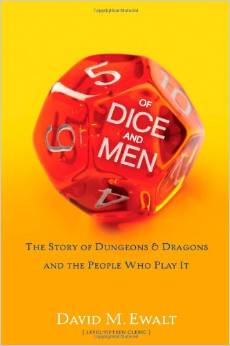
Of Dice and Men
I haven't written up a book on this site, even a game book, but I wanted to share this little gem: Of Dice and Men: The Story of Dungeons and Dragons and the People Who Play It by David M. Ewalt.
 I had been hiding out in the library. We were selling our house, and we had to leave when prospective buyers wanted to come see it. So the dog (Prince Henry the Navigator) got a walk, then had to stay in his crate in the back of the SUV. Alison (my wife and editor) sat in the car and read, and I went into the library, to work on The Sun Below: Sleeping Lady.
Eventually I got up to stretch, and decided to look for books on game design. Nothing. So I did a search for role playing games, and Of Dice and Men showed up. Despite the glowing back blurb by Felicia Day, I picked it up with low expectations.
Two pages in I'm blown away by David Ewalt's writing. Then I find he's an editor at Forbes. He covers gaming as part of his job. I've read this guy on before, and liked him.
What you get is the history of roleplaying games, mostly D&D, told within a framing device of David's own campaign. From the earliest games found in Egyptian tombs to 5th Edition D&D, he covers a lot of ground. When he jumps back to his own campaign, it reads like mix of great swords and sorcery with post apocalyptic adventure. You want to know what happens next.
And then he cuts to the first GenCon, or the rise of D&D and the media attack on this "satanic" past-time. You want to keep going, but he's back to his campaign. Works really well.
Well done, even includes some great GM advice from Frank Mentzer, one of the original D&D designers. The way I figure it, if you can't game, at least you can read about gaming. Highly recommended.
Stealing the Weird: Putting Numenera Creatures into your 13th Age Game
Sometimes it's nice to shake the players up a bit. They know the game a little too well and are becoming hard to surprise. One trick is to look at your bookshelf and steal something from a very different game and stick it in the one you are running now.
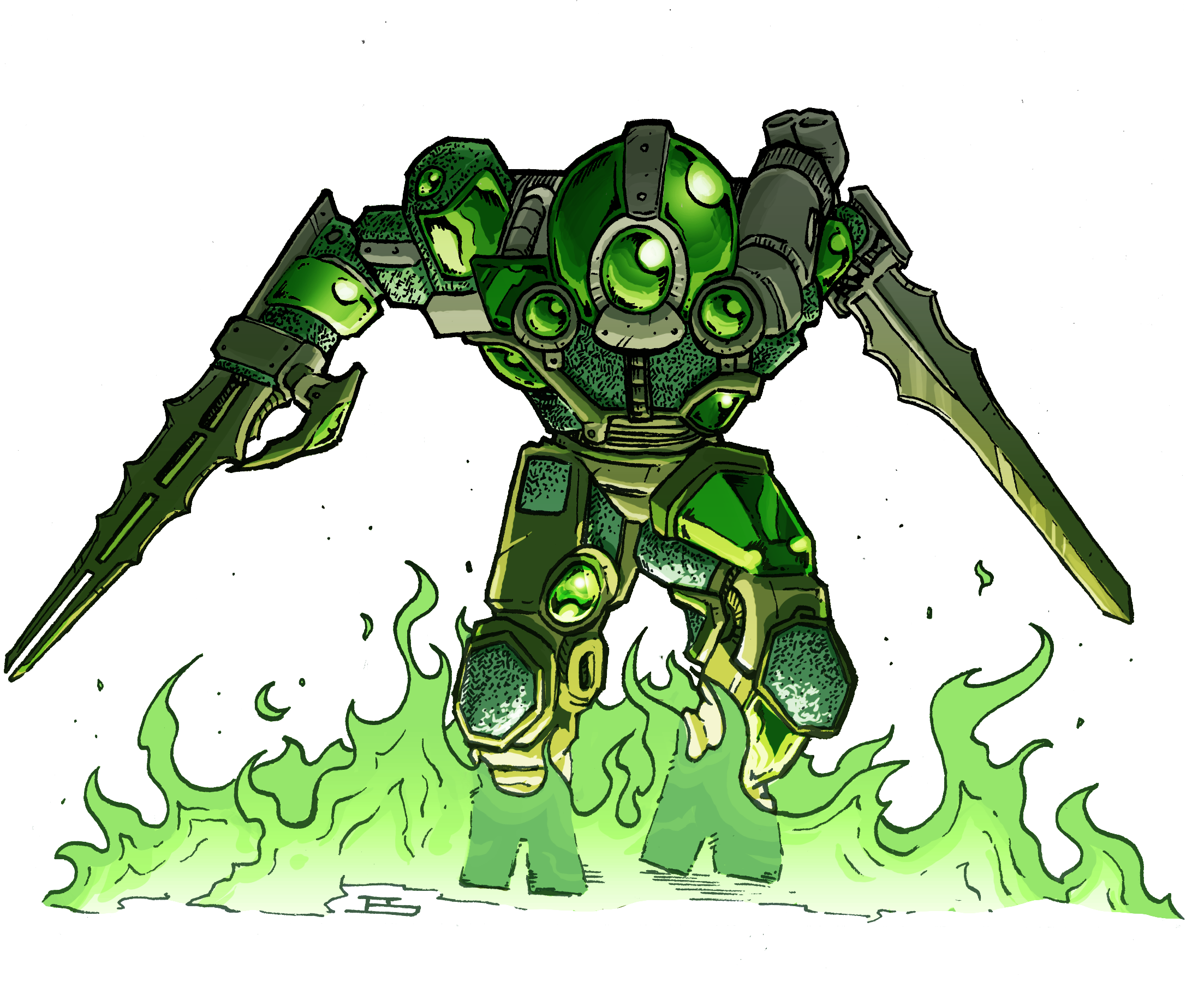
As an example, I'll steal a Numenera creature, and 13th Ageify it. I'll take one of mine, the Pyronic Sentry, which first appeared in The Sun Below: City on the Edge, but you can see it here. You can do this with any two game systems.
This is a challenging creature for beginning Numenera parties, so let's make it a challenge for a 2nd level 13th Age party. We'll make it a large 4th level monster. It looks large and it's doing double damage, which is what large monsters do.
It's obviously a construct, perhaps one of the Dwarf King's artificers went over the deep end and sold these to the highest bidder. Or was forced to make them against her will...
Reading the modifications, we'll make it invulnerable to heat, and vulnerable to cold.
Now, let's look at it's GM Intrusion: it can teleport a PC to directly in front of it. Which is nice, because it's always standing in a fire or lava, and then it hits it for extra damage. A GM Intrusion typically only happens once a battle, so we'll go with limited use, once a battle.
Check out DIY Monsters section in the 13th Age Core book.
Pyronic Sentry
A pyronic sentry is an armored construct whose color changes to match the flames it finds itself in. It looks like an eight foot tall armored man with long blades for hands. It is always found standing in fire, lava, or some other superheated environment. To engage a pyronic sentry, one must enter its fiery environ. As a construct it follows orders to guard a place or a thing.
Large 4th level wrecker [construct]
Initiative: +7
Invulnerable: magical and mundane heat and fire; Vulnerable: cold
Sizzling Sword Hands +9 vs. AC -- 20 damage
Natural even hit: +16 heat damage
R: Come Play: +9 vs. MD -- 24 damage
Hit or Miss: Nearby target is teleported directly in front of the pyronic sentry, taking 16 heat damage from the environment the sentry is standing in.
Limited Use: 1/battle.
Fiery environs: At the start of the pyronic sentry's turn, each enemy engaged with it or otherwise standing in the fire/lava takes 14 fire damage.
Nastier Specials
Some Like it Hot: A character must make a hard save (16+) to leave the fiery environs.
AC 20
PD 18 HP 108
MD 14
GM Excuses VII: So That's What An Invisible Man Looks Like
GM Excuses, Part VII
 If you’re new to this blog thread, I’m following the Writing Excuses master class on writing, and transmogrifying it to be about adventure design. In Part 2, I mixed up ideas from Part 1 to create a mash-up, an adventure based on Drood, the novel by Dan Simmons and World Without Tears, a song by Lucinda Williams. In Part 3, I auditioned NPCs for the lead role in the adventure and let the blog readers vote for their favorites. In Part 4, I sent three of these NPCs to do a dead-drop.
Homework Time! Who Are All These People? Have a listen.
Writing Prompt: Pick one of the dead-drop characters and turn them into a secondary character. Now take one of the characters with whom they interacted, and write the same scene again, but from this new character's POV with the characters focused on the other NPC.
I'll pick Anton, Nalo's brother, as they had the only dead-drop with two characters. Last time Anton was unseen. Again, I'll do it as Read Aloud text in an adventure.
Anton In the Market
Read the following aloud, or paraphrase it in your own words.
You cast your spell to make the invisible visible and the silent heard, then search the crowded marketplace. Sure enough, when Nalo D'Costa enters the market, her invisible brother fades into view right there at Nalo's side. Unlike his sister who is well dressed, Anton wears threadbare clothes and is shackled, dragging a chain behind him.
They are only two black skinned people in the market, but others only see one.
"You hear these English talk?" Anton asks his sister. "They hate you. You are too smart, too pretty, too well dressed, and most of all, too black. They will kill you like they did me. See how they stare?"
Nalo struggles not to look at him. Under her breath she hisses "Yes, I know they are looking at me. Always me, and not you. Why don’t you make yourself useful and create a distraction?”
 Anton smiles. "Only because I can't hold the bag myself. Stick it in that barrel while I overturn the fat man's fish cart."
Aha, so this is a big change from the scene in Part 4. While it relies on a spell, I like this one better as far as getting the action going. The other one distanced the character watching. Now that they see and hear Anton, they are more in the game. I think in games with mystery, you can wait too long to really engage the players, where only the GM has a clue what is going on. The players are so lost they don't know what to do.
And why can he overturn fish carts but can't hold the bag?
Interesting when you try a scene where the PCs are spying on Nalo, then try it again, when they spy on her invisible brother Anton.
GM Excuses VI: Win or Lose, Still Fun
<-Previous -- Next->
GM Excuses, Part VI
 Following along Writing Excuses' master class in writing, we get to a very interesting discussion on the magical 1%. As in Star Wars, the Jedi are the 1%, all that matters to the plot. And then comes Han Solo. Great stuff, have a listen.
The homework is going to have to be reskinned:
Writing Prompt: Think about the last time you lost at a game. What was the process of thought that led to your loss? Now, replicate that moment in the dramatic structure of the story, except the story isn't about games.
What a wonderful fiction prompt, but for a RPG adventure, how can we use it? The last game I lost was Carcassonne, a Euro Game. Hmm, how to create an adventure out of my blunders in cathedral and farm placement...
What are some of the reasons I like Euro games? They are fun even if you lose. The entire time you are playing, you're usually make progress, building things, and racking up points. Even if someone edged you out, you were building your own empire.
Now, let's apply that to an adventure. While RPG players can always lose, they don't usually lose while making progress, getting stuff accomplished. They walk in a door, find something awful, roll badly, make bad choices, and either flee or reacquaint themselves with the character creation rules.
Adventure Writing Prompt: Create a scenario where the players can make progress, accomplish great things, have a good time doing it, and still lose.
 The goal is create a key out of parts found inside an underground temple, rescuing prisoners and destroying evil shrines along the way. Then take the key to the final encounter and unlock the imprisoned avatar of good. So, besides ending up on the sacrificial altar, how can they lose? They can lose to a second adventuring group that finds it's own key and rescues the avatar, putting the PCs in second place. "Nice try..." But the big rewards are for first place.
Let's make three keys that will work, bronze, iron, and steel, each made of three parts. The temple is an inverted pyramid. The fourth, lowest level, holds the door to the imprisoned avatar. The third level has three chambers, each of which has key pieces of different colors. The second has six chambers, three with different colored key pieces. The top level has nine chambers, three with key pieces. Frightful guardians, prisoners, and evil shrines are scattered throughout.
Bishop Beesir is the patron, and sets the two teams in motion. The NPC team, the "Silver Shadows" includes NPCs the PCs have run into before, either as rivals or allies. There are two known entrances, the front door and side entrance. The PCs pick their entrance. The clock is ticking, as the avatar can't survive much longer in it's extra-dimensional prison.
While it may be possible to get to the goal in four encounters, the evil complex is warded against abilities that show either party what is where without looking. It's not wise to skip freeing prisoners and destroying shrines, because these actions give the avatar respite. Sprinkle clues to the keys among shrines and prisoners.
To keep things abstract, we'll measure time in encounters the PCs face. All things being equal, the Silver Shadows will free the avatar in 10 encounters.
Headwinds: If the PCs are racing to an easy win when they hit the third level, they find the Silver Shadows have already looted a key piece they are looking for. The PCs will have to find the other group and arrange a trade, or switch to another color key.
If the PCs are lagging behind, one of the surplus key pieces they have picked up is needed by the Silver Shadows. The NPCs backtrack and find the PCs, offering a trade. This adds 1d3 to the number of encounters the NPCs need to win.
Treachery: If the PCs attack the Silver Shadows to rob them of their keys, they hear a thunderclap as their deeds feed the evil complex, adding to the difficulity of all future encounters. Plus they find themselves applauded by an evil priestess who offers them a deal if they bring her Bishop Beesir in chains.
A nice change of pace adventure. What about you, can you think of an adventure where the players would feel like they are doing good, even if they "lose" in the end?
<-Previous -- Next->
GM Excuses V: Lovecraftian Horror
<-Previous -- Next->
GM Excuses, Part V
And the 3rd will be 5th. Somehow we jumped over the Lovecraftian episode of Writing Excuses. Perhaps our broken minds blocked the show out. And now, it's back, more terrifying than ever!
 And it's a great episode, with guest speaker Cherry Priest. Her latest novel is Maplecroft: Lizzy Borden with an ax vs. Cthulhu! Hello?
Take a listen, then let's do our homework.
Writing Prompt: Take a character, and from that character's point of view, describe their reaction to something horrific and awful, but do so without describing the thing itself.
OK, great fiction writing prompt. How can we twist this for gaming? If we use an npc, when would the players ever hear about it? If we take a PC, how would you describe something to them without describing it?
Here's my shot. It's a PC, and here's the READ ALOUD text addressed to ONE character:
As you step across the obsidian floor, white glyphs flare into existance across the surface and twist and turn. The rest of the party watches in horror as you vanish.
You fall to the floor in front of your friends, covered in a foul caul of mucus. How long were you gone? Thankfully you don't remember, until, then you do. Just bits and pieces. Being on a stone table as surgical implements held by what? Pincers? As you were cut open? There was a lot of screaming. Yours.
And they put you back together. But not quite the same as before. And didn't they add something? Cold and wriggling? Can you feel it now wrapped around your heart, or is this some delusion?
You hope it never happened. But you know better. There is no hope, and it's only going to get worse.
So the poor player doesn't really know what took them away, nor what they looked like. What all the players know, is any of them can be taken at any time. And unspeakable horrors are hovering.
<-Previous -- Next->
March Playtesting
 If you are interested in playtesting The Sun Below: Sleeping Lady, email me.
System: Numenera
Author: John WS Marvin
Deadline: April 30th
Description:
As the explorers investigate disturbing goings on in the numenera mines of Orb Mountain, in the world of The Sun Below, the dangers start to escalate fast. Can the players stop not one, but two apocalypses? Or should they choose one? A Numenera adventure for all tiers.
If you are interested in playtesting The Sun Below: Sleeping Lady, email me.
System: Numenera
Author: John WS Marvin
Deadline: April 30th
Description:
As the explorers investigate disturbing goings on in the numenera mines of Orb Mountain, in the world of The Sun Below, the dangers start to escalate fast. Can the players stop not one, but two apocalypses? Or should they choose one? A Numenera adventure for all tiers.
Ringing Out the GM Changes
Game Masters’ Roundtable of Doom #3 This month's topic comes to us courtesy of Scott Robinson, who asks, "How has your gaming and/or GMing changed over time?"
So many things have changed. We're more diverse, we play different kinds of games, and we're older if not wiser. I'll focus on how my GMing has changed.
 To start with, I was a simulationst GM. What I was trying to simulate was an epic fantasy or sf novel. Without the character development. I threw in some jokes, used random die rolls to create encounters, and killed a bunch of PCs. White box D&D to 2nd Edition and a little Traveller. Good times.
Slowly I started to bring in the bare bones of plot into my games. Now there was a reason my players were clearing out a dungeon. Not much, maybe they were geased to do so, but it was something.
 I got into goal based, rather than encounter based, gaming starting with Call of Cthulhu. Story based gaming had arrived, and I was hooked. Wild adventures with characters who had professions, not classes. Simple, not complex, rules. I will never forget running Masks of Nyarlathotep or Horror on the Orient Express.
I played a lot of systems since then, but the idea the game was about a goal, rather than a series of encounters, really struck home with me. I enjoy both kinds of games, but when I first tried a goal based game, it was like a breath of fresh air. Walt Ciechanowski did a nice post about the differences over in Gnome Stew.
 For a while, I equated games with story to goal based games, but games like 13th Age have changed my mind. 13th Age is a wonderful mix of storytelling and encounter based fun.
 Setting has become more important to me. I used to hand-wave setting in my early D&D games. "It's like Tolkien, Leiber, and Moorcock" I'd tell my players, and then run fairly unconnected adventures. These days, a great setting really makes me want to play in that world. I had more fun than the law will allow with Rogue Trader, just because of the setting. Numenera's setting is so awesome I want to play it all the time.
 I got another eye opener when I read Robin's Laws of Good Game Mastering. Shockingly enough, not everyone played rpgs for the reasons I played them! Who knew? I started to pay more attention to everybody's fun. Instead of the game mechanics creating all the fun, I worked on giving players spotlights and letting them take control of the narrative.
Which reminds me, at some point I started to read books, blogs (like Gnome Stew), and the like about how to be a better games master. I watched my friends GM and copied the things that worked for me. Before, I just focused on the rules, now I'm more focused on the table.
These days, I'm much more comfortable improv. When I pick up a published adventure to save time, I still do a lot of improvisation. Even when I'm not playing an indie improv game like Fiasco, I'm always twisting and turning the game based on what the others at the table are saying. And my players do the same.
Now that I'm designing adventures for publication, I try to think more about how others who aren't me would run my adventure. And how players who aren't my players would play it. Playtester feedback can be real humbling when something that was effortless at my table becomes a confusing stumbling block at theirs.
It's been a fun ride. I can't wait to find out what happens next!
Plans that Come to Naught by John Clayton
The Evolution of My GM-Style by Scott Robinson
My Evolution as a GM by Lex Starwalker
Home Grown Gaming by James Walls
Evolution of GMing Style by by Peter Smits
The Game Masters’ Roundtable of Doom is a meeting of the minds of tabletop RPG bloggers and GMs. Every GM has his or her favorite system, but in these articles we endeavor to transcend a particular system or game and discuss topics that are relevant to GMs and players of all roleplaying games.
If you are a blogger, and you’d like to participate in the Game Master’s Roundtable of Doom, or if you have a suggestion for a topic, send an email to Lex Starwalker at gamemastersjourney@gmail.com.
GM Excuses IV: What Do You Mean My Main NPC is Boring?
<-Previous -- Next->
GM Excuses, Part IV
Because of my hiccup, I've gotten behind in my homework! Time to file for an extension and get back to work.
If you’re new to this blog thread, I’m following the Writing Excuses master class on writing, and transmogrifying it to be about adventure design. In Part 1, I came up with five adventure ideas. In Part 2, I mixed up the ideas to create 4 new ideas. One of them is a mash-up of two of my ideas from Part 1, an adventure based on Drood, the novel by Dan Simmons, and one based on World Without Tears, a song by Lucinda Williams. In Part 3, I auditioned 5 NPCs for the lead role in the Drood/Williams adventure and let the blog readers vote for their favorites.
Take a listen to the Writing Excuses Podcast, What Do You Mean My Main Character is Boring? (only 15 minutes, and time well spent).
Today's Homework: Take three different characters and walk them through a scene. Convey their emotional states, their jobs, and their hobbies without directly stating any of those. The scene in question: walking through a marketplace, and they need to do a dead-drop.
Cool! We'll take Nalo D'Costa, Robert McTavish, and Elizabeth Dixon. You can see their biographies in Part 3. I haven't created hobbies for them yet, unless you count looking damned suspicious. We'll do these as Read Aloud text from a published adventure.
Nalo D'Costa:
You hear a hubbub from the city marketplace in front of you. Shoppers and stall owners comment on an unseen woman. You hear a lot of "Who does she think she is?" and disparaging remarks about the woman's dark skin color. You spot a fidgety brown woman dressed in a teal day dress wearing a deep bonnet that prevents you from seeing her face unless her head points straight at you. The fingers of her left hand are stained with ink.
She seems to be arguing with someone, but you see no one walking with her. Her accent is both educated and Jamaican. "Yes, I know they are looking at me. Always me, and not you. Why don't you make yourself useful and create a distraction?"
A fishmonger's cart collapses, but you can't see the cause. Cod spills across the cobblestones. While all eyes are on the fish, you see the woman stuff a brown sack into a barrel, close the lid, and walk away.
Robert McTavish:
You enter the city market and are surrounded by the calls to buy fresh fish, produce, and the like. An old gentleman with long sideburns and a mustache hurries past you. You meet his watery blue eyes for a moment, then turn away. There's an intensity about those eyes that is unnerving.
The gent marches up to a grocer and points to turnips. When the grocer turns to grab the turnips, the old man looks around, then puts his hands on the lid of a barrel. He stares across at a fishmonger's cart, where a woman calls out "Snakes! Snakes under the cart!"
You see the old man stuff a brown sack into the barrel, close the lid, and walk away, turnips forgotten.
Elizabeth Dixon:
You enter the city market and are surrounded by the smells of fresh fish, poultry, and the like. A bespectacled woman, perhaps in her 30s, rummages through a cart selling old books. A black ankh pendent graces her neck. She's talking to a corpulent Turk, fez and all, and they seem to be arguing. She points at a fishmonger's cart with a folded hand-fan, and says something sharp to the foreigner.
The Turk nods, and ambles over to the display of cod and mackerel. He stops, closes his eyes and falls into the fish-cart, hands flailing and grasping. The cart tips forward, spilling fish and causing a scene.
You see the woman stuff a brown sack into a barrel, close the lid, and walk away.
<-Previous -- Next->
Print Version Now on Sale: 25% off for rest of February
The Print Version of The Sun Below: City on the Edge, is on sale through the end of February. The PDF version's sale continues to the end of the month.
The Sun Below: City on the Edge Print Version Now Available
The print version of the Numenera adventure The Sun Below: City on the Edge is now available on DriveThruRPG!
If you already purchased the pdf version of The Sun Below: City on the Edge, AND you are allowing me to send you emails on DriveThruRPG.com, I sent you a special offer on the print version. Check your email!

It Is Known: Players tell me about the NPC
Ever want to make an NPC that the players connect with? That they find interesting?
 Here's a technique that works for me. I use it sparingly. I let the players design the NPC.
Not the stats, not the role the NPC fits in. I've got that covered. I go around the table and ask them in turn to tell me something about the NPC. I'm still the GM so if they go way silly or something that won't work, I will gently modify or ask for another idea. Usually one circuit around the table is enough.
I give them the NPC and say, tell me about ________. They tell me something. I say "It is known" and write it down. Then I ask the next player. It's a little like the Montage technique.
EXAMPLE: As a hook, I had Opal's sister Sapphire get captured by devil cultists and thrown into the gates of hell. Opal is a PC, Sapphire is an NPC I just made up. The woman playing Opal was excited by this idea, but we didn't know anything about Sapphire.
So I asked each player, "Tell me about Sapphire, what do you know?" Opal should know her sister -- for the others, I said "You've been traveling with Opal for quite some time. She's told you stories about her sister, what stuck in your mind?"
Player: "She has Blue Hair." GM: "It is known."
Player: "She has a penchant for losing things, even things she's not touching. Things near her just go missing." GM: "It is known."
Player: "She's a cliff diver. The cliffs in her hometown have low gravity, so she can do lots of tricks on the way down." GM: "It is known."
Player: "Her eyes match her hair." GM: "It is known."
Player: "She can alter reality with her thoughts. Only little things. A door is slightly to the right of where it was before. The blue fork is now red." GM: "It is known."
You get the idea. I now have a very interesting NPC who needs to be rescued from hell and the players know Sapphire way better than me telling them what they remember about Opal's sister.
This example comes from a recent Numenera game where weird is the new normal, in a more conventional game you might keep things more "realistic."
Announcing The Sun Below: Sleeping Lady
We couldn't talk about the new adventure until we got the license from Monte Cook Games, but that just came in, so....
The Sun Below: Sleeping Lady
A new Numenera adventure, in development now!
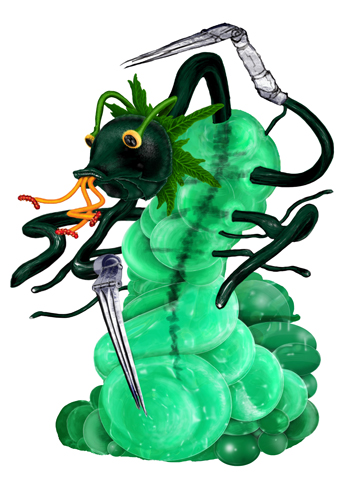
And it's Mor-Klish approved!
And remember, The Sun Below: City on the Edge is on sale for the rest of February!
Valentine's Day Sale
What could be more romantic than The Sun Below: City on the Edge?
Yes, it's 25% off for Valentine's Day, and for the rest of Valentine's Month!

Mor-Klish wants a kiss!
Blogger's Roundtable of Doom: The Montage
It's time again for the Blogger's Roundtable of Doom! Last time we talked about how to encourage roleplaying. This time our question is: What is a favorite mechanic or idea you've encountered in an RPG that you think would work well in other games? Please explain the mechanic/idea, tell us a bit about the game it comes from, and give some ideas of how it could be used in other games.
THE MONTAGE
I'm going with the montage. I first encountered the montage in 13th Age's Organized Play adventures. At the start of every session, the GM tells the players where they are going, and then has the players go around the table, each player describing a challenge the group encountered, and the next player describing how their character overcame the challenge. No dice, just pure roleplaying.
So the players tell the story of how they get to an important scene, and then the normal 13th Age rules take over and everyone plays out that scene. I love this, as it gets everyone's creative juices flowing and creates an exciting shared story that is part of the adventure.
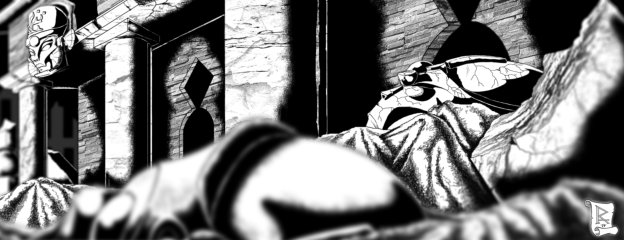
Here is an excerpt from my Numenera adventure The Sun Below: City on the Edge. The goal of the montage is to narrate a prison break by the PCs. Since they have lost all their equipment, I let them pick up cyphers as they go around the table. After the montage, they may encounter a hostile patrol, so I want them to gear up appropriately.
Prison Break
For the escape, the goal is not to go into details with maps and die rolling, but to give a sense of time passing as the characters make their getaway.
The characters are fleeing in an underground labyrinth of tunnels full of ancient machinery. In this scene, the players will help decide what obstacles they face, and what they must do to overcome them.
If the characters search for weapons at any point, they find pipes and bits of metal they can use as clubs.
Pick a player to start with, then go around the table. Each player will describe an exciting problem the group encounters. The next player will describe how their character solves the problem in a cinematic fashion. The GM narrates the solution back to the group, with the character as the hero, and has the hero find a cypher in the process. The player then comes up with a new problem and the next player in turn comes up with the solution. Keep going until every player has created and solved a problem.
For example, the first player says, “We run around a corner and find a bottomless chasm blocking our way.”
The next player describes how their character got the group past the difficulty. (No die rolls needed.)
For example, the player could say, “We find a storeroom full of long transparent tubes, wide enough to crawl through. We lay one over the chasm and go on.”
You then narrate that back to the group, making the character the hero and add a cypher.
Amazing. What looked like just part of the wall turned out to be the door to a storeroom, and you found it. You single-handedly lift a long clear tube up and place it across the chasm. You even find some machinery on both sides to brace it with, so it won’t roll. All the other characters get across.
You go last. As you crawl across the chasm in the clear tube, and notice something glittering on a shelf three feet below the far ledge. It’s a cypher.
Then give them a cypher. Consider cyphers that might help the characters escape from a patrol, such as a force screen projector.
Now the player who described the solution and found the cypher describes a new obstacle to the party’s escape. You keep going around the table. Once every player has had a chance to make up a challenge to overcome and a solution, the montage is over.
What are the other Blogger's of DOOM stealing from other roleplaying games? Let's see!
James Walls takes on the Player Turn from Mouseguard. I love Mouseguard, and this is an excellent post!
Marc Plourde is such a showoff, he blogs about 5 things to steal, and then adds 2 more. Great stuff.
Scott Robinson steals location aspects from FATE. Hmmm, I'm going to have to try this myself...
Lex Starwalker is behind all this madness: Now, he's taken the Cypher System's GM Intrusion, and intruded it into D&D 5th edition. Is nothing sacred?
John Clayton finds backstories that have fallen off the back of a lorry. Prince of Shadows aproved!
GM Excuses: Audition Your Lead NPC
GM Excuses, Part 3
OK, class is in session again, and we have more homework. If you're new to this blog thread, I'm following the Writing Excuses master class on writing, and transmogrifying it to be about adventure design. In Part 1, I came up with five adventure ideas based on the homework assignment. In Part 2, I mixed up the ideas to create 4 new ideas. One of them is a mashup of two of my ideas from Part 1, an adventure based on Drood, the novel by Dan Simmons and one based on World Without Tears, a song by Lucinda Williams.
Check out the latest (15 minute) podcast from Writing Excuses, Q&A on Ideas.
 The podcast is well worth a listen, but instead of dealing with the very interesting questions the cast answered, I'm jumping right to the homework:
Take one of the ideas you're excited about, and then audition five different characters for the lead role NPC in that story. Make sure they're all different from each other.
I changed the idea from the lead role, to the lead NPC because your player characters, lovable idiots that they are, are already cast in the lead roles. The question is who do they get to bounce off of? It could be the antagonist, an ally, or a another important person, perhaps one around whom the adventure revolves.
Looking over the ideas from the last GM Excuses, I'm going to go with Drood meets World Without Tears. Everything revolves around the famous writer, Charles Dickens. I'm going to mix it up, and replace Dickens with a fictional writer, but we'll say they are a famous and successful Victorian author.
Elizabeth Dixon Liz is a popular writer who has an aura of scandal around her. She's been seen traveling with another man while her husband stayed home with the children. Somehow the scandal has only increased her sales. She's taken a bizarre turn since a railway accident, and can now be found wandering graveyards and dealing with foreigners and other odd people. She's the daughter of a wealthy shipbuilding family and something of an expert in Egyptology. Secretly she believes she is the reincarnation of Hatshepsut, a woman pharaoh of the 18th Dynasty.
George Kingsport George is a popular speaker and writer on occult topics. He's known for his seances and being able to make contact with those who have past beyond the veil. A happy charlatan, George has been milking the naive since he was a teen, but now thing have taken a turn for the strange. For the last few months, George's fake powers have started to work. He speaks in tongues, recites ancient Egyptian poetry, and has the power to bend people to his will. Which would all be great, but for the blackouts. George wakes in odd places and has no recollection of how he got there.
Nalo D'Costa Nalo is a Jamaican woman who has burst onto the literary scene in England. Aided by a following in the upper class, she has transcended racial and gender barriers and gained a popular following. One worry is her belief that she will be fashionable only for a brief moment, and then the English will find another "exotic" author to pay attention to. The other worry is Anton, her fraternal twin who died at birth. Nalo sees and hears Anton, and while she used to believe he was a harmless hallucination, recent events have proven him neither.
Connor Synge is a celebrated Irish playwright and poet. Intense and brooding, he's a bit of a walking contradiction -- often seen in bars, he never drinks; popular with the ladies, he never marries; said to be gifted in Irish, he only works in English. Connor has recently been frustrated in his work. The play "The Droods" just will not write itself. He's torn up more versions than he can count. And each time he stops writing, he sees a pale face in the window. When he looks, he sees a figure vanishing down the block. He follows, and then finds himself lost in the most peculiar places. He's been talking to himself, and his friends are worried.
Robert McTavish was unknown outside of his Scottish landholdings until he reached the age of 70. He claimed he found a Pictish burial site and vanished for three days. When he came out, he began writing at a furious pace, and soon started on well attended speaking tours. He has watery blue eyes that force people to avoid his glance. He's also taken up poetry, and his latest poem is entitled "Before Man, Serpents." His dark writings have embarrassed his offspring, and they are looking for someone to rein in the old man.
[polldaddy poll=8613997]
When Dice Go Bad
 In almost all roleplaying games, we use dice to make the gamy part of our roleplaying game fun. Nobody knows if your barbarian will hit the giant snake with his broadsword, if your occultist can banish the eldritch entity, or if your pilot can outpace the exploding supernova until the dice are rolled. This creates tension at the table, as players cheer critical hits and groan at critical misses.
It's all fun until somebody gets pushed out the action by the dice. Recently, I watched an rpg game and saw a single bad roll sideline a player. She had taken a prisoner, no one else seemed interested in anything but combat. As the battle wrapped up it was obvious the PCs were in no danger, so she took her prisoner aside and began to question him.
In almost all roleplaying games, we use dice to make the gamy part of our roleplaying game fun. Nobody knows if your barbarian will hit the giant snake with his broadsword, if your occultist can banish the eldritch entity, or if your pilot can outpace the exploding supernova until the dice are rolled. This creates tension at the table, as players cheer critical hits and groan at critical misses.
It's all fun until somebody gets pushed out the action by the dice. Recently, I watched an rpg game and saw a single bad roll sideline a player. She had taken a prisoner, no one else seemed interested in anything but combat. As the battle wrapped up it was obvious the PCs were in no danger, so she took her prisoner aside and began to question him.
 When it was her turn she would ask a question. On her first round she got to roll the die, and she rolled poorly. That was it. From then on, each turn the GM had her get stonewalled while the other players finished up a combat, took treasure, and had a good time. She got to sit out for 20 minutes while everyone else had fun. All because she tried to think out of the box, and try something new.
This broke a great rule I try to remember to use in my games: Never roll the die unless failure is interesting.
"Na, na, I won't talk" is not interesting. In fact, I felt like the player was being punished for being creative. I don't mean to pick on the GM, who was doing an overall great job. I'm sure I've done this a million times, it's just easier to see when I'm observing a game from the outside.
So what would be interesting?
 No roll Have the prisoner spill some beans. It was a low level prisoner, so he probably didn't know much, but he could provide a small clue or two, something to let the captor shine in the spotlight.
Perhaps he could tell the PC where the bad guy is who hired him. Maybe you were going to give the players this clue anyway, but by giving it to the captor you make her look good.
Fail Forward When you Fail Forward you let the player roll, but if the roll is bad, you still give them something, but with a twist. When this player rolled badly, the GM could of said something like "You try to look tough but trip over your own shoelaces, but the cowering prisoner doesn't seem to notice. He says, 'OK, OK, I don't know much, we were hired by this weird guy...'"
And then drop a good clue (where the weird guys camp was), and a not so good clue (how to get there avoiding mentioning the hidden guards in the pass).
 Make the Failure Interesting While a little bit of frustrating the players can be fun and motivating, a long sequence of stonewalling the PC got old fast.
What if the prisoner started shaking and then heating up? He had some suicide device that was going off. Maybe the PC could disable it fast before he burst into flames? Maybe the PC could find the map hidden in his cloak before it went up in smoke?
Happy gaming!
I Have an Adventure Idea; What Do I Do Now?
GM Excuses, Part 2
Last time on GM Excuses, we followed along with the master class in writing being offered by the awesome podcast Writing Excuses. And we transmogrified the slant to be about writing roleplaying adventures. Take a look at what we came up with.
Well, the writing class has moved on, and so should our GM class. Take a listen. Our homework this week: Writing Prompt: Using last week's five story adventure ideas (or five new ones): 1: Take two of them and combine them into one story adventure. 2: Take one and change the genre underneath it. 3: Take one and change the ages and genders of everybody you had in mind for it 4: Take the last one and have a character make the opposite choice. 1. Combining Drood and World Without Tears: The players are Victorian occult investigators, and they get put on the case by a friend of Charles Dickens. Dickens is on a speaking tour, and terrible things are happening to the audiences. They arrive in good health, but leave covered in bruises and scars. It seems every reading is interrupted by a madman with a gun. And the always charismatic Dickens is spellbinding when he speaks, almost magical. When the PCs tail Dickens, they find him sleepwalking at night. Visiting graveyards and vanishing into crypts. Following, they find a passageway down from the crypt to an underground maze where shadowy figures lead Dickens on, always just out of reach of the investigators. Hidden in the maze is a strange temple with Egyptian style markings, and it is there the Demon of Misery holds court. Can the investigators defeat the demon while rescuing the greatest writer of their time?  2. Move the Invisible Protagonist story from Urban Fantasy/Horror to Space Opera Science Fiction: While exploring the new planet Hykloksia, the xeno-archeologist player characters find a dormant power source still powering *something.* Their instruments start to fail, which triggers an automatic teleport back to the ship. Except now, nobody can see them. They search the ship in vain for a way back into the real world, then realize they are not alone. Alien forms slither away every time they comes upon them. The aliens seem to be making changes to the ship's warp drive. When they enter the drive chamber, the aliens become hostile. The creatures are trying to create a warp gate *inside* the character's ship. Not a good idea. Can they save the ship and find a way back to the real world?
 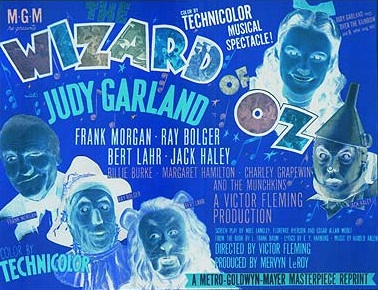 3. Change the ages and genders of everyone in my frp group goes to oz adventure. I had already changed the good/evil axis last time. So why not change the rest? In fact, we can change it up so much that the players might never guess I started with Oz at all. Which is great, I get a great world to riff from, but they think it's all my brilliant imagination. So The Great and Powerful Oz becomes the Dread Sorcerer Tally. She's only six years old, but she was born with such power she wiped out her home village while being born. She's been a terrible force ever since. A road made of violet mounds of flesh leads to the Towers of Tally, a city populated by her minions. Glindor, a handsome and powerful old witch, finds the characters soon after they reach this world. He professes to want to help them, and says that the way home can be found at the Towers of Tally, where the benevolent Empress Tally is sure to help them. He vanishes before the characters can question him further. Mombik, a six year old green (goblin?) boy also born with similar powers to Tally reaches out to the characters, and warns them against Tally and her forces. Mombik has a small force of flying lizard men that protect his castle from Tally.
  4. Take the Great Filter adventure idea and have someone make an opposite choice: What if humanity made a different choice about replicator nano-bots? We decided to keep them off of earth, in case anything bad might happen. But it's fine to bring them to someone else's world. They can help with terraforming. After some fixed number of generations, they stop making copies of themselves, and start making things more Earth like. But this planet has seen replicator swarms in it's past, and has defenses. First it takes out the player's starship, but they make it to the surface in a shuttle. Then the planet starts constructing a weapon to deal with the source of the replicator bots. Can the characters stop the weapon from attacking Earth? Can they reason with an intelligence that sees them as an invading species? And with good reason? Try this with your own ideas. Come up with anything fun and exciting?