
Roleplaying Game Design Excuses
First, I want to point out a fantastic podcast for writers, which you might already know about. It's called Writing Excuses. This year, the 10th season, is a master class on writing. WITH HOMEWORK! Second, I'm going to do the homework here, on my blog, but not the way the presenters intended. Instead, using my transmogrification ray, I'm going to make the homework not about writing a fiction piece, but about writing a roleplaying game adventure. Let's start! Class 1 is Seriously, Where Do You Get Your Ideas?
And the homework is: Write down five different story adventure ideas in 150 words or less. Generate these ideas from these five sources:

GM Excuses, Part 1
First, I want to point out a fantastic podcast for writers, which you might already know about. It's called Writing Excuses. This year, the 10th season, is a master class on writing. WITH HOMEWORK! Second, I'm going to do the homework here, on my blog, but not the way the presenters intended. Instead, using my transmogrification ray, I'm going to make the homework not about writing a fiction piece, but about writing a roleplaying game adventure. Let's start!
Class 1 is Seriously, Where Do You Get Your Ideas?
And the homework is: Write down five different story adventure ideas in 150 words or less. Generate these ideas from these five sources:
- From an interview or conversation you've had
- From research you've done (reading science news, military history, etc)
- From observation (go for a walk!)
- From a piece of media (watch a movie)
- From a piece of music (with or without lyrics)
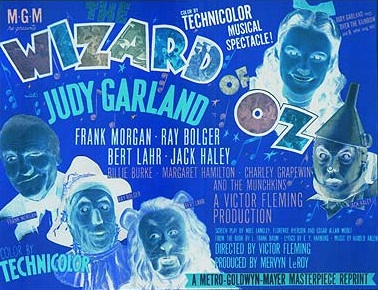 1. (I was talking with Alison, my wife and editor, and she said, "What about a Dark Oz?" Alison is a big fan of the Wizard of Oz, and we have a collection of first editions.) The player characters in a fantasy roleplaying game find themselves brought to the land of Oz, but not the Oz we know from the books and the movie. In this Oz, good and evil are reversed. Glinda still looks and talks like a good witch, but she stays young and beautiful by stealing the life force of others. Players have to contend with munchkin assassins, a man who seems made of tin, but is really an adamantine plated killing machine, and so on. The Wizard of Oz is a Lich. If they want to get home, they'll need help, and the green hag of the North is their only hope. How can they get to her with the forces of Oz on their tale?

2. (Online article: Habitable exoplanets are bad news for humanity) In a space exploration game, the PCs are astronauts on the first manned expedition to an exoplanet that unmanned probes have found to habitable. They have also found what appear to be ruins. When the PCs awake from deep sleep, they are greated with the news that the great filter struck Earth just after they left. A nanotech facility in India imploded and nano-biobot replicators were released that turned organic material into copies of themselves. The living world was drowned in a gray goo of nanobots. A few tiny space colonies survive in the solar system, but are not tenable long term. Can the PCs find a solution on the alien world that will give humanity a second chance? Or will they unleash the alien version of the great filter and destroy themselves?

3. (Went for a walk. The woman behind the bakery counter filled coffee, moved inventory around, and left. Like she couldn't see me.) The player characters trigger a trap that takes them outside normal life. They can move around, see and hear people, but no one can perceive them. While they struggle to find a way home, they find other beings are also out of phase with reality. These being are spying on the world, up to no good, and they notice the PCs have slipped into this voyeur side world. Can the PCs thwart the threat from this extra-dimensional source? And can they find their way home?

4. (Media: Drood by Dan Simmons) The player characters are occult investigators in Victorian England who meet a popular writer, Wilkie Collins, who claims that Charles Dickens has been possessed by an Egyptian demon. He says that Dickens is now a cannibal necromancer with a cult to carry out his mysterious and unholy wishes. While there are plenty of reasons to distrust Collins, the characters keep running into evidence that is consistent with his wild accusations. Are the thieves breaking into the characters' flats robbers or cultists? Can the characters be seen to be spouting lunatic libels about the most popular writer of his time? Can they restore Dickens to himself?
 5. (World Without Tears, by Lucinda Williams) A misery demon has come to town, and it doesn't mean to leave. Bruises fly in packs, searching for faces to lie upon. Scars hunt for skin to etch themselves into. Guns load themselves and find unstable hands to slip into. Occult investigator PCs need to stop these manifestations, and track them down to the source. Can the PCs find the demon before its manifestations cripple them? Can they find the means to banish it so it won't come back? What drew it here in the first place?
That was fun. Try it for your own game.
Happy Gaming!
PS, want to see what a real writer does with this homework assignment? Let's snoop on Christy Shorey. Here she is, coming up with cool story ideas. And you know, a cool story idea is often a cool adventure idea, so this snooping is Dread Unicorn approved!
How to Encourage Roleplaying
Bloggers Roundtable of DOOM!
Lex Starwalker asked a group of Cypher System bloggers to discuss various topics in roleplaying games. He asked James August Walls, Marc Plourde, Scott Robinson, and me, to all address the same roleplaying topics. Lex himself would chime in as well. For January, we all get to respond to the following question:
 "How would you, as GM, encourage roleplaying in a player who doesn't roleplay as much as you'd like, whether it's roleplaying with NPCs, being more descriptive in combat, or referring to themselves in the third person? If you want to take the roleplaying at your table to the next level, how do you get your players on board?
Before I start pontificating on my own ideas, I thought I'd share what my players said when I asked them the same question:
 Leslie said I think there are two things that made me feel comfortable testing the role playing waters - and here role playing means exactly that, playing the role of a character vs. playing the RPG game (which I've done for years).
First, having other players that do it really helps. This group made role playing the characters the norm. This created positive pressure without me feeling like "I had to" in order to enjoy the session. Its the best kind of peer pressure.
The GM did a great job of creating "space" at the table for characters to be played. It was rewarded not only socially, but mechanically in the game through incentives that were meaningful, but not critical to me being successful as a player.
 Matthew (who has just started GMing Numenera) said Learn what each player finds motivating for playing in character, and what takes them out of it. Then you can play to various strengths and avoid those detractors. Does a player find the grind of dungeon crawling boring? Does counting and calculating costs to perform actions boggle them and take them out of character? Does a player withdraw when their skillset isn't useful for the game? Add specific moments that are personal for each character, to bring someone back into character.
After my all of one day GMing, I've noticed that different characters are more interested in certain subplots than others, and I'll work to include those characters more into the subplots they like.
 James (who is also an Edge of the Empire GM) said Be an encouraging GM. That is, a good GM never says "no" or "you're wrong" to a player. If you want roleplaying and creativity from your players, you encourage them to make things up, and if those ideas aren't quite up to snuff, you roll your own creativity into it and help the player make their idea better... even if you're totally going to murder them all later anyway. :-)
I had my players posing as repair workers on a ship they were thinking about stealing. They learned that the ship had a backup control center hidden off the bridge, and they'd need to find and disable it before they could steal the ship. One player was having a hard time getting into the RP aspects as she searched for clues as to where it might be, and I kept encouraging her to just roleplay any idea she wanted for how she'd find the hidden location. Finally she went with "I see a big red line on the floor going down the hallway from the bridge into a particular room."
Now, obviously, this isn't the most "plausible" way to find a secret bridge, but I ran with it, and basically "covered" for the idea. "Ah yes," I said, "with your thermal goggles down, you see a red glow, highlighting a suspiciously warm series of deck plates leading to an otherwise innocuous looking cabin. It seems a large number of energy conduits are routing from the bridge to here."
Bottom line, there should be no bad ideas.
 Nicole (who also GMs from time to time) said If you hope for your players to rp, then rp your NPCs as well! Hardly a player can resist to answer in character, when an NPC addresses them in first-person speech, modified voice, mannerisms of shaking the head and an obvious lisp.
Writing a gaming blog is like GMing. Just listen to your players. The big stuff having been said, I'll just add a few ideas:
For me system matters. Highly crunchy rpgs with minimal support for storytelling engage the part of my brain that used to do computer programming all day. I find myself thinking about rules, tables, and numbers. I find it much easier to roleplay as a player and as a GM in more storytelling focused rpgs, such as Numenera. As someone whose played a lot of Dungeons and Dragons, I'm very happy to see games like 13th Age, Dungeon World, and 5E that support storytelling.
There is no one right way to play an RPG. You'll never get everyone to roleplay at the same level. Some players are less comfortable improving than others. Some may be worried that they will "do it wrong." Others just haven't come up with an idea they think is useful. Encourage, model, but don't force.
Happy gaming!
GM Intrustions Podcast Reviews The Sun Below: City on the Edge
"Just as good as an official product -- in some ways I think actually better." "Lots and lots of GM Intrusions..."
 Lex Starwalker reviews The Sun Below: City on the Edge in episode 73 of his awesome podcast GM Intrusions. The review starts at 31:39, but if you like the Cypher System, you'll want to listen to the whole podcast, which starts with an interview with Matt Forbeck about the Shotguns and Sorcery kickstarter, a new licensed Cypher System rpg.
Making it Matter in Numenera, Part III
Factions
 Previously we talked about making what happens in your game matter to your players by making things personal, and then we talked about letting your players tell you what's important and how to use the old reoccurring mastermind trick.
This time we'll talk about factions. Groups of people who have their own agendas and have plots and plans in motion.
Factions are useful in a lot of ways.
World Building and Continuity
For one thing factions help with building the world in your players minds and with continuity. If your players keep bumping into The University of Doors, The Order of Truth, the Convergence, and other factions, your version of the Ninth World comes alive with the give and take of organizations and movements bigger than the adventure you are running. It's a big world out there, and the PCs aren't the only movers and shakers in it.
Anchoring PCs to the world
Factions can create ties to player characters. If a glaive in your party has a backstory of being in an order of bodyguards to Aeon Priests, that player is just begging you to run adventures that include the Order of Truth. If not, you can invite them into such an organization after an impressive performance that aligns them to the order. Give them a badge or amulet that shows they belong.
En Garde
Factions are great adversaries. The party may have defeated one plot from the Convergence, but the Convergence can always be relied to up the ante next time. The organization itself become the reoccurring villain.
The Amber Papacy
The biggest faction in the Ninth World are the Aeon Priests and their Order of Truth. They can be a big help to the characters, and may act as patrons. But what of the ties between the Order of Truth and the Angulan Knights? How does that sit with a mutant character? Are there factions within the Order of Truth who support mutant rights? Factions within factions?
 For the Queen!
The Steadfast is full of monarchies, all of which contain factions. Are the PCs acting for the Queen of Navarene? One of her enemies?
Factions with Faces
Players won’t react strongly to abstract factions. A faction needs a face. Use NPCs that you roleplay to represent the faction. For examples, check out the People of Renown at the back of MCG’s The Ninth World Bestiary. What if Magistrix Nelgadara tries to recruit a player character into the Convergence? If the PC refuses to go along, will the Magistrix use him as a double agent? And what if you then throw the players into a Convergence scheme, such the Three Sanctums adventure from the core book?
Watch your players. If they react strongly to a faction, think of ways to bring it into your adventures. If the faction matters to them, then the adventure with that faction will matter to them.
Good gaming!
See Also:
- Making it Matter, Part I: Making it Personal.
- Making it Matter, Part II: Letting Your Players Tell You What’s Important and The Reoccurring Mastermind.
John WS Marvin interview on GM Intrusion
On the GM Intrusions podcast, I blab about GMing, books, writing teachers, cartography, The Sun Below: City on the Edge, and whatever else sailed through my head with Lex Starwalker.
Head on over to Starwalker Studios and have a listen.
Making it Matter in Numenera, Part II
In Making it Matter, last time we talked about making it personal. This time we cover letting your players tell you what matters and the old recurring mastermind trick.
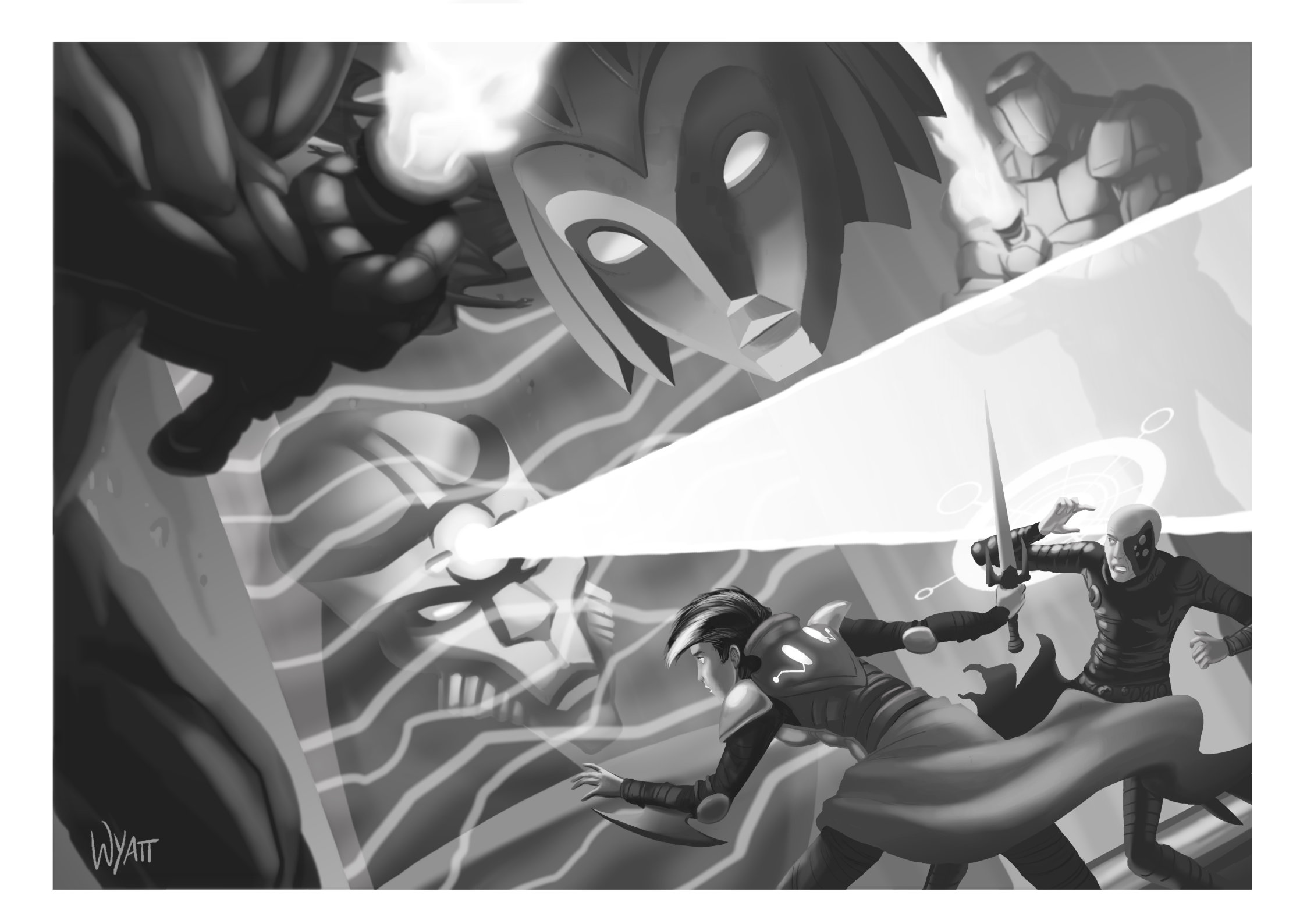
Let the players tell you what’s important. This is a bit of improvisational game mastering. Listen to your players. If you hear a lot of table chatter about a town, an NPC, or anything else in the game world, make it a key part of your games. If the players are always going on about Qi, make Qi the setting for a good number of your adventures. If the very thought of the Jaekels of Aras makes them ready to smash heads, use the animalistic pirates as villains every so often.
If you have a player who can’t get enough of their pet or a favorite NPC, use that it to tie the character to an adventure. The loyal Seski runs through the portal. The favorite innkeeper vanishes leaving clues of a involvement with in a plot about to engulf the PCs home base.
Remember, it's not wrong if the players fixate on something in your world you haven't planned on. It's awesome! They are telling you what they find engaging. Go with it.
The Reoccurring Mastermind who always gets away to start trouble again. Despite being a gaming cliche, it can still be effective. Over and over again the players confront the evil mastermind, and over and over again she gets away. In a world with teleportation cyphers this isn't hard.
Every time she gets away, the players might be just that much more invested in the game.Players can obsess on how to finally bring her down. The trick is to make the characters feel she won't get away forever. It may be impossible to stop her, but the player characters are used to doing the impossible!
One trick is to have the major threat be able to teleport only to their lair. This way, they can always get away, until the characters track them down. In The Sun Below: City on the Edge, the King of the Praithians has just such a power. When the characters finally confront him in his throne room, his teleportation power can't save him.
Or give it a twist -- the enemy who got away has grown to appreciate the player characters. Perhaps she will aid them in a future adventure, which could confuse the players wonderfully. Will they trust the healing cyphers that come from the woman who tried to stake them in front of the Iron Wind?
Or the old enemy could have run afoul of a new and bigger enemy. Their old nemesis begs for help from the characters. If they refuse, the new enemy is becomes stronger and more bold. If the accept, they have created an interesting alliance. Where will it lead?
See Also:
- Making it Matter, Part I: Making it Personal.
- Making it Matter, Part III: Factions, Using major organizations to make it matter to your player characters.
Last Two Days for 25% Off The Sun Below: City on the Edge
December 14th is the last day of the sale on The Sun Below: City on the Edge. Save shins while you can!
Making It Matter In Numenera, Part I
Numenera is a game of exploration set in a world where anything can happen. Anything. Places and people are incredibly weird. Creatures more so. Which makes for a wonderful sense of awe and wonder.
But some players may worry, why should I care about anything in the Ninth World? It’s so damned weird, how can I relate to it?
Some games, like The Strange or Star Wars: Age of Rebellion, come with a set of built in ties to the world. The player characters are part of an organization (The Estate, The Rebellion) and what’s important to the organization becomes important to the characters. Other RPGs, like Call of or Cthulhu, Trail of Cthulhu, or Hunter: The Vigil come with built in sets of adversaries all characters are expected to take on. If you join a Call of Cthulhu game, you know you’re going to be investigating and struggling against the machinations of Elder Gods.
However, in most RPGs, including Numenera, PCs are likely to be freelance operators.
The GM has a few tools to help player characters care about the world. This time I’ll talk about how to make it personal. Next time we’ll discuss how let the players tell you what’s important, the reoccurring mastermind, and factions with faces. They are not mutually exclusive.
Make it personal. This is the key in any kind of story. You know the cliché from all those movie trailers, This time it’s personal? While you don’t have to say that in the deep movie trailer voice (oh, go ahead, your players will love it), you do want to make the stakes personal.
Survival is damned personal. For example, in MCG’s The Devil’s Spine, at least one player is put at risk. If the group doesn’t succeed in the adventure, the player character dies. Or in Beyond All Worlds, another from MCG, the entire party is trapped in a Ninth World Hell. Escape or die, it’s that simple.
Family is personal. Kidnap a character’s mother. Cripple or murder a younger sibling. These plot hooks, when not overused (“What? My mother’s kidnapped for the third time?”), are great for making the players care about the outcome.
An appeal to the character’s morals is personal. The Sun Below: City on the Edge, includes the player characters witnessing the kidnapping of two young children, and an appeal from their grandmother to rescue them. When a PC tells themselves "I may be an opportunistic bastard at times, but I'll be damned if I'm going to let these children suffer," they care.
When PCs have a personal stake, they know why they are taking action. They are not just tourists.
See Also:
- Making it Matter, Part II: Letting Your Players Tell You What’s Important and The Reoccurring Mastermind.
- Making it Matter, Part III: Factions
25% Off on The Sun Below: City on the Edge!
Starting NOW, The Sun Below: City on the Edge is on SALE! 25% Off! Journey far below the surface of the Ninth World, and save shins while you do it!


Creature Preview: Pyronic Sentry
Here's a preview from The Sun Below: City on the Edge, available now on DriveThruRPG.com. While the creature hails from a Numenera adventure, it'd be right at home in The Strange as well.
PYRONIC SENTRY 5 (15)
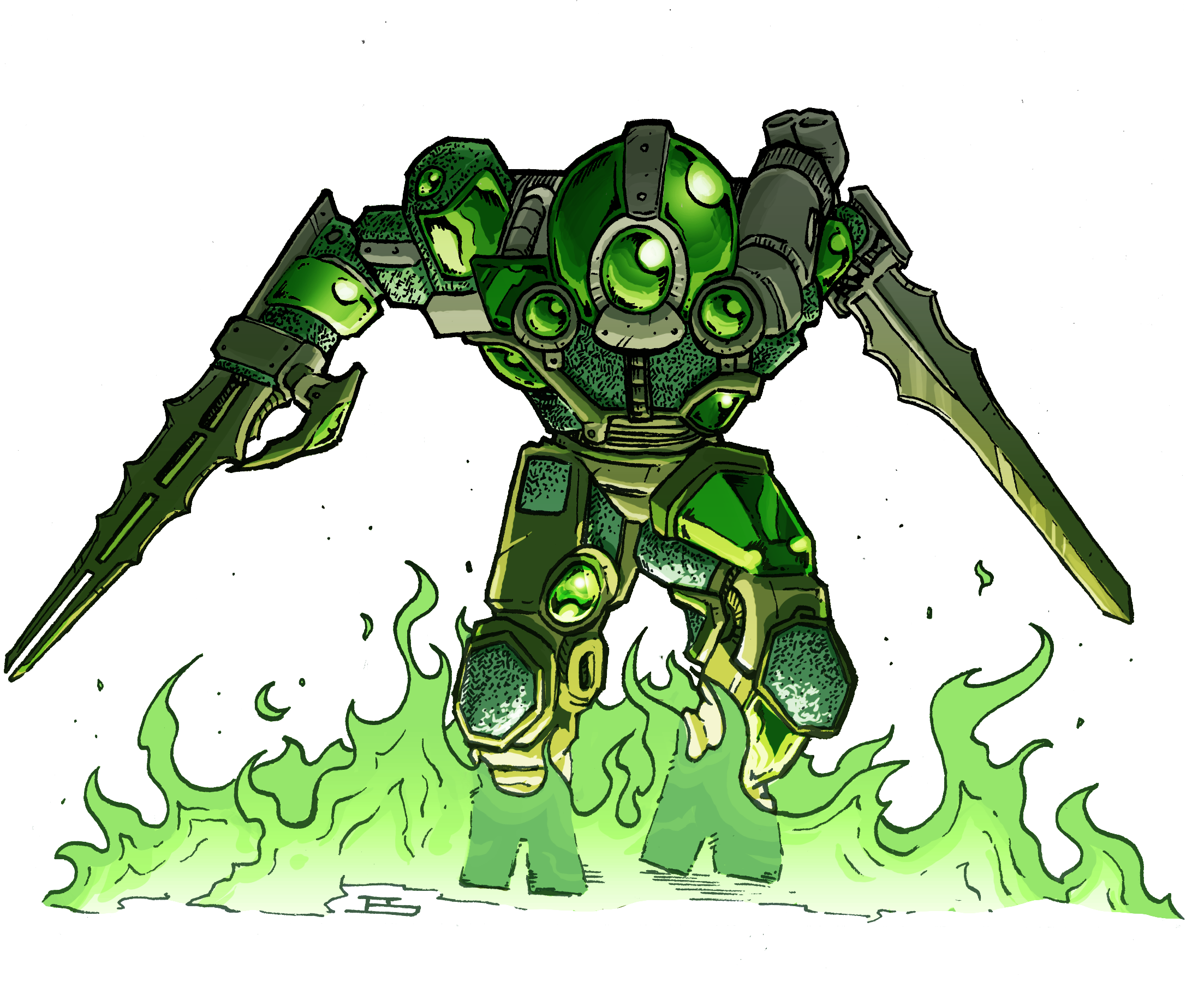
A pyronic sentry is a synthsteel- and glassteel-cladded automaton whose color changes to match the flames it finds itself in. It looks like a massive armored man with long blades for hands. Motive: Follow orders to guard a place or a thing. Environment: Pyronic sentries are usually found near fires, lava pits, or other hellishly hot environments. Damage Inflicted: 5 slashing and 5 heat. Armor: 3 (100 vs. heat) Modifications: While being almost invulnerable to heat, cold attacks gain an asset and ignore armor. In fact, if a pyronic sentry is removed from a fiery environment and placed in a temperature comfortable for a human, the automaton will become sluggish and have a one-level penalty on all its actions. Should one end up in a frigid environment, it would take a two-level penalty on all actions and take one point of damage a turn until it shattered into pieces. Combat: A pryonic sentry will follow its orders first, and worry about self-preservation second. Usually the orders do not require it to move to cooler locations. Interaction: Pryonic sentries do not speak, but are telepaths. Use: An arch-nano’s synthsteel tower rises out of a lava field. People say the arch-nano hasn’t been seen in years, but the pryonic sentry still stands guard, stopping good folk from taking valuable items from a woman who surely doesn’t need them anymore. Loot: Once cool, the remains of a pryonic sentry can be salvaged for 1d6 cyphers and possibly an oddity.
 The Pyronic Sentry's GM Intrusion is designed to challenge any tier party, from tier one to tier six. Stats are presented in three groups, separated by /s. The first stat is for tiers 1 and 2. The second for tiers 3 and 4. The last for tiers 5 and 6.
GM Intrusion: The pyronic sentry teleports an enemy who is at short range or closer to just in front of the automaton. The sentry then attacks as level 7/8/9 with both bladed hands, doing double damage and dazing the foe for one round if it hits. The foe will also take heat damage from the environment if the pyronic sentry is in its usual searing environs.
You teleport into the flames and feel the searing-hot bladed hands of the automaton spike deep into your body. Your flesh sizzles like meat on a spit.
Notice how the GM Intrusion flows from the creature's description? Bring on the searing heat! You can do the same with your own creatures, see Numenera GM Intrusions: Creatures.
Have fun, and there plenty more creatures to be found in The Sun Below: City on the Edge's bestiary!
Using Fronts in Numenera and The Strange
Ever notice when you’re reading a great book or watching a great movie or TV show how tense everything gets? You are on the edge of your seat because the characters you are rooting for are under tremendous stress and the stakes are sky-high. How do you bring that to your game?
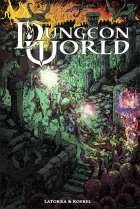 One trick I use is called “fronts,” a concept I stole from the dungeon bashing game called Dungeon World. Like Numenera and The Strange, Dungeon World is rules light and focuses on story telling. Its aim is to create great stories of heroic adventurers in a medieval fantasy setting without the rules getting in the way. Here’s an online version of the rules.
While the game mechanics aren’t at all like the cypher system, the use of fronts to create tension comes across beautifully. A front is a set of problems (called dangers) that will only get worse if the player characters don’t solve them. There is usually more than one danger, so while the PCs work on one, the others fester and grow worse. This forces the players to prioritize and make hard choices.
Throw in multiple fronts, each with their own dangers, and watch the PCs sweat!
Here’s an example I call Bantion, Village in Peril.
First I have to choose between a campaign front and an adventure front. A campaign front is a big, long running front. Say how The Convergence (Numenera) or Lotan (The Strange) are going to devastate nations.
 A shorter term front is an adventure front, and Bantion, Village in Peril is an adventure front. The problem with Bantion is that it is built into ancient ruins. Yes the ruins provide shelter and a source of cyphers or magic, but they also provide the dangers. The village could be in The Beyond or the hinterlands of Ardeyn. To keep things simple I’m going to use Numenera examples, but the basic story elements can work just as well in The Strange.
A front has two to three dangers, so I’ll choose two. Both involve mental powers and villagers acting strange, which will probably confuse the PCs. Yay!
For my first danger I’ll choose a cursed place that wants brains. The Chamber of Unity, deep in the ruins below Bantion, has recently been activated. It seeks to unify people into a hive mind. To do that, it wants everyone’s brains to be taken out and placed in a big soup of nutrients and nanites. It uses mental powers to force people to do its bidding. Those people become angry and emotional.
The second danger will be a nano seeking mental powers. Kavlon the Seeker has found a way to build his mental powers by injecting himself with nanites grown in brainstems of psychic parasites. First he’ll create hosts out of villagers, and then after the parasite kills off the hosts, he’ll harvest the brainstems. A win-win! To create a contrast, the hosts will lose all affect and become emotionless.
OK, we have two dangers, now what? For each danger we come up with 1 – 3 grim portents. A grim portent is something bad that happens if PCs don’t defeat the danger. This way, if the PCs are out fighting Kavlon, the Chamber of Unity will be ticking off its grim portents.
Here are the grim portents for the Chamber of Unity: 1. Villagers vanish (they sleepwalk to the chamber) 2. Scapegoating: Paranoid villagers turn on one another, guards arrest many “troublemakers” (guards are under the influence of the Chamber and deliver the prisoners there) 3. People rounded up en-mass and driven to the chamber
Besides grim portents, each danger has an impending doom that happens if all the portents get ticked off because the PCs didn’t defeat the danger.
For the Chamber of Unity, the impending doom is that the entire village will be emptied into the brain soup. Yay!
And for Kalvon, the grim portents are: 1. Villagers become hosts to the parasites and become affectless 2. Hosts vanish to be replaced by new hosts 3. Mass grave of dead hosts discovered
And the doom? Kalvon’s mental powers become such that he makes all villagers thralls or experimental subjects. Or both. Yay!
How do you GM this? Pick one or both of the dangers and set off the first grim portent. Then just follow the players. While one danger gets worked on, the other ticks off another grim portent.
Have fun.
(For those following along with the Dungeon World rules, the Chamber of Unity is a Cursed Place, a Shadowland. The Doom is Destruction. Kalvon is an Arcane Enemy, a Power Mad Wizard seeking magical power. His doom is Tyranny.)
The Sun Below: City on the Edge – Review on Origins of a Dark God
John-Matthew DeFoggi's review of The Sun Below: City on the Edge: "Well worth the price. The flexibility you get from this supplement is staggering. The setting is weird and interesting, the adventure is flexible, and the creatures are inventive. There is enough material here to continue to bring your characters to the world below even after the main adventure has been completed."
Living for Crits Reviews The Sun Below: City on the Edge
James August Walls has reviewed The Sun Below: City on the Edge and is blogging about GMing the game in his amazing game blog Living for Crits. "Let me say now, very clearly, that this... is... BRILLIANT!"
"The adventure shares a similar layout as the Numenera Corebook, with callouts and pertinent information listed along the edges of the main text, which makes running this adventure very easy. Frankly, if I didn't know already that this was a third-party licensee, I wouldn't be able to tell the difference."
Read the whole review, and an account of his first session playing the adventure, here.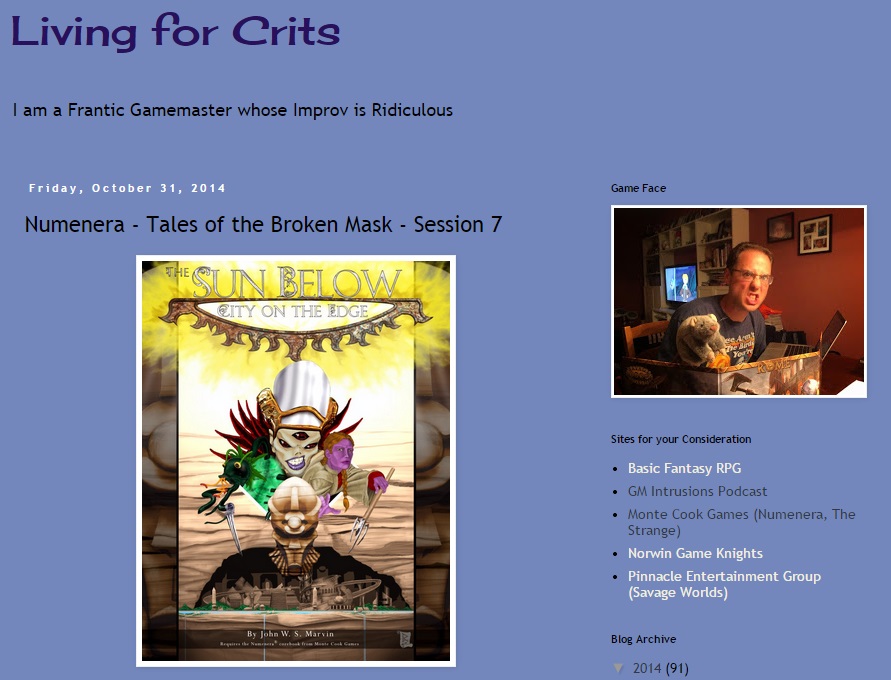
Hipster PDA + (Numenera or The Strange) == Awesome Sauce
 One of my favorite organizing tools it the Hipster PDA, also known as a stack of index cards with a paper clip. Index cards are the perfect tool for keeping things going while GMing Numenera or The Strange.
The idea is while you are playing, you are shuffling a stack of index cards, and you pull one and add something from the card into the current scene.
One of my favorite organizing tools it the Hipster PDA, also known as a stack of index cards with a paper clip. Index cards are the perfect tool for keeping things going while GMing Numenera or The Strange.
The idea is while you are playing, you are shuffling a stack of index cards, and you pull one and add something from the card into the current scene.
Step 1: Make a card for every PC. Write down the Descriptor, Type, and Focus. Add the suggested GM Intrusion for the focus. Add any powers and artifacts the player likes to use all the time. For example, "Sneaking, Bounding Boots." Add anything from the characters background that is fun to bring into play, like "remembers a past life experience from when she was Lady Ash's lover and they explored space together."
Step 2: Make cards that say Smell/Taste, Hear, Feel. I don't bother with See, because I'm telling them what they see all the time, but you might want to throw that in too. I put smell and taste on the same card, as taste is great, but it doesn't always come into play.
Step 3: Make a Reoccurring Dealies card. Put down NPCs, creatures, and events that your players have latched onto. These are things you've used in the past that intrigued the players. If it helps, add a note of how the concept got into your campaign For example "purring invisible lion (GMI for Opal: Commands Mental Powers)", and "Lebby the Pan-Dimensional girl (NPC from The Sun Below: City on the Edge)."
Step 4: Shuffle the Deck
Step 5: Play
Now, while you are playing, keep pulling a card and finding something on it to add to the current scene.
If you pull a character card and they haven't had a GM Intrusion this session, give them one. Otherwise, look at what's on the card. If you pull the character with Bounding Boots, you could say "They way forward is blocked, but up on a ledge you can see a ladder that's been pulled up. The ceramosteel wall looks almost impossible to climb. Anyone have a way up?"
If up pull the Smell/Taste card, you might say "There's an oily, minerally smell wafting from the pit."
When you use something from the Reoccurring Dealies card, see if your players still care about it. If they don't cross it off. If they like the purring invisible lion, keep using it.
Keep a note of fun things that come up in the current game that your players might like to see again, and add them to the reoccurring list.
I stole this idea from Ash Law's talk on 13th Age Adventure Design and modified it for Cypher System games, but you can use this in most any RPG. Ash's talk on index cards starts at 27:25.
See Also: Spotlight Cards.
The Sun Below: City on the Edge, Available Now!
At long last, the PDF version of The Sun Below: City on the Edge, is available now at DriveThruRPG.com.
What if I told you there is a world below this one? A world with its own sun? Full of strange peoples, amazing discoveries, and unspeakable horror? Finding your way down to this world is almost impossible.Finding a way back up, well, that’s worse.
The Sun Below: City on the Edge, an epic adventure for Numenera that takes place deep below the surface of the Ninth World. What starts as an investigation into the aftermath of the Iron Wind soon turns to kiddnapping, a strange journey to an even stranger city.
Who will the player characters trust? Will they escape The City on the Edge?
An adventure for any tier party that your players will never forget.

Numenera: Greatest Internet Hits
 On to the Greatest Datasphere, er, Internet, Hits for Numenera. If I missed a favorite of yours, let me know.
(edited April 10th, 2015)
1. Companions in Numenera. The MCG blog is always worth reading, but this puppy by Monte Cook I use all the time. I have it favorited on all three of my browsers. An elegant way to make your loyal seskii, zombie, or zombie seskii useful without adding a bunch of complicated die rolls.
2. How Story Gives Life to Mechanics, by Bruce Cordell. As a GM and game designer, I reread this every so often to keep my head in the game. Highly recommended.
3. Using Points for Defense, by Monte Cook. I've had a a player at my table say "No way am I going to spend hit points? That's crazy!" This post explains the concept clearly and helps me explain it to others.
4. Optional Rule: Effort for NPCs, by Monte Cook. A new one and one I tried just last night. I used it to help wrap up a combat where the players were defeating a group of chirogs. I had already used a GM intrusion in the combat, so this was perfect. I used Method 2: Based on Health, which made the chirogs both more dangerous and easier to finish off.
5. Quick and Dirty Adversaries, by Ryan Chaddock. It's easy to say "Level 5 thingy" but this post shows an easy way to make a creature memorable. I often start with an image or mini and go from there.
6. How to Play Numenera, the best game play video ever!
7. Transmissions from the Ninth World Podcast. This two time Ennie nominee is not to be missed. Highly informative.
8. I'm Vaux, an Informed Jack who Tells Tales. This is my Signal. Oh yeah. Ennie winner The Signal is a transmission from the Ninth World. This must be a lot of work but I wish there were 28 of these every day. The signal has gone quiet, but word in the datasphere is it will return.
9. The GM Intrusions Podcast. This since morphed into the very nice system neutral Game Master's Journey. It still covers Numenera among other games, and the old podcasts are in in archive. Check it out!
And of course there are vibrant Numenera communities on Facebook, G+, the Ninth World Hub, and The Ninth World.
See you in the datasphere...
Whine: You know that cool layout Monte Cook Games uses in their products? I heard Monte wonder on Lex Starwalker's GM Intrusions why other people don't copy it from him? After all, he copied it from Dorling Kindersley travel books. Well, I copied it, and it's hard to keep all the art, internal sidebars, the outer sidebar, and the text all together. Add a paragraph and a sidebar topic needs to move to the next page. Blah, blah, whine, blah.
But it does look cool and make it easy on the GM. The Sun Below: City on the Edge will be wrangled into shipping shape soon. I swear! (Edit: Available now!)
New to Numenera III: GMing Action Scenes
Here are two techniques I find helpful when I'm GMing Numenera action scenes. Numenera is not a game of all combat, all the time, but the Ninth World has plenty of action.
1: GM Intrusion
I always look for a way to add a GM Intrusion. In fact, I often start the combat out with one. This grabs the players attention and usually puts one player character at risk. Most creatures come with GM Intrusion suggestions right there in their descriptions.
For example, if I'm using a travonis ul, I can see the core book has a very nice GM Intrusion: a character is overwhelmed by a flurry of tendrils and becomes lost under the massive creature. Each round the character automatically takes 10 points of damage as they are crushed into the drit. A Might task will free them. I'm pretty sure I've got that player's attention.
It's so easy to create your own creatures in Numenera, and here are some ideas for designing GM Intrusions tailored to your own creatures.
Other GM Intrusions may occur to you. An explosive cypher may kick back bits of twisted metal from a ruin as shrapnel. The floor can cave in. Another travonis  ul can show up. Gravity could reverse. All of the above!
The core book has lots of great advice on GM Intrusions. Want more? I recommend Taking the Narrative by the Tail: GM Intrusions and Special Effects. It's 99 cents, so go ahead and splurge.
2: End With a Bang
If combat is looking to go longer than about 3 rounds or so (I look around the table and look for flagging interest), I change things up to End With a Bang.
Here's what I say about nasty opponents when I want the combat to finish soon:
The big beast with mouths on its claws roars and charges, disregarding its own safety in an attempt to finish you off. Its Speed defense drops one level, but if it hits you, you're going to be hit hard.
Then I add the creatures level to it's damage. I wing it if adding the level feels too hard or too easy.
For minor creatures, like minions or packs of lesser creatures, I say:
The little squirmy guys back away from the big beast, seemingly shaken by its mad rage. Their Speed defense drops one level, and they won't hit any harder than before.
The PCs will hit more often, and really want to spend effort to avoid the "boss monster's" attacks. The little guys might flee once the big guy goes down.
Enjoy! I'm sure you'll find your own techniques. Like anything else, the best way to learn to be a great Numenera GM is to do it.
PS: Most combats in Numenera are over before they get old, so you may never need my End With a Bang idea.
However, I'm the kind of GM who really likes to challenge my players, so I throw terrible foes at them. They say they can tell if I'm running other people's adventures because the creature levels are "so low." Usually with the right cyphers, effort, and die rolls, my players find a way.
Sometimes, they don't, and I want to end with a bang. I've explored stealing mechanics from 13th Age to use the Escalation Die and Escalating the creatures, but in reality, I don't do that. It says something about the simplicity of the Cypher System that a very simple rule from the d20 world feels overly complicated when you use it in Numenera.
My End With a Bang is inspired by 13th Age's Escalation die, but feels more Numeneraish.
New to Numenera II, What's Your Second Book?
I am an exiled Jack who Consorts With the Dead.
I talked about what you need to play Numenera in my last post.
Before I talk about what you might want to get next, check out this wonderful new video on How to Play Numenera from Monte Cook Games.
Now that you know what you need to play, you may notice all these other books and gaming aids available. What do you need next?
 I recommend Character Options, and you can get a free preview here. This book opens up the field for players with over a hundred new options to choose from.
In Numenera, you create your character by filling in the blanks of:
I am an <ADJECTIVE> <NOUN> who <VERBS>.
The core book gives players plenty of choices, and Character Options expands the list considerably. It includes over 40 new adjectives and dozens of new verbs. New adjectives (called descriptors) include Exiled, Guarded, and Weird. New verbs (foci) include Consorts With the Dead, Fights Dirty, and Moves Like a Cat.
There are no new nouns (types)--you still use the three from the core book: glaives (warriors), nanos (nano-tech wizards), and jacks (jacks of all trades). But now you can be a Guarded Jack who Fights Dirty.
When a player spends experience points, they can gain powers based on their type. New fighting moves for glaives in Character Options include Danger Sense and Daring Escape. New esoteries (spells) for nanos include Force Field and Wormhole. Additions to ticks of the trade for jacks include Erase Memories and Uncanny Luck.
All these new powers fit perfectly with those found in the core book. Players can mix and match from both books.
There are also rules that allow characters to switch descriptors and foci, and play beyond sixth-tier.
That's my recommendation, if you get a second Numenera book, get Character Options. If you can, I'd suggest having a copy before you make new characters at the start of your campaign. My players love it.
OK, now back to editing The Sun Below: City on the Edge. It's getting close, I promises my preciouses!
Next: GMing Numenera Action Scenes.
New to Numenera? What do you need?

Maybe you've heard about this Numenera game, roleplaying 1 billion years in the future, but where do you start, what do you need?
First of all, Numenera is a roleplaying game. You need a few friends. One of you will be the Games Master (GM), the others will be the players. I suggest at least two, preferable three players. I like five players, but some people prefer less.
OK, you have your friends, what else? The GM needs the core book. The players need dice (they can share). What kind of dice? d100 (percentile dice), d20 (twenty sided dice) and d6 (six siders, aka normal dice). If you're experienced in other roleplaying games, you probably have the dice. Your local hobby shop probably has lots of dice (and the core book as well), or if you don't have a good game store near you, the internet is your friend.
You can download free character sheets here.
If you are an experienced GM, most of the published adventures are good for beginning player characters. If you're already good at improvising, read through the four adventures in the back of the core book just to get an idea of the system. If you want an easy introduction to GMing Numenera, start with The Beale of Boregal in the core book. It was written to teach the rules as you go.
That's it. Go have fun.
In the next post, I talk about what's the one book I recommend you get next?
