
Who Wants a Cypher-Kiss?
Good News! CypherCaster issue 5 is Out!
Cypher Caster Magazine, issue 5. With ton of great content, including and interview with Bruce R. Cordell, Shanna Germain, and Dennis Detwiller.
Plus an instant adventure by yours truly, Kiss of Death! Kiss of Death, a Numenera adventure, which takes place in Branu's Kiss, a watery world floating in space found in Into the Night from Monte Cook Games.
You see Numenera fans, I haven't forgotten you.
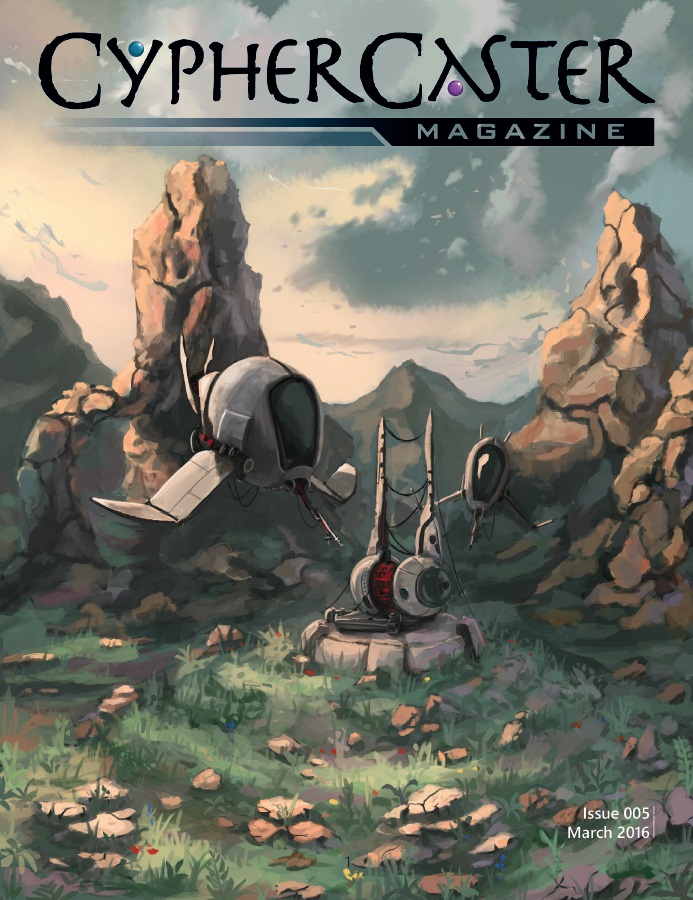
Plus an article on cypher limits by Marc Plourde, another Into the Night instant adventure, this one by James Walls, and a Strange recursion by Rustin Coones & Scott Robinson.
Check it out at DriveThruRPG.
Spotlight Cards
 Index cards are a GM's best friend. Remember the Hipster PDA?
I hate forgetting to give each player time in the spotlight. Therefore, I love having an index card for each player. I shuffle them before the game, and then flip the deck so I can see the top PC card.
Index cards are a GM's best friend. Remember the Hipster PDA?
I hate forgetting to give each player time in the spotlight. Therefore, I love having an index card for each player. I shuffle them before the game, and then flip the deck so I can see the top PC card.
On the left I put the information from the game system I need to be able to improv, things from the player's character sheet. I don't need numbers, just the background bits that help in roleplaying.
On the right side of the card I put the stuff the player loves to do in game with this PC. Play with his pet bear, drink at her regular watering hole, flirt with their favorite NPC, and so on.
I finish the left side with a question to myself. Has this PC gotten the spotlight yet? If not, I give them the spotlight ASAP, then put this card on the bottom of the deck and make sure the next PC gets a spotlight moment.
What's a spotlight moment? When you let the PC shine, make them the star of a scene. If they have a favorite action, like pick pocketing, flirting, or flying, I let them go for it. Action scene or pure roleplay, I make sure the character gets center stage.
Here's some examples. You can probably improve on these because no one knows your players better than you.
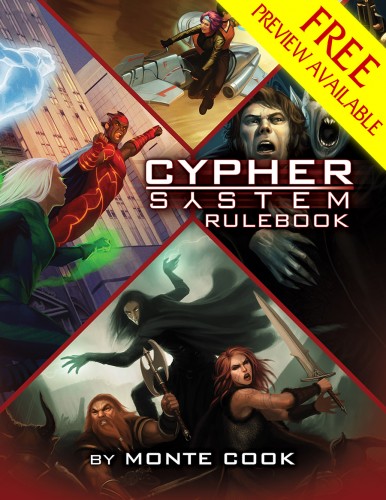 This is the Cypher System card. I have another question to myself: Has the PC had a GMI (Game Master Intrusion) yet? I'm talking a GM Intrustion that gives them experience points. The card helps me remember. GM Instrusions are fun, and players love the XP that comes with them.

 This is the 13th Age card. When I'm working on a spotlight moment, I need the PC's One Unique Thing, their Icon Relationships, and their Backgrounds. Under the notes I might include favorite icon spirits and agents from past icon relationship rolls.

 Here's the 5E card. What's important for spotlighting a 5E character might include the PC's background, trait, ideal, bond, and flaw.

 Here's a generic GUMSHOE card. Drive and Occupation give me a handle for spotlight scenes.
I thought about doing a card for each GUMSHOE game, but realistically, I'd do them as needed for the games I'm running. On the right side I'd definitely list any sources of stability if they are used in this system, species for Ashen Stars, and so on...

It's easy enough to make your own for your favorite game system. They help me, maybe they'll help you.
A Plague of Ones, Part II The Bad and the Ugly
Now it Gets Bad.
Now it Gets Ugly.
 In Numenera, The Strange, and all other Cypher System games, the rule is: roll a one, the GM gets a "free" GM Intrusion with no experience point award. Ones are supposed to happen. 5% of the time.
But if you game enough, you'll be sure to run into the dreaded plague of ones. So many ones, what's a GM to do? A lot depends on what's going on in an encounter.
Last time we talked about the good side, when everyone is still having fun, despite the plague of ones. Now let's look at the harder problem, where the ones are wrecking your game.
 A Plague of Ones in an Encounter that is No Longer Interesting
Combat
The cypher system is made for fast, exciting combat. But if the PCs just keep missing and are running out of pool points, what do you do? (For a more general solution, see End With a Bang.)
Adding typical combat intrusions (creature/artifact/environment) will slow down combat. But there's yet another one sitting there on the table, taunting you. We're assuming the combat is not spiraling down the TPK drain (see below), so why not try a different kind of intrusion?
If the foes flee, combat ends, and you can move to a more interesting scene. Next time the NPCs will be better prepared for the PCs (+1 level for attacks? Return in greater numbers? Find a higher level friend?). An iron door or a force screen could stop the party from pursuing and prolonging the pain. The foes might jump through a secret door and lock it behind them. Perhaps the foes can wave some treasure, say a cypher or artifact, at the PCs as they vanish. So long, suckers!
Or, give a typical combat intrusion a silver lining that helps bring the dragging combat to a close. The artifact sword slipped out of the PC's hand and flew across the room, but it also cleaved through a statue revealing hidden cyphers (that are perfect for ending the fight) within. A creature careens into the PC, knocking them both across the floor, but put itself in a vulnerable position for a different PC. Thanks Nojo! And sorry about the concussion...
Environmental (climbing, crafting, and so on...)
It's not any fun anymore, so end it. Maybe give some damage for doing something dangerous like climbing, then narrate how the rest of the party got the PC over the wall. The item in the workshop broke, the PC needs new parts, so try again another session. End it and jump to an exciting scene. The workshop's doors fly off their hinges and in comes a hulking steam powered automaton!
Social
Same thing, wrap it up and move on. Give the PC one last insult, and show the party the door. If this is a critical plot point, an NPC can whisper to a different PC to arrange a private meeting later. "The king will never listen to you now, but the prisoners in the vineyards still need you. Meet me in the park at midnight..."
A Plague of Ones in an Encounter that Threatens to Ruin the Session
Oh noes. Too many sessions like this can kill a campaign. At least you can blame the dice.
Combat
 All these ones are pointing in one direction: TPK. Move to capture or let the PCs retreat. An intrusion could set off a trap that imprisons the PC, followed by an ultimatum for a party surrender. The PC could be mind controlled. A larger trap is sprung, and the way out is blocked while more foes join in the battle. "Surrender!"
 Or nudge the party into fleeing. Describe how the tide has turned against them, and the foes are trying to encircle the PCs. A friendly NPC could try and hold off the foes. "Fly, you fools!" Drop the PC down the damage track and just let them know "You still have time to flee."
Dropping a PC down the damage track encourages them to flee as it makes the player feel vulnerable.
Environmental (climbing, crafting, and so on...)
It's hard to see how this kind of failure would kill a session, but if the players keep hitting their head on the wall, help them move on. Leave the scene and narrate to something fun. The wall collapsed, the workshop blew up, and a week later the party reaches the baron's tower (or whatever the next fun scene is).
Social
It's sad their social strategies have failed, but they did. So move on and narrate them to something exciting. If you succeed here at the tower, those back home might change their minds. But first things first. Like those giant clockwork worms heading your way. What do you do?
Move On
You see a common thread in all of these suggestions? If it's not fun, cut the scene and move on. Sometimes groups will get stuck trying the same thing over and over again, waiting for the dice to save them. Help the players move on, and everyone will benefit.
It's a game. It's supposed to be fun. So when it's not, move on.
A Plague of Ones, Part I
Too many Ones in a Cypher System Game? -- It's All Good
In Numenera, The Strange, and all other Cypher System games, the rule is: roll a one, and the GM gets a "free" GM Intrusion with no experience point award. Ones are supposed to happen. 5% of the time.
But if you game enough, you'll be sure to run into the dreaded plague of ones. So many ones, what's a GM to do? A lot depends on what's going on in an encounter.
Subjectively, more ones than is normal feels like a lot more. If the group's been rolling 10% ones instead of 5%, they're sure to notice. And claim that 25% of their rolls are ones! And since rpgs are entertainment, it's the perception that counts.
A Plague of Ones in a Fun Encounter
This is the easy case. Everyone's having a good time. People are laughing at all the ones showing up. (For when the Fun-O-Meter flatlines, see Part II: The Bad and the Ugly). The biggest problem is coming up with new and entertaining GM Intrusions.
Go with, or against, the theme of the game. Numenera intrusions should be high-weird. Intrusions in The Strange often work with the theme of the recursion. Playing a horror game? More horror!
Combat
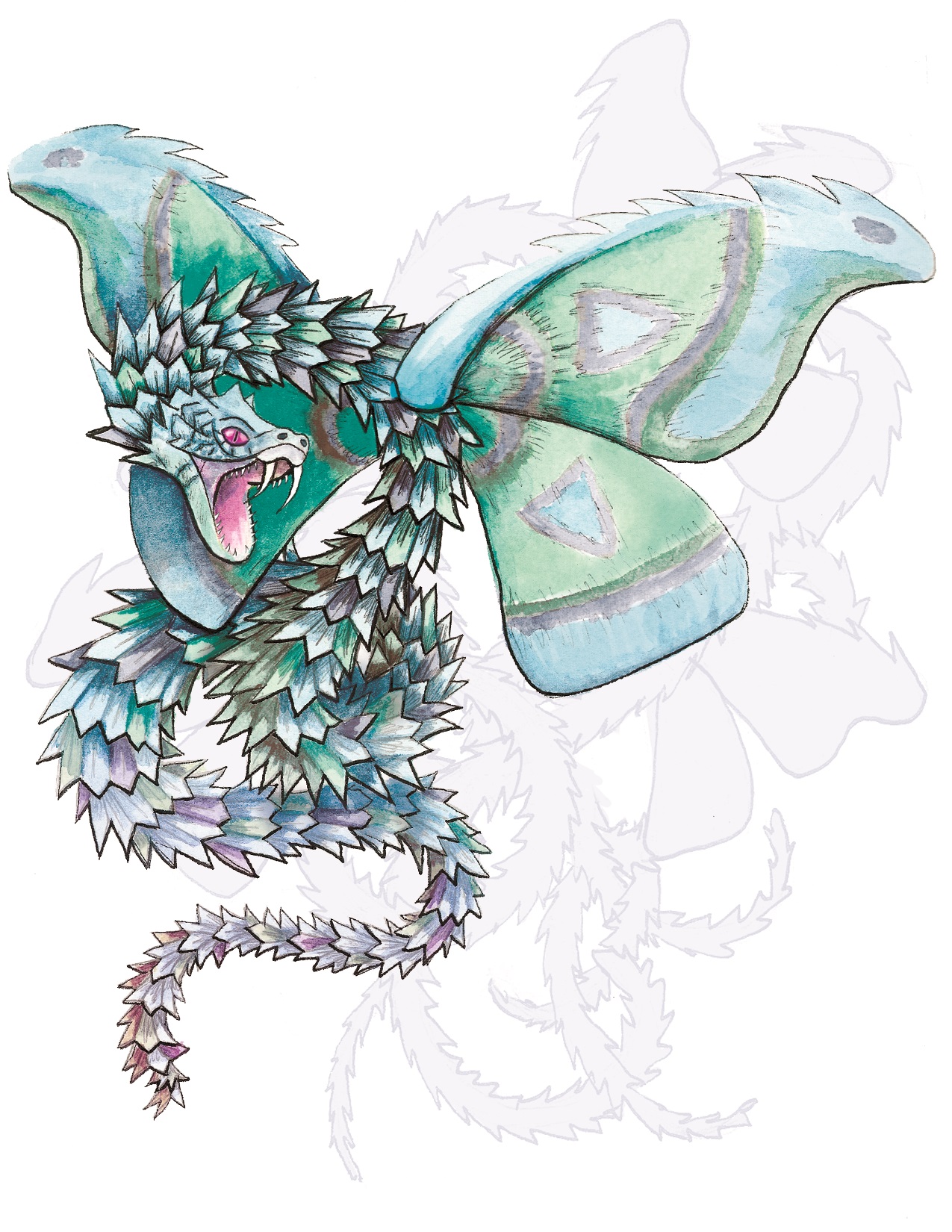 OMG, another GM Intrusion, what can I do? Try another kind of GM Intrusion. You've been using creature intrusions? Great, now try a cypher or artifact intrusion. Or have the floor fall in, gravity reverse, objects turn into bubbles. Another foe shows up. A dead foe gets back up, always a table-pleaser. Or have the PC spring a trap.
There's nothing wrong with going back to creature intrusions, just sprinkle some other types in between.
Environmental (climbing, crafting, and so on...)
The poor nano has rolled three ones in a row trying to climb that wall? OK, falling is good to start with, but then think outside the box. Itchy insects have a hive right where the nano puts his hand. A passerby spots them, and wants to talk. The PC gets to the top, but falls over the other side. At least they're with the party now.
Crafting? They made something, but not what they set out to make. Perhaps it will work as intended, but have side effects, like being loud when the PCs want to be stealthy, or dripping oil on the Prince's favorite carpet, and so on.
Social
 Perhaps you started with a social faux pas or two, now what? The PC is already looking like an idiot, move on. The PC could convince an NPC to do something, but not at all what the character intended. Communication breakdown! Has the slip of the tongue implied a marriage proposal? Was the party trying to hide their true motives? Oops, they just gave them away.
Next Time
Next time we'll look at the harder problem when people are rolling ones and the players are not having fun. Attention is flagging or maybe even people are no longer willing to engage. What will you do?
Cypher System Creature: Child of Golthnor
The Child of Golthnor is found in The Sun Below: Sleeping Lady. For more on this horror, and it's parents, see the adventure. Without the adventure, just gloss over it's parentage.
 This eldritch horror is designed as an extreme challenge to any tier party, from tier one to tier six. Need a transdimensional boss fight? The child is here to help. Stats are presented in three groups, separated by /s. The first stat is for tiers 1 and 2. The second for tiers 3 and 4. The last for tiers 5 and 6.
Child of Golthnor 6/8/10 (18/24/30)
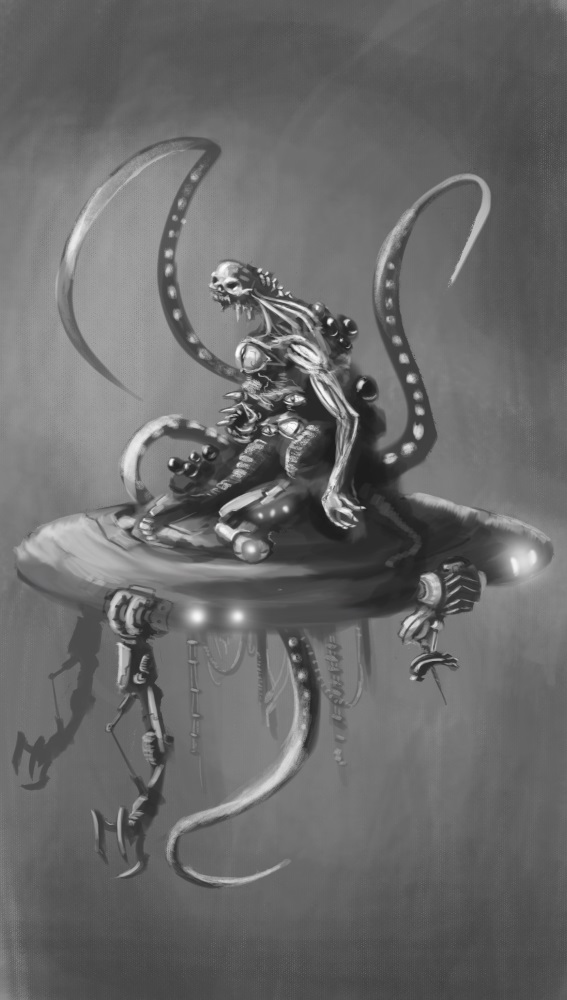
This transdimensional child of a synite and Golthnor is a sanity-blasting monstrosity. It usually stays invisible, but once it attacks, it shows its true form: a 16 foot (5 m) synite saucer covered in weeping red eyes and lipless drooling mouths. Atop the saucer is a writhing mass of purple trunks and tendrils, some ending in eyes, others in fanged maws.
The first Child of Golthnor the PCs meet has a lumpy humanoid face that stares out in horror from this mass of corruption, whispering, “Help me,” in a dozen languages, including Truth. Perhaps this is a face the PCs have met before in happier circumstances.
Motive: Open the door between worlds and let Golthnor in. Seek out esoteries that deal with transdimensional entities. Eat mass quantities of fresh meat.
Environment: Any, especially near a portal to other dimensions.
Health: 18/30/42
Damage Inflicted: 6/8/10
Armor: 3/10/25 vs. normal physical weapons; 1/3/6 vs. numenera weapons and esoteries.
Movement: Short (flying)
Modifications: Speed defense 8/10/10 when invisible; 5/7/9 when visible. Those in thrall to Golthnor are immune to the Child’s sanity blasting attacks.
Combat: When invisible, approaching within 100 feet (30 m) causes an Intellect attack that does 3/4/5 points of Intellect damage if not resisted. To physically attack, the Child must become visible.
When visible, looking at it the first time causes an Intellect attack that does 6/12/18 points of Intellect damage.
A Child of Golthnor attacks twice per round, with a bite and a constricting trunk.
Bite: 7/9/11 points of damage
Twisted jaws clamp down on your flesh and grind back and forth. Will the pain ever stop?
Trunk: 11/15/19 points of damage from crushing and blood drain. Target must escape the next round to avoid automatic crushing and blood drain.
You can’t breath and it feels like your ribcage is about to pop. Dozens of mouths burrow into your wounds and suck. Your head spins as your blood is drained. The trunk holds on, obviously unsated.
Interaction: Will only assist those in thrall to Golthnor.
Use: This creature is great for defending a portal that Golthnor is trying to open.
Loot: The saucer yields 1d6 squirming bio-mechanical cyphers.
GM Intrusion: A mass of tendrils reaches for the face of someone in immediate range, level 8/10/10. If it hits, it forces the target’s mouth open, and a wriggling mass of pus with worm-like appendages slides down the victim’s throat. Move down one step on the damage track and gain the Gibbering descriptor until Golthnor is defeated (use Mad if you don't have The Sun Below: Sleeping Lady).
Options: In a Cypher System horror game where you are using shock levels, the Child of Golthnor counts as mind-bending. Any encounter that ends up with a Child of Golthnor is a great excuse for using Horror Mode.
In a recursion of The Strange, a Child of Golthnor may be a mad-science child of a robot and a planetovore.
More: Follow the link for more information on The Sun Below: Sleeping Lady.
Fail Forward, Cypher System Style
What is a Fail Forward?
 Here's a callout from my upcoming Numenera adventure, The Sun Below: Sleeping Lady:
When you fail forward, a bad die roll means things go wrong instead of the PC isn’t good enough. This way the game doesn’t stall because a player rolled a 2, but there is a consequence.
So What Went Wrong?
Anything that complicates the situation. If you are running out of time, you might have succeeded, but you lost quite a bit of time doing so. You opened the locked door, but the alarm went off. You found the clue, but the clue implicates you in the crime. And so on.
Note: You use Fail Forward in non-combat situations. Combat is a string of successes and failures. Outside of combat, often a single bad roll is all it takes to block progress.
Who Decides?
The GM can make up the consequence, or, better yet, she can ask the player.
"You're a hero, you obviously didn't miss your stealth roll because you're not stealthy. That's just not what your character does. So what went wrong?"
Then you run with the player's complication and let the story continue.
Isn't that like a GM Intrusion?
Yes. But instead of getting two xp, one to keep, one to give away, you get a success. You find the secret door. You open the lock. You find your way to your goal. The story continues.
As the GM, you can choose. Give them a a GM Intrusion, let them fail, or Fail Forward. A GM Intrusion is great fun in combat and is key to giving your players experience. If failure is interesting in and of itself, you might want to let it stand. When failure bogs the game down, that's the perfect time to Fail Forward.
Doing Both
If a player missed a roll and you give them both a success and xp, make sure the consequences are dire. If your players have regularly been spending xp to reject GM Intrusions, this makes their decision that much harder.
"You can't open the door, unless you wouldn't mind setting off the trap?" You wave two xp cards and smile at the player.
"It wasn't easy, but you open the door. Unfortunalty, you trigger the trap and fall down into the pit with the hungry creature. Speaking of creatures, the rest of you see a swarm of nasty ones leaping over the pit right at you. Everyone roll for initiative."
Tell Me More!
No. But listen to this 13th Age podcast from Iconic Podcast on how to Fail Forward in 13th Age. It's the same idea in any game.
Horror on the Cypher System Express
I've always enjoyed a great eldritch horror game: Call of Cthulhu or more recently, Trail of Cthulhu. And I really enjoy the Cypher System, the core rules used in Numenera and The Strange. Now, with the publication of the Cypher System Rulebook, I can mix my shuggoths and my GM Intrusions.
So, how does horror work in the Cypher System? First, I should explain a little about how the Cypher System Rulebook works. It's a menu of rules a GM (and players) can chose from to create their own game. Besides horror, there are rules for science fiction, fantasy, modern, and superheros. Within each genre, you get more choices. Lots of optional rules to tailor the game to just the right kind of horror.
The rulebook has a big bestiary of creatures to choose from and the horror section lists the ones that best fit a horror campaign, including Deep Ones and Mi-Go. It also includes 3 horror artifacts, so if you want more, you're going to have to make some yourself.
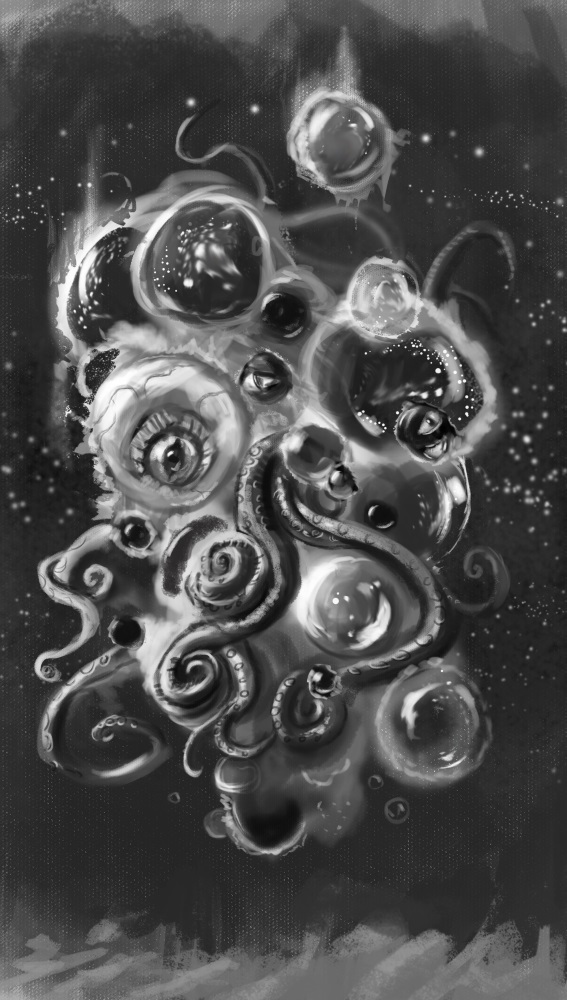
The horror rules are all optional rules. Madness will be familiar to Cthulhu players. Cypher System madness grew out of the madness rules found in In Strange Aeons: Lovecraftian Numenera. In this case madness puts a hurt on your Intellect pool and can even change your descriptor. I do something similar in The Sun Below: Sleeping Lady, which has a seriously eldrtich horror vibe.
Shock is another optional rule, more for short term effects like losing control of your character and running away or sitting down to sob rather than fight. Trail of Cthulhu players will find it very similar to Stability losses. Different mechanics, but going for the same effect.
Combine both Madness and Shock if you want a game like Trail of Cthulhu, or just Madness if you want a Call of Cthulhuish experience.
I've saved the most interesting for last. Horror Mode. Horror mode is a great way to ramp up tension, as the range for a GM Intrusion (the dice fail kind, not the 2xp kind) goes up to a 1-2 on a d20 roll. Then 1-3. And so on. You can get to 1-10 fairly quickly. Each GM Intrusion brings new horror AND widens the GM Intrusion range by one.
After the horror mode is over, you reset the GM Intrusion range to 1. Until the next time...
Which has me thinking of a Cypher Cthulhu adventure. I'm sure my players would love it!

Creature Preview: Pyronic Sentry
Here's a preview from The Sun Below: City on the Edge, available now on DriveThruRPG.com. While the creature hails from a Numenera adventure, it'd be right at home in The Strange as well.
PYRONIC SENTRY 5 (15)
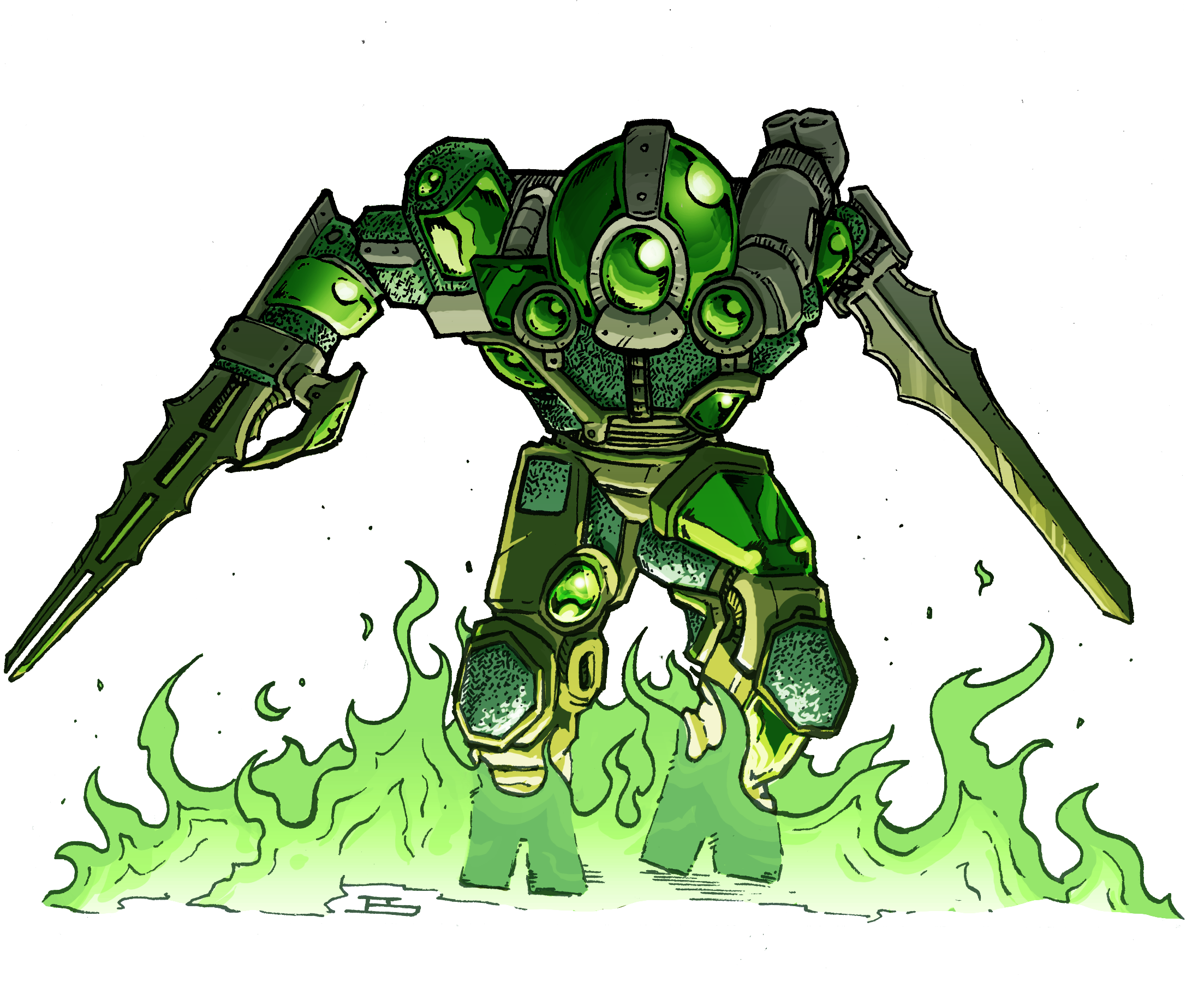
A pyronic sentry is a synthsteel- and glassteel-cladded automaton whose color changes to match the flames it finds itself in. It looks like a massive armored man with long blades for hands. Motive: Follow orders to guard a place or a thing. Environment: Pyronic sentries are usually found near fires, lava pits, or other hellishly hot environments. Damage Inflicted: 5 slashing and 5 heat. Armor: 3 (100 vs. heat) Modifications: While being almost invulnerable to heat, cold attacks gain an asset and ignore armor. In fact, if a pyronic sentry is removed from a fiery environment and placed in a temperature comfortable for a human, the automaton will become sluggish and have a one-level penalty on all its actions. Should one end up in a frigid environment, it would take a two-level penalty on all actions and take one point of damage a turn until it shattered into pieces. Combat: A pryonic sentry will follow its orders first, and worry about self-preservation second. Usually the orders do not require it to move to cooler locations. Interaction: Pryonic sentries do not speak, but are telepaths. Use: An arch-nano’s synthsteel tower rises out of a lava field. People say the arch-nano hasn’t been seen in years, but the pryonic sentry still stands guard, stopping good folk from taking valuable items from a woman who surely doesn’t need them anymore. Loot: Once cool, the remains of a pryonic sentry can be salvaged for 1d6 cyphers and possibly an oddity.
The Pyronic Sentry's GM Intrusion is designed to challenge any tier party, from tier one to tier six. Stats are presented in three groups, separated by /s. The first stat is for tiers 1 and 2. The second for tiers 3 and 4. The last for tiers 5 and 6.
GM Intrusion: The pyronic sentry teleports an enemy who is at short range or closer to just in front of the automaton. The sentry then attacks as level 7/8/9 with both bladed hands, doing double damage and dazing the foe for one round if it hits. The foe will also take heat damage from the environment if the pyronic sentry is in its usual searing environs.
You teleport into the flames and feel the searing-hot bladed hands of the automaton spike deep into your body. Your flesh sizzles like meat on a spit.
Notice how the GM Intrusion flows from the creature's description? Bring on the searing heat! You can do the same with your own creatures, see Numenera GM Intrusions: Creatures.
Have fun, and there plenty more creatures to be found in The Sun Below: City on the Edge's bestiary!
Using Fronts in Numenera and The Strange
Ever notice when you’re reading a great book or watching a great movie or TV show how tense everything gets? You are on the edge of your seat because the characters you are rooting for are under tremendous stress and the stakes are sky-high. How do you bring that to your game?
 One trick I use is called “fronts,” a concept I stole from the dungeon bashing game called Dungeon World. Like Numenera and The Strange, Dungeon World is rules light and focuses on story telling. Its aim is to create great stories of heroic adventurers in a medieval fantasy setting without the rules getting in the way. Here’s an online version of the rules.
While the game mechanics aren’t at all like the cypher system, the use of fronts to create tension comes across beautifully. A front is a set of problems (called dangers) that will only get worse if the player characters don’t solve them. There is usually more than one danger, so while the PCs work on one, the others fester and grow worse. This forces the players to prioritize and make hard choices.
Throw in multiple fronts, each with their own dangers, and watch the PCs sweat!
Here’s an example I call Bantion, Village in Peril.
First I have to choose between a campaign front and an adventure front. A campaign front is a big, long running front. Say how The Convergence (Numenera) or Lotan (The Strange) are going to devastate nations.
 A shorter term front is an adventure front, and Bantion, Village in Peril is an adventure front. The problem with Bantion is that it is built into ancient ruins. Yes the ruins provide shelter and a source of cyphers or magic, but they also provide the dangers. The village could be in The Beyond or the hinterlands of Ardeyn. To keep things simple I’m going to use Numenera examples, but the basic story elements can work just as well in The Strange.
A front has two to three dangers, so I’ll choose two. Both involve mental powers and villagers acting strange, which will probably confuse the PCs. Yay!
For my first danger I’ll choose a cursed place that wants brains. The Chamber of Unity, deep in the ruins below Bantion, has recently been activated. It seeks to unify people into a hive mind. To do that, it wants everyone’s brains to be taken out and placed in a big soup of nutrients and nanites. It uses mental powers to force people to do its bidding. Those people become angry and emotional.
The second danger will be a nano seeking mental powers. Kavlon the Seeker has found a way to build his mental powers by injecting himself with nanites grown in brainstems of psychic parasites. First he’ll create hosts out of villagers, and then after the parasite kills off the hosts, he’ll harvest the brainstems. A win-win! To create a contrast, the hosts will lose all affect and become emotionless.
OK, we have two dangers, now what? For each danger we come up with 1 – 3 grim portents. A grim portent is something bad that happens if PCs don’t defeat the danger. This way, if the PCs are out fighting Kavlon, the Chamber of Unity will be ticking off its grim portents.
Here are the grim portents for the Chamber of Unity: 1. Villagers vanish (they sleepwalk to the chamber) 2. Scapegoating: Paranoid villagers turn on one another, guards arrest many “troublemakers” (guards are under the influence of the Chamber and deliver the prisoners there) 3. People rounded up en-mass and driven to the chamber
Besides grim portents, each danger has an impending doom that happens if all the portents get ticked off because the PCs didn’t defeat the danger.
For the Chamber of Unity, the impending doom is that the entire village will be emptied into the brain soup. Yay!
And for Kalvon, the grim portents are: 1. Villagers become hosts to the parasites and become affectless 2. Hosts vanish to be replaced by new hosts 3. Mass grave of dead hosts discovered
And the doom? Kalvon’s mental powers become such that he makes all villagers thralls or experimental subjects. Or both. Yay!
How do you GM this? Pick one or both of the dangers and set off the first grim portent. Then just follow the players. While one danger gets worked on, the other ticks off another grim portent.
Have fun.
(For those following along with the Dungeon World rules, the Chamber of Unity is a Cursed Place, a Shadowland. The Doom is Destruction. Kalvon is an Arcane Enemy, a Power Mad Wizard seeking magical power. His doom is Tyranny.)
Hipster PDA + (Numenera or The Strange) == Awesome Sauce
One of my favorite organizing tools it the Hipster PDA, also known as a stack of index cards with a paper clip. Index cards are the perfect tool for keeping things going while GMing Numenera or The Strange.
The idea is while you are playing, you are shuffling a stack of index cards, and you pull one and add something from the card into the current scene.
Step 1: Make a card for every PC. Write down the Descriptor, Type, and Focus. Add the suggested GM Intrusion for the focus. Add any powers and artifacts the player likes to use all the time. For example, "Sneaking, Bounding Boots." Add anything from the characters background that is fun to bring into play, like "remembers a past life experience from when she was Lady Ash's lover and they explored space together."
Step 2: Make cards that say Smell/Taste, Hear, Feel. I don't bother with See, because I'm telling them what they see all the time, but you might want to throw that in too. I put smell and taste on the same card, as taste is great, but it doesn't always come into play.
Step 3: Make a Reoccurring Dealies card. Put down NPCs, creatures, and events that your players have latched onto. These are things you've used in the past that intrigued the players. If it helps, add a note of how the concept got into your campaign For example "purring invisible lion (GMI for Opal: Commands Mental Powers)", and "Lebby the Pan-Dimensional girl (NPC from The Sun Below: City on the Edge)."
Step 4: Shuffle the Deck
Step 5: Play
Now, while you are playing, keep pulling a card and finding something on it to add to the current scene.
If you pull a character card and they haven't had a GM Intrusion this session, give them one. Otherwise, look at what's on the card. If you pull the character with Bounding Boots, you could say "They way forward is blocked, but up on a ledge you can see a ladder that's been pulled up. The ceramosteel wall looks almost impossible to climb. Anyone have a way up?"
If up pull the Smell/Taste card, you might say "There's an oily, minerally smell wafting from the pit."
When you use something from the Reoccurring Dealies card, see if your players still care about it. If they don't cross it off. If they like the purring invisible lion, keep using it.
Keep a note of fun things that come up in the current game that your players might like to see again, and add them to the reoccurring list.
I stole this idea from Ash Law's talk on 13th Age Adventure Design and modified it for Cypher System games, but you can use this in most any RPG. Ash's talk on index cards starts at 27:25.
See Also: Spotlight Cards.
The Sun Below: City on the Edge -- available late September
When I started this project I had a vision of a much smaller adventure. Instead I have over 35k words and a lot of wrangling to do to make it a product I can be proud of. I want it to be an adventure you'll be proud to own. It just kind of grew. So, to let that happen, we're moving the ship date to late September.
As a consolation prize here's a picture from GenCon, featuring The Sun Below: City on the Edge lead artist Reece Ambrose (in the red circle).

If you own a copy of The Strange (and you should), you'll see Reece is one of the artists. GenCon is where Numenera won Product of the Year.
And speaking of art, check out the new Art Gallery.
See Reece's experiences at GenCon here.
And, of course, The Sun Below: City on the Edge, is available now.