

Having Fun at a Extra Small Con
I always thought conventions came in two sizes, small (a few thousand attendees) and massive (tens of thousands of people). Now I’ve been to an extra small one (a few hundred folk), and it was different. This was SpoCon.org.

I had great fun, but I had to be a bit more flexible.
The gaming schedule was more aspirational than predictive. Most of the games posted didn’t happen due to lack of players. Worse, this included two out of the three I was prepared to run! I’m used to folks being on waiting lists for my games; I was shocked.
But the one game I did run, The Ripper of Shriveport, a 13th Age adventure, was great. I had two adult women looking through my pre-gens when two girls, maybe 12ish, joined us. Together they investigated two murders, collected cats, dealt with fungus folk and demons, and avoided getting stuffed in the Wicker Man.
With fewer attendees, if something exciting like the costume contest or a popular panel was scheduled at the same time as your game, you didn’t get a lot of folks coming in.
So, here I was in a new city I had just moved to. I had hoped to make some friends in the gamer community here. Falling into a pit of despair over my other two games didn’t seem like the right thing to do. So I ended up finding games to play when I couldn’t run one. Guess what? I had fun!
I’m used to the RPGs being separated from the board games at other conventions. I tend miss the boardgame action since I’m always running RPGs. Both were in the one gaming room (the adventurer’s league had its own room), and I got to learn some great new board games. One I fell in love with is Century, Spice Road.
I was on the panel Game Mastering with Ease. We had such great questions; it could have gone for another hour. Oh well, leave them hungry for more!
The hard working volunteers at this smaller con were super helpful and nice. Volunteers work hard at all cons, but at a very small one each wore even more hats than typical. Speaking of hats, I tip mine to them.
I’ll be back next year.
Have you been to an extra small convention? How was it?

Popcorn Initiative
Popcorn initiative (AKA Elective Action Order or Balsera-Style Initiative) has been around for a while, but it’s new to me, a lot of fun, and might be perfect for your game. I’m playtesting a game for Pelgrane Press right now that uses it, and I’m stealing it for my Numenera playtest.

How It Works
Use the normal initiative process from your game to determine which player or NPC/Monster goes first. So far, no change.
Then, that player (or GM if it’s an NPC or Monster) chooses who goes next. When it’s your turn, you choose who goes next. Pop, pop, pop, the initiative goes around until everyone has gone and the round is done. Whoever went last gets to choose who goes first on the next round and can choose themselves.
Why Choose the Balrog?
The first time you use popcorn initiative, players will want to choose each other in a row, thinking of how smart they are. Then the last player must choose one of the GM’s characters. All the baddies get to go, and guess who the GM chooses to go first? The baddies! Yes, let’s give the balrog two turns in a row.
Gaming the System
The side with more turns has more control of the battle. If the GM has one boss and a bunch of minions who would normally go at the same initiative, the baddies can get boxed into the middle of the initiative order by astute players. To avoid this, break up that one big group of minions into a few smaller groups. Having roughly equal numbers of initiatives on both sides makes the popcorning more fun.
Some players who invested into having better initiative may feel cheated. I allow them to change their character if they no longer want those feats (d20), skill training (Cypher System), or whatever your game system uses. However, going first the first round is an advantage, so they might want to keep their initiative powers.
Index Cards
To help track who has gone this round, index cards with “Ready” on one side and “Done” on the other are perfect. Flip to “Done” once you’ve move, everyone reset to “Ready” when a new round starts.
Start Popping!
Have you tried popcorn initiative? How did it work for you?




Tables at the Table
A table that calls forth a new scene, a new encounter—I’m calling these event tables.
Event tables in RPGs have a bad reputation, but let’s show them some love. Roll some bones and make the party deal with consequences.

A fun event table to show off a small village (The Overworld and Beyond)
Bad Tables
Poorly done tables can be fun killers. The story can vanish as unrelated events take control. Random fights can be all risk and no reward. Roleplaying can go out the window as the harried GM jumps from the table to page 509 of book 3 and must run content they’ve never seen before. But it doesn’t have to be that way.
Right of Refusal
With any RPG table, I always give myself the right of refusal. I roll something lame, mood killing, or just uninspired, I give myself permission to ignore it. The dice are only a suggestion. Roll again. Pick a result that calls my name—better yet, calls a PCs name. Roll three times and pick. Whatever works for you in the moment.
Mystery Fight
The wandering monster table is the granddaddy of event tables. A good one gives you
A mix of encounters, not all are combat
A feeling for the setting. In a drow city, an encounter table might serve up drow, drow pets, slaves, visiting merchants, demons, and mercenaries.
Story. Why is the rakshasa’s palace filled with angry werewolves? The adventure might have a backstory that explains about the earring of lycanthrope control and how the rakshasa was given it by a vampire lord. If the adventure doesn’t tell you, use the result to improv and maybe foreshadow a future adventure.
When you’re writing your own wandering encounter table, think about the story the table will tell. Try a mixture of quirky and expected encounters, and blue-sky possible story hooks for why the quirky encounters could happen. Let the players discover the backstory if they show interest.
A Sense of Place
What happens if the party enters the town of Shriveport? A table can give all sorts of events that help the players experience the town. For example (from The Overworld and Beyond):
1. All the cats in town disappear. This happens sometimes, and while the locals don’t know where the cats go (or so they tell outsiders) they assure the adventurers that the cats will return shortly.
2. An unseasonal storm, crackling with strangely colored lightning, is on the horizon. Locals are used to these. Sometimes these storms rain strange things (frogs, fish, worms, blood, etc.).
3. It is a festival day, and the locals are feeding fish heads and goat milk to cats. Children perform complicated dances involving ropes and poles. All present (visitors included) are expected to wear squid-themed hats.
These kinds of entries are examples of show, don’t tell. PCs can interact with these events, which will make the town much more memorable than telling the players “Shriveport is an odd town.”
When writing your own random event table for a place, make each entry a puzzle piece that add up to the atmosphere of the setting.
Improv Prompts
Events need not be concrete, some can be a springboard for improvisation. These allow the GM to tailor the entry to the players and the ongoing story they are part of. More examples (from The Overworld and Beyond):
1. The sound of a many voices singing a chanting song is carried on the air, though it is hard to make out the lyrics of the song. Is it the song of farmers as they work, the chanting of witches, bandits singing around a fire, or a marching song?
2. The adventurers stumble across a corpse. Is it bandits, an animal attack, a monster’s work, or natural causes (like plague)?
3. A riderless horse thunders by the party, its eyes wide and its saddle empty. If the party follows the horse’s trail back they might find a bandit attack, a dis-horsed rider who has suffered an accident, or a rift in space-time that closes as they approach. Catching the horse might prove equally interesting.
When Not to Table
When you want some options, but the players are unlikely to hit the same table multiple times. A short bullet list will work fine.
When you are writing for yourself and you never roll, always pick. Again, bulleted lists work great.
When you want to hit all the events in order. Rumor lists are often written like that. The first (and most critical) rumor is on top, other (and optional) rumors are below.
When you hate making tables!
Table or not, have fun!

Naming NPCs
Ever get stumped when you must name an NPC? Especially on the fly? I know I do. Here are some tricks that help me.

Make a List Before Game
I write down 5 to 20 names, maybe separated by gender and culture if that matters. Then, in game, I just pick one, and add a short note of who they are now.
Theo – tinker in the town square
Tilly – tailor on the north side of the bridge of hisses
Samwell – soldier in the regiment of fog
Sheena – spy on the street of tears
This is my favorite method and works great unless I forget to do it. I still have to come up with names, just not on the fly.
Look Around
Last game the good ship Tilia was named after the malbec in front of me. It helps if you don’t always get the same wine each game.
Change the Vowels
Use a word (doesn’t have to be a name) and change the vowels around to make it sound new.
River -> Rovar. Meet Rovar the elf!
Use a Generator
Do an internet search for a name generator. You can find dozens. If you don’t like what they offer, refresh and check out the new names. My problem with this is I often never find a name I like, I keep thinking “one more refresh and I’ll have the perfect name.”
Use a Translator
Use an internet translator like Google Translate. Take a word and see what it looks like in Latin, Finnish, or whatever.
If you have played in any of my games with a robot nurse named Hoita, guess what? I translated “nurse” into Finnish and got Hoita. This must be a boring name to Finnish gamers, sorry!
If I get a big word with many syllables I often just chop it down to the two or three syllables I like the best.
Baby Names
For modern games do an internet search for baby names. You can do it by country or culture. This is great for games set in modern(ish) times.
And check out these baby names generated by a neural network.
Publication
For publication, I spend a lot more time on names. I want them to “feel right.” That might mean the name sounds like the role of the NPC (Captain Crown works for the King), has the right language or culture (Latin is great for European fantasy wizards), and is easy to remember.
And?
What are your tricks to coming up with good names for your NPCs?


A 13th Age Tarsiss

Lightning rod (cursed champion tier wand) Always: +2 (champion). Recharge 11+: When you use this wand, you can cast the wizard’s lightning bolt spell, with a level no higher than your level. Curse: When you use a spell attack against an aberration, the damage you deal heals the target. The curse takes effect whenever the lightning rod is on your person. Quirk: Assume tarsi are your friends.
Remember when we created a new monster partly inspired by the mind flayer? A 13th Age fan asked for a version with 13th Age stats. So here it is! This creature has a 5 tentacle head on top of a humanoid body.
Tarsiss
Double-strength 8th level caster [ABERRATION]
Initiative: +15
Hungry tentacles +12 vs. AC—50 damage.
Natural even hit: The target also takes 20 ongoing psychic damage.
C: Psychic blast +14 vs. MD (1d3+1 nearby enemies in a group)—50 psychic damage and 10 ongoing psychic damage.
Natural even hit: The target is dazed until the end of its next turn.
R: Lightning rod +13 vs. PD—75 lightning damage.
Miss: 25 lightning damage.
Resist lightning and psychic 16+: When a lightning or psychic attack targets this creature, the attacker must roll a natural 16+ on the attack roll or it only deals half damage.
Nastier Specials
When the tarsiss is brought to 0 hit points or less, the tentacled head pops off. It has half its original hit points, all its defenses drop by 2, and can only use the hungry tentacles attack.
AC 24
PD 18 HP 260
MD 22


Mutating the Mind Flayer

Fun Fact
The term Mind Flayer is not in the SRD, it is the intellectual property of Wizards of the Coast. Which means nothing unless you want to publish your version professionally outside of the Dungeon Master's Guild.
The 13th Age RPG calls its squid-head the Soul Flenser. I'll call my version the Tarsiss, in case this ends up in a future project.
Inspirations
Besides the mind flayer, the khepri: bugs that lived on human bodies from Perdido Street Station and of course, Mi-go brain cylinders.
Mind Flayer
Everyone, from D&D players to Stranger Things fans, loves a mind flayer. Here's the first mind flayer I ever saw, from the original Dungeons and Dragons white box supplement II Blackmoor by Dave Arneson. 1975!
Mutation Station
Let's mix it up, creating a new creature, inspired by the mind flayer -- one that players won't know all about. For this example, let's use the Cypher System, as stat blocks are easy. If we like it we can make a 5th Edition or a 13th Age version. (Edit: the 13th Age version is here.)
What do I like about mind flayers I want to keep?
- Squid head, humanoid body
- Super smart
- Mental attack
- Eats brains
The Tarsiss
I love the fact that these creatures have humanoid bodies and squid heads. My creatures (the Tarsiss) are squidlings that take a human body, cut off the useless head, and replace the head with their own squid like body. They are super smart, use bizarre technology, and are practiced in dimensional travel. When not using weird tech weapons, they have a psychic attack.
And of course, they eat brains. They don't mind canned food, so they keep humanoid brains alive in weird devices that look like fat thermoses with ports for connecting to other weird devices. Captives in these brain-jars can be made to run machinery. Imagine the fun when the players find a Tarsiss outpost staffed by human brains in jars!
Tarsiss
Level 7 (21)
Armor 2 (force field, works against Intellect attacks as well)
Lightning gun: 7 damage, long range, (depletion 1 in 1d6) level 7 artifact
Psychic blast: Short range Intellect attack that does 7 damage (ignores armor) and causes target to make a Might Defense roll or take 5 Speed damage.
GM Intrusion: The tarsiss attacks up to five targets within short range with its psychic blast attack.
Danger: This creature is more dangerous than a typical 7th level creature. That's the way we like it. Tone it down if you and your players prefer easy fights.

Time After Time
You know the Time Loop story? Where the protagonists are stuck repeating the same events over and over? You may remember it from Groundhog Day, Star Trek, or Dark Matter. It's everywhere. I wanted to run a time loop session for my Predation group, and make it fun. I've seen a bunch of these, but the one that really made me want to do this in a roleplaying game was Dark Matter's All the Time in the World. Instead of focusing on one or two characters who knew they were time-looping, it started with one and added a character each loop until the whole gang was in on the secret. Perfect for a roleplaying group.

"I'm Going to Mess with Your Agency."
For many games, messing with player agency is the worst thing a GM can do. So of course I wanted to do it.
I started out announcing I was going to do it before we got going. I did this to let them know this will be a different session and that I was going to do commit a terrible GM sin. 4 out of my 5 players were fine with this announcement. The 5th gave me a baleful stare. "This better be good."
The Setup
I started with the newest edition to our gaming group, and told her she was gesturing wildly and talking nonsense, then told the heavy of the group "You can't stand her raving so you hold her off the ground and clamp your hand over her mouth. Now you can hear the others decide what to do."
As the rest of the group decided what to do about the strange sleeping aliens (think shape-shifting mind flayers who ride dinosaurs) and the shoggoth who was advancing, I sprung the first TPK. A secret door popped open, an arm came out holding a gun that shot a black hole into the chamber with the PCs. The black hole errupted with terrible damage, sucked the PCs to it and then let them fall down a giant hole and into the maws of a hungry shoggoth. Everyone dies.

Click
I run the same scene again and this time let the new player go, telling her she's been stuck in this loop and died over and over. "What do you do different this time?" I let her know she can attempt to convince one other PC the truth. I let the other players know they have no memory. My players are great, so those who have no memory ham it up, telling her to "calm down and take a chill pill."
She convinces another PC, and they steal the black hole gun and throw the mind flayery creature to the shoggoth.
Then the way out gets blocked by a giant plug and the shoggoths eat everyone. TPK.
Click
I randomly choose another PC to remember. Now there are 3, and they know the secret door is about to open. Old squid head loses his black hole projector and the whole group runs out before the plug closes. The party sees strange transdimensional beings ripping apart the high tech lab they were in last session. Everyone shrugs and runs out and hears one of the strange creatures say "Ut oh." Then everyone dies in a thermonuclear explosion as the fusion reactor gets torn up and goes boom.
Click
We start with the secret door, throw the squid-head to the shoggoth, run past the plug, and drive off the creatures ripping apart the reactor. In the jungle, there is an ambush by mind flayery creatures riding upgraded Utah raptors. TPK.

Click
I had one more time loop ready to go, but reading the table I could see enough was enough. They used the black hole projector on the shoggoths and found a secret subway out of the area and I ended the loop. We had some more fun, but the time looping came to an end.
Takeaways
I asked the players if was fun or frustrating. "Both."
"That was really fun! Frustrating to die again and again, sure. But the pace... was absolutely perfect. Great job with the distracting glimmer of hope that we might actually escape!"
and
"I thoroughly enjoyed it! It was almost a riddle we had to solve. Or do trial and error - as we did."
As a GM I loved it. So many TPKs! ;) I won't use this again this campaign. Maybe in a time travel game like TimeWatch it might work multiple times, but in a normal campaign I think once and done is great.

Recipe for Adventure
Hey, game masters, ever wonder what the heck you're going to run next game? Sometimes a little research can make it all come together. For what it's worth, he're how I made my last adventure.
Start with an Idea and an Internet Search
Throw your idea into a search engine and see what comes up. Or just jump right to Wikipedia and start your search there.

My idea: Nicolas Flamel, alchemist. I knew he was a big name in alchemy and used in a number of fictional works (Harry Potter for one). Wikipeida tells me more.
I find that according to legend he A: Discovered the Philospher's Stone and B: Found the secret to eternal life. What's not to like about that?
There's a bit about his gravestone and where he was buried in Paris. More research finds that the graveyards of Paris were all dug up and the bones of SIX MILLION PEOPLE put into catacombs, really old limestone mines that undermine the city of Paris.
Now, if you live in Paris, this is old news to you, but to me it's the best thing ever. After inhaling the very great Wikipedia article on the Catacombs of Paris, I search for "Catacombs of Paris Movies" because why not? And I find As Above, So Below. I love movies, so I rent it (Amazon Prime) watch it, and take notes for the adventure.
- Giant walls made of bones and skulls
- Unlit, but still hot candles that show someone is down in the catacombs
- Women in white robes and face paint singing
- Crawling over bones
- "To Get Out Go Down" said by an out of touch person that the characters knew years ago
- Growing fear
- Dead end except for brackish water that can be swum through to reach hidden chambers
- The undecayed corpse of a crusader knight
- Collapsing passages
- Having to move, and the only way forward is also down
- Entrances that vanish
- Panic in the dark
And so on. I filled up every square centimeter of a page while watching. I would pause the movie to jot down a note. I used maybe 1/5 of my notes, but it was great to make all of them. The movie helped me improv the adventure in the catacombs.

My game isn't set in the modern day like As Above, So Below was, but so much translated to my 1895 setting (play testing the Yellow King RPG). If I was running D&D or 13th Age or a Cthulhu game, almost all would still work. I'm not saying the movie is the best horror movie ever (there are serious flaws), but it is so damned stealable for great catacomb crawling adventures. Plus Perdita Weeks and the rest of the cast do a great job, and I found it watchable.
Watching movies as game prep!
Putting it Together
I used a player's backstory (I think my sister is a werewolf) as the hook, and had the sister connected with an NPC, Pascal Saccard, who vanished into the catacombs after reading "The King in Yellow" and researching Nicolas Flamel.

I had a number of scenes straight from the movie, including having the players find Pascal in an unreachable space. I played him as remote and haunted. He would answer yes or no questions with a nod or head shake, then stare at the limestone wall. He told them to "go out you must go down."
I needed Flamel in the catacombs, and hey, he "found eternal life," so of course he's a vampire.
I ran through the game system's mental hazards and listed those I thought we'd hit: looking at / reading the King in Yellow, seeing things that can't be like the passageway they just crawled out of vanishing without a trace, and so on. I looked up what I could do with a cave in, and made notes so I could find it in play.
Actual Play
In play, the cave-in was more fun because despite me making the roll harder for the people in the back, the one in the middle failed, so the freaked out person in the back crawled screaming over the middle PC, shoving his face down into the bones while the roof caved in.
Cave-ins, underwater swimming in the dark, odd visions, and worse took a toll. By the time they confronted the crusader corpse, they were pretty depleted in fine horror movie fashion. The meeting with the vampiric Nicolas Flamel gave them the clue they needed for the next game. He doesn't like the Yellow King any more than they do, so he advised they track down all the copies of the play and destroy them.
A good time was had by all.
Races in Numenera & the Cypher System

I love Numenera, but using a descriptor for your race bothers me. It keeps non-humans from having "regular" descriptors like charming, rugged, or lonely. And if they really want to lean into their race, they lose their choice of focus, like murders or masters insects. What can you do?
Don't use the Racial Descriptor
This is the "Doctor it hurts when I do this," "Then stop," solution and the one found in the Cypher System rulebook. You're PC is a varjellen because you say they are, and you get to use any descriptor you want. You don't get the varjellen abilities in the core book, you just use your descriptor powers.
I like this for Numenera if you make it optional, and you let your players use racial foci without the descriptor. Some players like to lean into their race.
For the Cypher System, it's fine if it works for you, but if a player wants to really embody a race, I'll have to look elsewhere.
Two Descriptors
I've heard Monte Cook and others say, "just use two descriptors for each player." The idea is everyone gets two, and now you can be that lonely mutant you've always pined for. After all, real people have more than one adjective.
I like this simple change. I don't think this makes PC's too powerful. The descriptor does not scale with tier, so the worst effect would be a little more resilient 1st-tier PCs, not a bad thing at all.
Racial Flavors
You use flavors, from the Cypher System rulebook, to represent a race. This lets a player really lean into their golthiar character. A flavor lets the player choose to add a flavor ability, instead of a standard type ability. Just like type abilities, flavor abilities become available by tier. A player could choose to be a little more golthiarish, and a little bit less glaivish. Those are words.
The character can have access to regular descriptors and foci, yet still be cool because of their race. This allows the player to choose how much they lean into their race. One player might have one race flavor ability, the other three.
The downside is this is work. Unlike the other two solutions we talked about here, you need to come up with a few new abilities for each tier. You can always use type abilities from a variety of types.
I've seen a great example of using flavors for races for Cypher System fantasy in Megan Tolentino's Fantasy Ancestries.

I put in a racial descriptor and foci in The Sun Below: Sleeping Lady. Maybe I'll put in a racial flavor in The Sun Below: That's How the Light Gets In. No promises, but I'm kind of excited to do one.
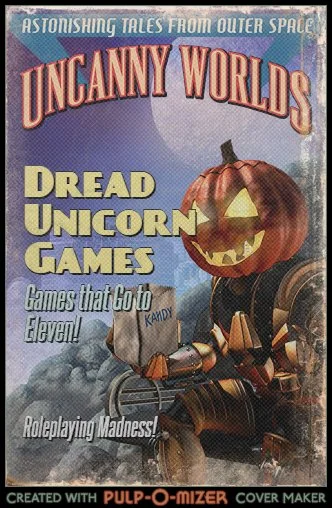
Pulp-O-Mized!

The Dread Unicorn couldn't resist.
Pumpkin Heads are all the rage in The Gray World.

Piggybacking Part II

Before we steal Piggybacking from GUMSHOE, check out how it works there in Piggybacking Part I.
The Noisy Cleric Problem
The problem piggybacking solves can be found in all sorts of roleplaying games with all sorts of skills, but the example that comes to mind is sneaking into a castle in a fantasy game like Dungeons and Dragons. In fantasy books and movies, the heroes sneaking into places is a staple of the genre. In D&D games, sneaking is left to the rogue and the ranger for scouting. Once the GM tells the entire table to roll dice to see if they sneak into the castle, somebody always misses, and the exciting infiltration turns into a frontal assault.
GUMSHOE Roots
In games like TimeWatch, Nights Black Agents, or Trail of Cthulhu, the whole spend resources to piggyback fits perfectly, since they are all GUMSHOE games. Most of my players have points to spend in Infiltration, but some have zeros. Every general skill is like that. You aren't giving the party something for free, they are spending resources they might need later to succeed now.
Let's look at other systems. I haven't tested these, but I will.
Cypher System Piggybacking
In games like Numenera, Predation, and The Strange, GUMSHOE style piggybacking is easy, since you're already spending the resources of Might, Speed, and Intellect to do anything.
The expert spends from their pool as normal, but the difficulty is harder because they are pulling the rest of the party with them. For a sneak into the castle test, the expert has their difficulty raised (+2 sounds good, +1 for less than 3 followers) and uses Speed. While the expert can use their Edge to lower their costs, the followers can not. They each spend one point, no discount.
If the expert succeeds, everyone sneaks in. Move on with the adventure.
Nothing to Spend Piggybacking
In games as varied as Call of Cthulhu, 13th Age, and Dungeons and Dragons, you don't have resources to spend to sneak into castles or climb up icy cliffs. You've got hit points, and while spending those might make sense in a few cases, usually not. Same with Sanity, Recoveries, or Spell Slots. These games are not about spending resources on skill tests, so it seems wrong to try and force them do that just for piggybacking.
In these games I'd boost the difficulty for the expert (+5 for d20, +25% for Call of Cthulhu), but then I'd require the rest of the party to roll just to assist. And if someone fumbles, well then, we're right back where we started from. That's the cost right there, the more players rolling, the greater the chance of a fumble. :)
Piggybacking, Part I
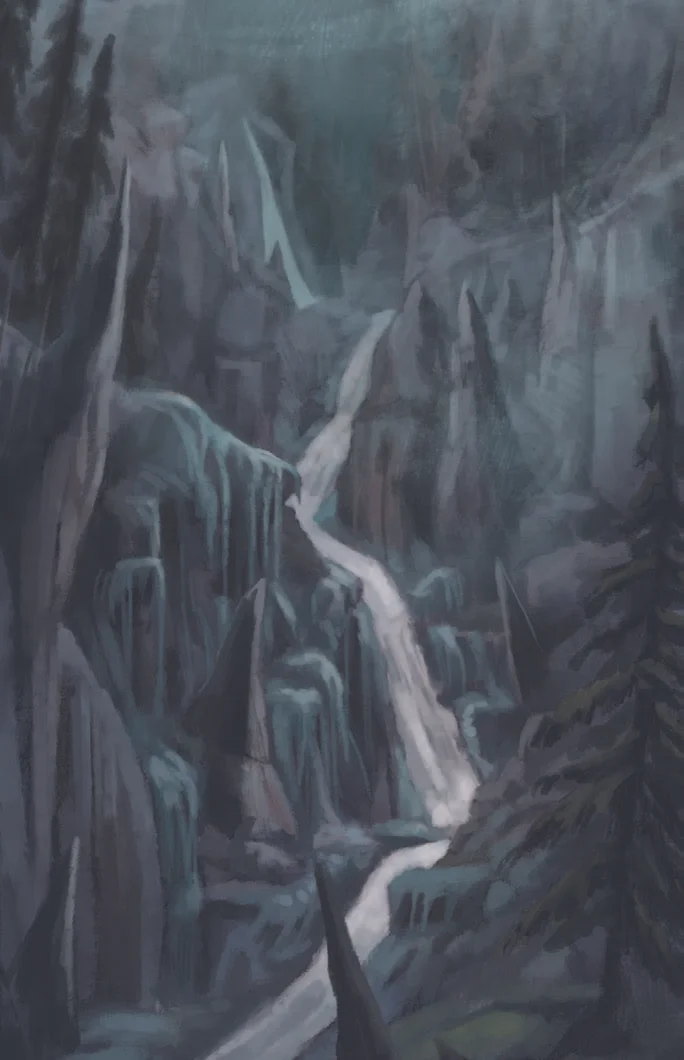
The other night we dove deep into our penultimate session of the Dracula Dossier. An unseasonable blizzard raged around the PCs as they had to climb up a mountain and down a waterfall. It was one of those roleplaying scenes where half the party had the skills to move the story forward, and half did not. (Athletics and Outdoor Survival in this case.)
This kind of scene happens in any kind of roleplaying game, from d20 fantasy games like Dungeons and Dragons and 13th Age, to the Cypher System, to Call of Cthulhu. This is a problem with "niche protection," where everyone has a different set of skills so that everyone can feel special and get their spotlight moments. It can also cause the adventure to stall. When a party tries to infiltrate, but someone is sure to fail their stealth roll--when everyone must impress to get information at a fancy dress ball, but someone is sure to fail a social roll--when the group must climb in a snowstorm, but the hacker and the crime boss are sure to fall to their deaths--what do you do?
(Sometimes letting the crime boss in heels fall off a cliff might be what you want. This post is about when you want everyone to make the climb, but still keep it interesting.)
What do movies and books do? Han Solo and Chewbacca take their queues from Princess Leia when dealing with big-shots. People trapped in Jurassic Park follow the lead of Dr. Grant, dinosaur expert. Sansa escapes from King's Landing by following Littlefinger's plan. Characters without the right skills let the experts lead, but don't leave the scene.
You want the expert PCs get to shine for their skills without stoping the story because some PCs have holes in their character sheets. You let them piggyback.
Piggybacking
This game system (Night's Black Agents) is a GUMSHOE game, and it comes with a piggybacking rule built in.
In GUMSHOE you can spend skill points to add to your d6 die roll. The expert does that, while everyone else spends 1 point. For every follower doesn't have any points to spend, the difficulty of the roll the expert has to make is +2. If the expert succeeds, everyone succeeds.
So the expert rolls the big die, spends a bunch of resources (skill points in Night's Black Agents), and the followers spend some resources for the privilege of tagging along. Great fun!
In our game, we had so many athletics rolls climbing in that blizzard that the spotlight passed between PCs who had tons of points in athletics. They got their spotlight moments, but they didn't have to leave the hacker and the crime boss behind. They also spent pretty much every point of athletics the group had, and there will be no time to refresh before the next game, so they are sweating it. Perfect!
This works great in GUMSHOE, but what about other games? Let's see if we can steal piggybacking.
Next time we'll look at 5th Edition Dungeons and Dragons, 13th Age, the Cypher System, Call of Cthulhu, and see if we can come up with ways to piggyback in those systems. See Piggybacking, Part II.
Dragonlanced

DragonLance
My sister Kelli just gave me Dragons of Summer Flame by Margaret Weis & Tracy Hickman. She got it for $1, and it's a beat up paperback, and has been sold more than a few times from the looks of it. Anyway, a Dragonlance book, and I haven't touched Dragonlance for years. Decades. The floodgates of memory open wide...
Back when it was new, I ran the Dragonlance campaign. It was my first story based, rather than encounter based, campaign. I know we made it to DL 8 (Dragons of War), but can't remember where the campaign fizzled.
I have both fond, and not so fond, memories of the adventures. This has me thinking about story based adventures. And giant campaigns made of linked adventures, or adventure paths. I've got some adventure design coming up after The Gods Have Spoken, so what lessons can I learn from my Dragonlance experience?
As a player, I love to feel I'm part of some big epic story. I also want to feel I'm in control, not a passenger on a railroad.
If you never played the original Dragonlance, it was very much a story. TSR released three novels, and each novel covered four adventure modules worth of epic feats and terrible dangers.
The players started off with pre-gens, the heroes of the novels: Tanis, Raistlin, and the rest. This took the character creation away from players, but they got to see your character in the classic 1980s rpg art. Caramon the fighter (2nd from the left) was all about the mullet. Business in the front, party in the back.

Dragonlance characters
Look at all that variety. Unless you want to play a humanoid of color, or a woman whose armor covers her actual flesh.
I gave Raistlin the evil mage to a good friend. A good friend who dropped out of the campaign without a word. The story often turned on Raistlin, so that didn't work so well.
The characters came with serious backstories, including who hooks up with who. Some great family ties, history to live up to, and the cleric who had to rediscover clerical magic which had vanished from the world many years ago.
In many ways this was a serious railroad. Of course my group went off the rails all the time, but as we moved to the next module I would yank them back. Eventually we lost interest. But not before having some great times.
All this nostalgia got me thinking about how to make a compelling story based adventure while preserving player agency.
Rather than focusing on mullets and railroads (plot, gender, and ethnicity), what worked?
Roots. These characters had deep backstory. One of the characters, Sturm Brightblade, a knight of Solamnia, got to go to the Tomb of Huma, the founder of his order. A large part of an entire module revolved around the backstory of one character. Sturm's player loved it, and it was fun for the whole party.
Epic plot arc. Dragonlance created the format for all the adventure paths that came afterwards. No longer was a campaign a collection of dungeon crawls with no overarching plot arc. Each session was about winning the War of the Lance. Dragonlance showed us PCs that were anything but murder-hobos.
Variety. Dragonlance had dungeon crawls, politics, war, diplomacy, magic that felt magical, mystery, and intrigue. Every module had a different focus, and kept the game fresh.
A world. Krynn, the world of Dragonlance, was massive in scope and history.
In some cases, I think we've learned some better ways to get achieve some of these effects, but they are great effects.
Anyway, if your sibling gives you a dogeared Dragonlance paperback, go ahead and take the time to dig in. You may find ideas for your own games.

Dragonlance
Getting the Band Together with Meeting Montages
Montages are great for traveling. And for prison breaks. But there are other kinds of montages. One great use of a montage is to transform all the individual PCs into a group with built in connections. It's pretty simple, at the start of the first play session, go around the table and have every play help the player next to them. Let's look at two examples.
Here's an example from The Tower in the Mist:
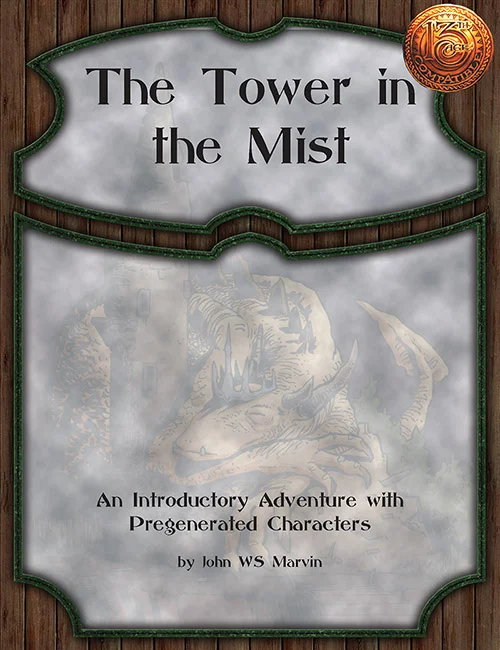
Tower in the Mist - 13th Age - Dread Unicorn Games
Meeting Montage
Explain that the players are going to do some group storytelling to create a little shared backstory. Go around the table, letting each player tell of a problem and a solution. Turn to the first player:
“Introduce your character. Tell us what you look like, what you are wearing, and anything about your character you’d like to share. Then describe a time you got into terrible trouble, and the player to your left saved you. Don’t say how, just say the trouble.
When it’s the next player’s turn, say:
“Tell us how you saved the player to your right. There’s no dice roll, just make stuff up. You can use your one unique thing, backgrounds, race, class, or anything at all. Then introduce yourself, telling us what you look like, what you are wearing, and anything else you want to share. Finally, describe the time you got into terrible trouble and the player to your left saved you. Don’t say how, just say the trouble.
As the players go around the table, make notes of anything in their stories you might want to incorporate into this or future adventures. When you get to the last player, they will be saved by the first player, thus completing the montage.

5thlogo-trans
Here's an example from The Gray World. In this example, the montage is doing double duty: connecting the PCs to each other, and connecting them to Old Man Gray, a central NPC in the adventure.
As soon as the montage ends, you start the first scene of the adventure, one where the people around the PCs all die a terrible death. Players are certain to wonder, could Old Man Gray be connected? Which is what you want.
Meeting Montage
Explain that the players are going to do some group storytelling to create a little shared backstory. Go around the table, letting each player tell of a problem and a solution. Turn to the first player:
“Introduce your character. Tell us what you look like, what you are wearing, and anything about your character you’d like to share. Then describe a time Old Man Gray got into terrible trouble and you tried to help him, but nothing worked until the player to your left solved the problem. Don’t say how, just say the trouble.
When it’s the next player’s turn, say:
“Tell us how you came to the player to your right’s aid and helped Old Man Gray. There’s no dice roll, just make stuff up. You can use your background, skills, race, class, or anything at all. Then introduce yourself, telling us what you look like, what you are wearing, and anything else you want to share. Finally, describe the time Old Man Gray got into terrible trouble again and everything you tried couldn’t help him until the player to your left solved the problem. Don’t say how, just say the trouble.
As the players go around the table, make notes of anything in their stories you might want to incorporate into this or future adventures. When you get to the last player, Old Man Gray’s problem will be solved by the first player, thus completing the montage.
Death for Breakfast
After the montage, tell the characters they are having a free breakfast at the Gnome’s Head Inn. Old Man Gray is paying as a reward for all the help the group has given him. Other tables are full of soldiers, hunters, and farmers. The serving girl comes over with a hot skillet.
Read Aloud or Paraphrase:
The serving girl brings down a hot skillet of sizzling sausages that smell like heaven. As you are about to dig in, she turns and says “Not again.”
Everyone else in the inn collapses to the flagstone floor, eyes bugging out and hands twitching. Out of their mouths writhe pallid white vines that sprout pale flowers. Their chests burst open, as more vines erupt out of their bodies. Only you and the serving girl are unaffected.
What do you do?
So, traveling, prison breaks, and meetups. There are more. What other uses do you get out of montages?
Don’t forget to visit our 5E Kickstarter: The Gods Have Spoken.