

Get Those Print Books and Cards Now!
Holiday Rush
Our printer, Lightning Source, is about to get slammed for the holidays. To get your book or deck of cards on time, order soon.
This affects all our print products you buy online.
For Numenera:The Sun Below: City on the Edge and The Sun Below: Sleeping Lady.
For 13th Age:Gods and Icons, Gods and Icons Player's Companion, and Icons and Conditions
For 5E:The Gods Have Spoken

From Lightning Source:
SEASONAL PRINT ON DEMAND SHIPPING SCHEDULE
Because of high seasonal demands placed on carriers and Lightning Source production facilities, please place your print on demand orders by the following dates so we can make our best efforts to get them to you in time for the holidays:
- Hardcover: November 24th, 2017
- Softcover: December 1st, 2017
FLGS
You can pick up The Gods Have Spoken, Gods and Icons and the Gods and Icons Player’s Companion at your Friendly Local Game Store! A great way to support gaming and your community.
If they don’t have it in stock, ask them to order it from Indie Press Revolution (IPR).

And see our Brick & Mortar PDF Guarantee
Dread Unicorn on the Move
Here's what we're working on now.
The Gods Have Spoken
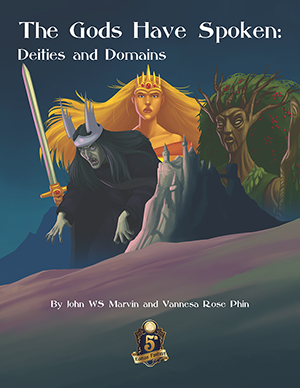 The Gods Have Spoken is our focus right now. Alison has edited over half the manuscript, and I am inputting her changes. Once that's done, we'll move to layout. We'll add all the art, then do another round of edits. Then we'll ship PDFs, black and white softcover, and color hard cover. Once all the Kickstarter backers have their orders shipped, we'll make these available.
The Gray World
After early playtest feedback, we're trimming the adventure a bit, and giving advice on pacing. It's our intention that you can run this in one session, including as a convention game. We also have advice for those who want to expand it a bit and don't mind letting the fun continue past a single session.
The Gods and Icons Upgrade Pack
For those who don't know, this will be a PDF full of new art of the gods, new monsters tied to the gods, and other bits from The Gods Have Spoken that work in Gods and Icons.
I've been taking Matt Evert's 5E monsters from The Gods Have Spoken and creating 13th Age monsters out of them. I'm not trying to replicate each facet and wrinkle of the 5E versions, my goal is to hit the high points and make them fun 13th Age creatures. I'm not using an mechanical algorithm, I just pick a level and try to capture Matt's flavor.
Gods and Icons Fiction
Our last bit for the Gods and Icons kickstarter got bumped a bit. One writer had to bow out, but it's all written now. Two short stories by me (one of a wizard with a new, and unusual new servant, and one where two icons negotiate over the fate of a town tainted by hell) and an epic pirate poem by Connor Marvin. (Connor worked on Unholy Places and playable races in Gods and Icons and is nationally known in slam poetry.) We just need time to pass it through editorial and layout.
Gods and Icons PDFs on Indie Press Revolution

We are working with our friends at Indie Press Revolution to put our Gods and Icons PDFs for sale on their store. They should be up soon.
More Card Decks
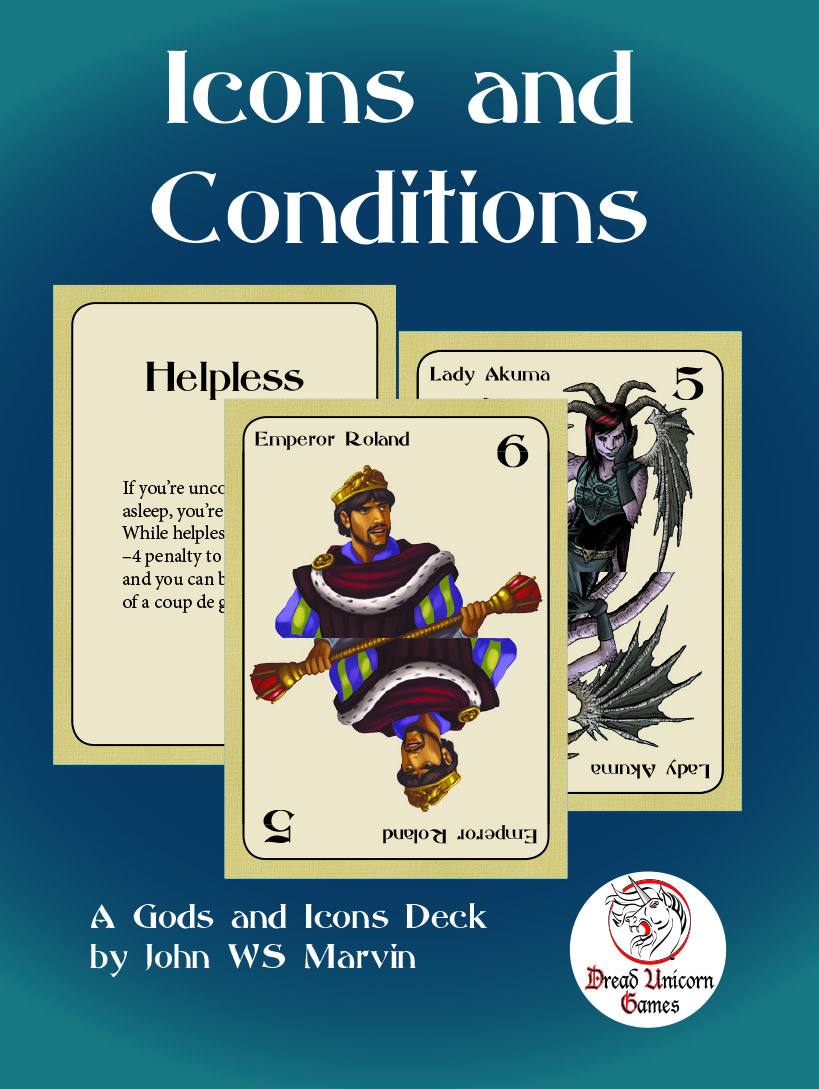 Icons and Conditions is doing well, so we're looking at other card decks to help your game run smoother. We're looking at more 13th Age decks, at 5E decks, and Cypher System decks. Stay tuned!
The Sun Below: That's How the Light Gets In
At long last, we'll be returning to the land of The Sun Below, for the last in our trilogy of Numenera adventures. You've seen The City on the Edge, and the Sleeping Lady. Now see what happens to the lands below when the actual sun of the Sun Below starts to die?
Light Gets In is still in brainstorming mode, but one idea we like is not to have one big capstone ending, but three endings. With one ending, a published adventure can have lots of player options, but at some point, you have to get the players to that ending. This creates a funnel where all roads lead to the climax. At the climax, they win or lose, which gives you two possible endings.
We're going with three epic capstone endings. Depending on what your players are doing, what they want, and what seems fun to the GM, near the end of the adventure the party will head to one of the endings. And again, they can win or lose, but they'll be able to steer their path right up to what kind of climax they are going for.
Another idea is to use all original creatures, cyphers, artifacts, nothing from the Numenera core book. That way you can use the adventure as a source book for your own adventures.
Nothing is in stone yet.
Icons and Condition Cards!
Just the thing for every 13th Age Roleplaying Game session. Got a 6 on an icon relationship roll? Put out a card, 6 up. A PC has a fear condition? Hand out the fear card!
On sale now!


Check out how to use the cards. Very simple.
Coming Attractions
What’s Next from Dread Unicorn Games?  You should always be able to see what’s for sale here: https://dreadunicorngames.com/shop-for-games/
- Right now we are working on The Gods Have Spoken, a 5E supplement full of gods, creatures, factions, magic, and more. If you missed the Kickstarter it should be available for sale soon. https://dreadunicorngames.com/games/the-gods-have-spoken/
- Our 5E intro adventure that shows off The Gods Have Spoken is The Gray World. This one-shot is the perfect tool to introduce players and GMs to our new content. https://dreadunicorngames.com/games/the-gray-world/
- Part of The Gods Have Spoken Kickstarter is the Gods and Icons Upgrade Pack for the 13th Age Roleplaying Game. More divine art and creatures that tie in with the gods. As writers roll off of The Gods Have Spoken, some will roll onto the Upgrade Pack.
- Then we have That’s How the Light Gets in, a Numenera adventure for all tiers. The Sun Below is failing, and it’s up to the players to get it back on line. Which involves visiting more than a few dimensions. https://dreadunicorngames.com/games/thats-how-the-light-gets-in/
- After that will be an adventure (name TBD) in two versions. One for 5E, and one for 13th This will be the start of a number of linked adventures. One link between these adventures is intrigue. If you can’t win a straight up fight with everyone, you’ll need to win some allies and maybe run a few con games. This will be Kickstarted, so watch for it!
Surprise!
Almost every roleplaying game that supports combat scenes has a rule for surprise. The surprised side gets some disadvantage, usually for the first round. Today I’m talking about when the player characters get surprised by the GM’s characters (NPCs or GMCs depending on your system), not the other way around.
 Why bother with surprise? How does it translate into fun at your table?
- The default kind of fun is a more challenging combat. This is a great way to stress the PCs, and is particularly fun if the players are getting just a little too cocky. How long has it been since the players sweated the outcome of a combat? Standing there with targets on their faces while the opposition gets free shots is sure to get their attention.
- Surprise can help in world building. Maybe here in drow territory, drow have ambush points set up all over the place. You can tilt the odds of whatever surprise mechanics your system has to make it favor the drow in these encounters. As the players venture deep underground, drow ambushes become part of their world. “We go north, we need to be extra careful for drow surprises.”
- Surprise can help in shared world building. If the dice dictate the PCs are surprised, you can ask the players “Why are you surprised?” They can come up with all sorts of explanations you would never think of: “I’m so tired. Henrik’s ghost stories didn’t let me sleep last night.”
- Surprise can help build story. An antagonist might run ahead of the PCs, helping potential adversaries set up ambushes. Maybe it’s because they feel the PCs have cheated them. The GM can leave clues such as “this is the third ambush in a row that has the hallmarks of a Dr. Wild setup. The doctor sure seems to have it in for you.”
- Avoiding surprise by roleplaying can be rewarding. The players may meet someone who knows about the ambush ahead. If the players make friends, they find out about it. If the players are all murder-hobos, they’ll never learn that information.
- Avoiding surprise can be a good use of resources. Maybe use of a magic spell can reveal the ambush ahead. In a game like 13th Age, spending an icon boon could have icon send a message about the ambush. In a 5E type of game, a PC that is part of a faction may get the info as a faction favore. In a GUMSHOE game, players can spend their Sense Trouble points. The players can feel very good that they avoided walking into that trap, by spending a resource wisely to avoid it.
- In some systems, surprising the PCs can end up giving them resources. In Numenera and other Cypher System games, the GM can just declare the party is surprised as part of a group-wide GM Intrusion. Each PC then gets an experience point.
How have you used combat surprises to make your game more fun?
GMs Day
GM's Day Sale at DriveThruRPG on all Dread Unicorn Games products! Now thru March 13th.PDFs 30% off, and savings on print as well. http://bit.ly/DreadUnicorn
The Old Gods
A full write-up of the Old Gods can be found in Gods and Icons for the 13th Age roleplaying game, and The Gods Have Spoken, for fifth edition Dungeons and Dragons, Kickstarting until January 30th. The Old Gods are perfect for Druids and Rangers, and anyone who wants to follow wild gods steeped in the power of nature. Elves and people who live in wild places are often drawn to the Old Gods. You can add these gods to your own world, or just grab the bits and pieces that work for you.
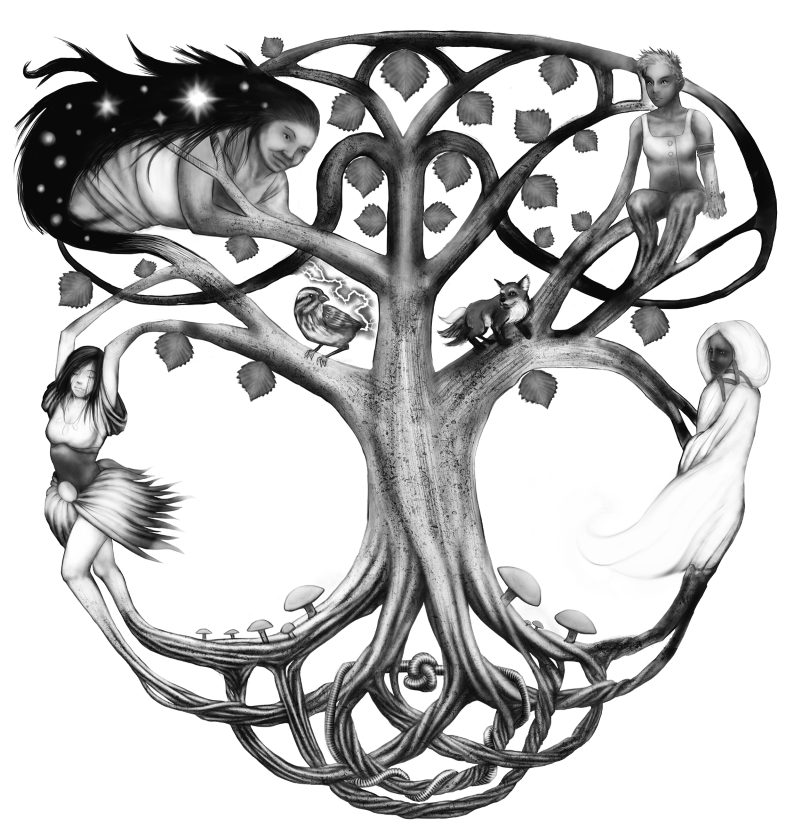
The World Tree: Argir in the roots, the Sparrow and the Vixen in the branches, and the Ladies circling the tree.
The Old Gods are all that’s left of an ancient system of worship that once spanned this part of the world. The iconography of the Old Gods—particularly the wheel and the idea of life’s circle—is well-known throughout the region. Some of these gods and their cults have remained alive through old stories and rituals. Other cults have been resurrected by people disaffected by local rulers. The oldest variants of worship involve animal sacrifice and the use of psychotropic drugs to produce visions. Newer variants have taken the form of mystery cults and healing centers.
The ritual calendar of the Old Gods is still widely used. This ritual calendar dates from the creation of the world, and governs life events. Many people in the region use the calendar without much reference, sadly, to the culture that created it.
Followers of the Old Gods
Human
Our people and our gods once covered the land like stars in the sky. Due to great crimes committed in past ages, our power is now hidden. The wilderness shelters us and the cities of the invaders hide us. Our lives are not easy, but our songs and clans live on. When this terrible age ends, we shall be ready for the next.
Half-Orc
I left the shelter of the deep forest for the gold of the cities. Now the Sparrow and the Fox protect me as I share my take with my guild-mates.

Inspired Inspiration in 5E
 Inspiration is one of my favorite parts of Fifth Edition Dungeons and Dragons. It works great as written, but I'm going to steal an idea from Lex Starwalker and show how to use inspiration for group storytelling.
Normally, you can spend inspiration to gain advantage to an attack, saving throw, or ability check. That still works.
Inspiration is one of my favorite parts of Fifth Edition Dungeons and Dragons. It works great as written, but I'm going to steal an idea from Lex Starwalker and show how to use inspiration for group storytelling.
Normally, you can spend inspiration to gain advantage to an attack, saving throw, or ability check. That still works.
However, you can also spend inspiration to make up something in the game world. It might be a detail that works with your background or skills. It could be a clue, a secret passage, or a one use item like a level-appropriate potion or a scroll.
For example, Qua the cleric is down on spells, but has inspiration. "I'm spending my inspiration to search that pile of skulls and find a potion of greater healing."
Or Kay the paladin is desperate to find the Lady Vonya. "I spend my inspiration and look at the track and find a clue." At this point, as the GM, you improvise a clue, "It's a scrap of parchment. In Lady Vonya's hand it reads 'we leave the Black Tower, our captors driving us west. Ahead lie the glass caverns. If any shall find this, send help.'"
Or Troik the bard just want another spotlight moment. "I'm spending my inspiration to have the farmers in from their fields for a local holiday. The village is full of people in good cheer. If only a very handsome someone just happened by to provide it. I tune up my lute."
Obviously, it's up to the GM to stop player abuse. Advantage is a great boon, but not a wish (or even a fireball). Spending inspiration might push over an apple cart during a chase scene, but will not push a combatant off a cliff.
Ask yourself:
- Is it overpowered, like the effects of a powerful spell? Or something small, along the lines of a cantrip?
- Does it break the story? If you are just starting a three session murder mystery, inspiration can't give away the culprit. It could point to information "Barkeep Barlo hears all sorts of things..."
- Does it take the fun out of the adventure? Some players try to play it safe all the time. And you want thrills, so don't let the players nurf the exciting bits.
- Does it open up a new fun avenue for adventure? Don't be afraid to improvise and go with player ideas that make the game fun. Sure, you had your own fun encounter directly ahead of them, but if they say they found a secret passage, improvise something fun in the passage. If they never see your planned encounter, you can reuse it in a future adventure.
 The cool thing about this for players is that it gives them a chance to improvise outside of their character powers. They get to do a little shared world-building.
And for the GM, it's another way for your players to surprise you, forcing you to improvise and keep the fun going. I don't know about you, but I like to be surprised by my players.
Have you tried something like this? How does it work for you?
Don’t forget to visit our 5E Kickstarter: The Gods Have Spoken.
Travel Montages in 5E
OK, you're the GM, and it's time for your players to move from A to B. It might take hours, days, or even months in game time, but you don't want to roleplay every single incident that takes place on the road. "You see a puddle in the road, what do you do?" "Um, we walk around it?"
 You can handwave the entire journey, and just cut to "You arrive in Plotville, everyone seems tense."
However, that makes it feel like teleporting. Which is great if the party actually teleports, but if you want to make travel memorable, yet not take more than a few minutes at the table, you can use a travel montage.
A montage in a roleplaying game is when you go around the table, and everyone makes something up in a collaborative fashion. It's often a time to set the dice aside and show how cool the characters are without worrying about initiative order and skill checks.
(I first ran into montages in the 13th Age roleplaying game. And I put a travel montage into The Sun Below: Sleeping Lady, a Numenera adventure. The concept is system independent.)
Here's how it works. You (as the GM), point at one player. I like to pick someone good at improvisation. "Stace, describe a problem that stops the group's travel. It can be anything, a flood, robbers, a three headed giant, just come up with a problem, not the solution. Your party will get by, because" (then point to the next person sitting clockwise at the table) "Jer will solve it. Don't say how."
After the problem has been described, turn to the next character. "Jer, how do you get the party past this obstacle? You can use your background, your class powers (which won't be used up), or anything. This is your time to shine. Jer, what do you do?"
We allow pretty much any solution to work. We do steer the player away from things that break the mood we're going for. Silly is great in some games, not in others. Remember the player doesn't have to roll dice, so talking their way past robbers, jumping over a chasm, building a raft, and so on, just works.
Option: Inspiration
At our table, we'll give each player inspiration once they tell us how they solved the problem. Some GMs use less inspiration than we do, so if this feels excessive in your game, just ignore it.
Back to the Montage
Once Jer has solved the problem, we'll ask him to come up with a new problem for the next character to solve, going around the table clockwise. Everyone makes up a problem, and everyone makes up a solution. Once the first player solves her problem, the montage is done. Now, instead of three sessions micro-managing the travel, or handwaving the entire journey, the players have a memorable experience, each character will shine, and only a few minutes have past at the table.
Don't forget to visit our 5E Kickstarter: The Gods Have Spoken.
The Gods Have Spoken: Kickstarting Now
The gods are spreading to 5th Edition of Dungeons and Dragons! Check out the Kickstarter now!
Gods and Icons, in a Value-Conscious Black and White Edition
Want to save those silver pieces and still get a print version of Gods and Icons and/or the Gods and Icons Player's Companion? Now both titles are available in value-conscious black and white editions. That saves us money at the printer, and we pass those savings on to you. It still looks great, and you can get the color PDF for free with your copy of the book.


The black and white interior also allows us to print in small quantities and still sell into game stores. More on this soon!
Intriguing Play
My home group recently finished a campaign. I asked for comments, and everyone agreed, I liked the previous campaign, but this was better. Well, that’s great, it must be I just keep getting awesomer. Or not.
People had many reasons, but a big thing for all the players is they felt more connected to the world. Like what they did mattered. Specifically, they connected to the world through intrigue.
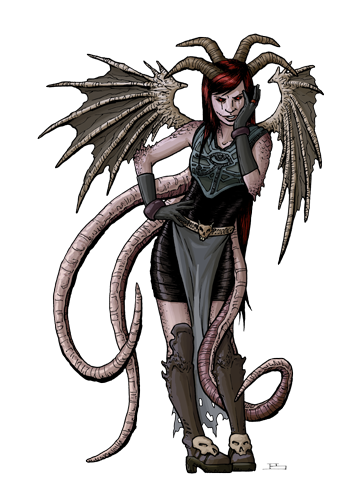
At the end of the Numenera campaign (which people liked), I asked what they wanted more of next campaign. “Intrigue,” they said. (And more visual props, but that’s another post.)
Intrigue. How do I do that? It really helped that the 13th Age RPG has leaders of factions ready to intrigue against each other, the icons. I use the icons from Gods and Icons, but you can intrigue among any group of icons.
The Game of Icons
One thing we know is that in 13th Age, when one age ends and the next begins, some icons survive into the next, and some get replaced. That struggle for iconic survival turned out be the axis around which we spun the campaign. To keep everyone guessing I made morally ambiguous versions of some heroic and villainous icons. More gray--less black and white.
While I took advantage of a 13th Age feature, I’m sure most 13th Age campaigns don’t focus on intrigue. You don’t need a system with icons to do this. In pretty much every rpg setting you can find organizations or factions. Find out which ones would be fun for your players to defend or attack, and set them off against each other.
You can bring in agents of one faction who bad-mouth other factions, and drop hints such as, “as the age ends, all bets are off.” I used 13th Age icon agents for this.
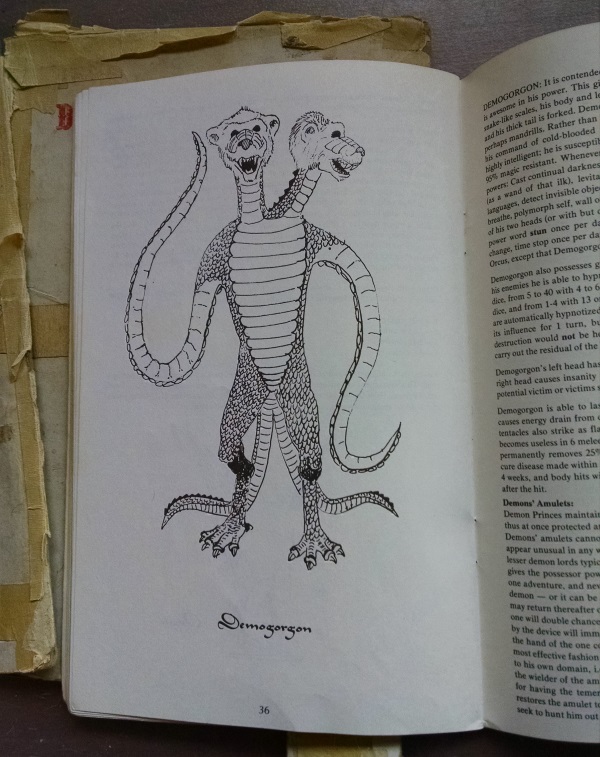 I stole some conspiracy ideas from Night’s Black Agents, even coming up with a conspiracy pyramid (they call it the “conspyramid”) of a drow house controlled by Demogorgon who wanted to replace the current icon of hell. (Those of you who subscribe to the Dread Unicorn Games newsletter already have our version of Demogorgon, 13th Age style.)
 Lower level nodes in the pyramid don’t know much, but (mostly) follow orders from above. The top of the pyramid was Demogorgon, trying to replace the current icon of hell. The PCs engage the bottom levels first, and climb up the pyramid. The final showdown with the big D was in the abyss, as traditional.
Intrigue games have a lot of NPCs, and I’m too lazy to make up tons of NPCs that never get used.
I stole a trick from some GUMSHOE improv campaigns (The Armitage Files and the Dracula Dossier). I came up with a bunch of NPCs, but did not decide if they were allies, enemies, or interested neutrals until the players met them. Instead of making 10 allies, 10 antagonists, and 10 neutrals, I made up names, descriptions, and quirks for 10 NPCs, and made 1 – 3 bullet points for each about how they would be played if they were self-interested, a house loyalist unaware of the demons pulling the strings, or knowingly working for Demogorgon.
 For example:
Jandril: Female Drow Knight
- White scar on left side of face over dark blue skin
- Wears a red cape
Self-Interested
- One day I’ll be captain. Can I use the PCs to further my goal?
- Some sort of deadly political infighting going on among the other knights. Best to keep out of it.
House Loyalist
- All these demons and devils should make our house invincible. Time to move on the other houses!
Working for Demogorgon
- Honor guard for the demonic dragons when they hatch.
When the players were investigating the drow house, trying to stop Demogorgon's plan, they met Jandril. On the spot, I chose Self Interested and she became a possible ally and source of information for the PCs.
I’m not the only 13th Age GM thinking this way. Check out the Heavy Metal GM’s take on this.
PS
Our current campaign is the Dracula Dossier. Great fun for an intrigue loving group.
Get those Holiday Orders in!
Heavy Metal GM Review of Gods and Icons
Moving on to the actual content, all I can immediately say is , “Wow.” Gods and Icons is a very relevant supplement...the flavor and overall setting of it is invaluable.
 Let me just begin with saying that this is a MASSIVE supplement. There is so much information and so many resources that can be pulled from this, it’s incredible. The page count is 162 pages …
Read Sean Clark's full review at the Heavy Metal GM: Review of Gods and Icons
Gods and Icons Player's Companion
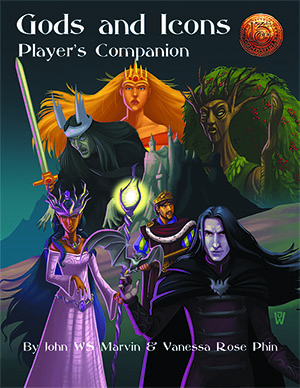
Take Gods and Icons, and cut out all the GM-only content, and what do you have? The Gods and Icons Player's Companion, available now in PDF! The perfect companion for Gods and Icons.
For Players and GMs: Coming Soon!
 For players we have Gods and Icons: Player's Companion. This is the subset of Gods and Icons that targets players, read more here!
 For GMs we have Tower in the Mists, and introductory 13th Age adventure that highlights all the cool content in Gods and Icons. Read all about it!
Gods and Icons is For Sale!
Gods and Icons, the exciting 13th Age supplement, is for sale now on DriveThruRPG. Anyone purchasing the PDF before the print versions are available will be sent a discount coupon on DriveThruRPG for the print versions when they become available.

Gods and Icons has three new pantheons of gods, thirteen new icons, pages and pages of suggestions for icon relationship rolls, new magic items, new player races, and more!
Gods and Icons Ships to Backers
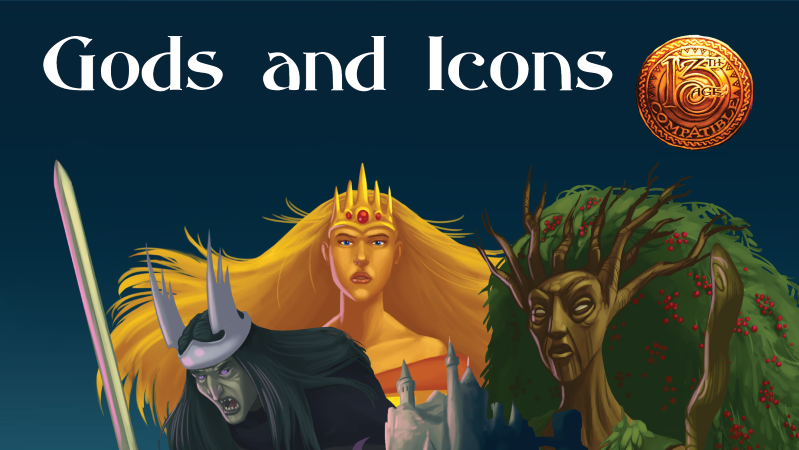
The electronic version of Gods and Icons is out to our Kickstarter backers, and will be available for sale in a few weeks. Check it out!
Should D&D be in the Hall of Fame?
USA Today has a poll, and D&D is going head to head with bubble wrap! Vote here -> http://usat.ly/2cnPA8p.

Artwork © 2014 Elizabeth Porter, used with permission. All rights reserved.