

The Gods Have Spoken

The PDF is available today at Drive Thru RPG. Praise the Gods! (But which ones?)
The print versions will be available soon.
Spotlight Cards
 Index cards are a GM's best friend. Remember the Hipster PDA?
I hate forgetting to give each player time in the spotlight. Therefore, I love having an index card for each player. I shuffle them before the game, and then flip the deck so I can see the top PC card.
Index cards are a GM's best friend. Remember the Hipster PDA?
I hate forgetting to give each player time in the spotlight. Therefore, I love having an index card for each player. I shuffle them before the game, and then flip the deck so I can see the top PC card.
On the left I put the information from the game system I need to be able to improv, things from the player's character sheet. I don't need numbers, just the background bits that help in roleplaying.
On the right side of the card I put the stuff the player loves to do in game with this PC. Play with his pet bear, drink at her regular watering hole, flirt with their favorite NPC, and so on.
I finish the left side with a question to myself. Has this PC gotten the spotlight yet? If not, I give them the spotlight ASAP, then put this card on the bottom of the deck and make sure the next PC gets a spotlight moment.
What's a spotlight moment? When you let the PC shine, make them the star of a scene. If they have a favorite action, like pick pocketing, flirting, or flying, I let them go for it. Action scene or pure roleplay, I make sure the character gets center stage.
Here's some examples. You can probably improve on these because no one knows your players better than you.
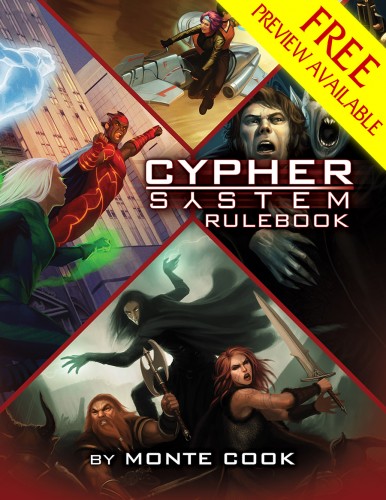 This is the Cypher System card. I have another question to myself: Has the PC had a GMI (Game Master Intrusion) yet? I'm talking a GM Intrustion that gives them experience points. The card helps me remember. GM Instrusions are fun, and players love the XP that comes with them.

 This is the 13th Age card. When I'm working on a spotlight moment, I need the PC's One Unique Thing, their Icon Relationships, and their Backgrounds. Under the notes I might include favorite icon spirits and agents from past icon relationship rolls.

 Here's the 5E card. What's important for spotlighting a 5E character might include the PC's background, trait, ideal, bond, and flaw.

 Here's a generic GUMSHOE card. Drive and Occupation give me a handle for spotlight scenes.
I thought about doing a card for each GUMSHOE game, but realistically, I'd do them as needed for the games I'm running. On the right side I'd definitely list any sources of stability if they are used in this system, species for Ashen Stars, and so on...

It's easy enough to make your own for your favorite game system. They help me, maybe they'll help you.
John WS Marvin Interview Part II
 Lex Starwalker, of Game Master Journey podcast fame, released the second half of his interview with me. We talk about Instant Adventures (here's my Part I and Part II) and other support for improv adventures, Gods and Icons for 13th Age, intrigue in 13th Age, The Sun Below: Sleeping Lady, and more. Give it a listen.
You can hear part one of the interview here, where we talk about montages, fronts, and The Sun Below: Sleeping Lady.
Lex Starwalker, of Game Master Journey podcast fame, released the second half of his interview with me. We talk about Instant Adventures (here's my Part I and Part II) and other support for improv adventures, Gods and Icons for 13th Age, intrigue in 13th Age, The Sun Below: Sleeping Lady, and more. Give it a listen.
You can hear part one of the interview here, where we talk about montages, fronts, and The Sun Below: Sleeping Lady.
Game Masters' Roundtable of Doom #4. TPK Anyone?
 This month's musical question is:
There is a wide spectrum of lethality in RPGs, and there are GMs who fall on every possible point within it. These range from GMs who run campaigns where PCs can never die to the other extreme—GMs who delight in killing PCs. Where do you fall on this spectrum? How lethal are your games and why? How do you handle PC death if and when it happens?
This month's musical question is:
There is a wide spectrum of lethality in RPGs, and there are GMs who fall on every possible point within it. These range from GMs who run campaigns where PCs can never die to the other extreme—GMs who delight in killing PCs. Where do you fall on this spectrum? How lethal are your games and why? How do you handle PC death if and when it happens?
As fun as it is to kill PCs, I don't do it often. A few deaths a campaign, and that's gritty for me. I don't kill them enough. I used to kill them too much. Now it's rare. And that really bothers me.
So I maim them.
Of course, every system is different. In Call of Cthulhu or Dark Heresy players expect very bad things to happen. I maim them a lot. In one Dark Heresy game I had a group of killers break into the PCs bedrooms and burn the characters with plasma rifles. The PCs woke up screaming and melting.
But no deaths. Eyeballs melted out of skulls? Check. Limbs exploded in fatty flames? Check. Players freaking out? Check.
I miss that game.
 I really miss Warhammer Fantasy Roleplay v2, now out of print. Those crit tables were to a maimer's dream come true. Luckily you can see the same kind of terrible effects in FFG's 40k books. Limbs gone, faces burned off, eyes melted (didn't I mention that already?), and more.
Besides maiming, one-shotting NPCs allies helps create a sense of threat. The players know they are tougher than an NPC, but when they see their ally transformed into a stain on the floor in the blink of an eye, it does set the mood. And when you get to the maiming, the player doesn't feel so bad.
A Song of Ice and Fire RPG is another maimer's playground. When my character (see, I don't always GM!) wouldn't yield, and my captors held my hand down on a stump, you can't say I didn't know what was coming. Jamie isn't the only lackhand in Westeros.
In games like Numenera, it's more about exploring a weird and dangerous world, and the system gives the PCs control over how they manage that danger. I knock them down and they find a way to get back up. Somebody always pulls out just the right cypher.
The Numenera core book includes a rule for maiming instead of death: Lasting or Permanent Damage as a Death Replacement. In place of a good maiming I often mutate the PCs. Love those mutants. And those knights who like to hunt them down!
D&D and similar games have mechanics to always keep the players ahead of the monsters. Even a hard fight doesn't have a significant chance of death if you follow the guidelines. These games are about heroes, and maiming them doesn't stick in a high magic story. I at least want the replacement bits to look alien and frightful. Kind of takes the fun out it when some cleric chants and the hand grows back, no scars or nothing!
If you want gritty stories, then exceed the safety limits. Use threats of a higher level than normal.
I appreciate 13th Age's battle building advice: "We've provided balanced monsters so that you can choose interesting ways to make most all battles unfair..." Then it goes on to list entertaining ways to make things unfair to the players, and encourages you to use them in every single battle. You've got to cheat a bit to maim and kill.
 I also like something else from 13th Age: the Meaningful Death Rule (stolen from 7th Sea): Bad dice can't kill you, only named villains can fully slay a PC. Nameless monsters can only put you in a coma, carry you back to their master, who is of course a named villain, and prepare you for sacrifice. Scary stuff, but this provides plenty of opportunity for daring rescues.
Hillfolk and other story heavy games might have very little or no violence. Player death might only happen if everyone at the table agrees it makes a better story.
Of course, Fiasco can be a bloodbath, but people expect that. Fiasco is also always a one shot, not a campaign, and players are more accepting of death when they know their is no next game to worry about.
For me, it comes down to the story we're collectively telling at the table. Ask your players, what kind of story do they want?
And check out this post on Run Away or Always Win.
The Game Masters’ Roundtable of Doom is a meeting of the minds of tabletop RPG bloggers and GMs. We endeavor to transcend a particular system or game and discuss topics that are relevant to GMs and players of all roleplaying games.
If you’d like to submit a topic for our future discussions, or if you’re a blogger who’d like to participate in the Game Master’s Roundtable of Doom, send an email to Lex Starwalker at gamemastersjourney@gmail.com.
This month's topic comes to us courtesy of Lex Starwalker.
The rest of the Roundtable has great things to say about player death. Read on!
Marc Plourde - The Mortality of the Situation at http://inspstrikes.blogspot.com/2015/04/nuts-bolts-27-game-masters-roundtable.html
James August Walls - Dead and Loving It - My Evening as a DCC Player at http://ilive4crits.blogspot.com/
Scott Robinson - Lethality and the RPG as a Relativistic Game at http://strangeenc.blogspot.com/2015/04/lethality-and-rpg-as-game.html
Lex Starwalker - How Lethal Are Your Campaigns? at http://www.starwalkerstudios.com/blog/2015/4/6/game-masters-roundtable-of-doom-4-how-lethal-are-your-campaigns
John Clayton Fatality! at http://blog.filesandrecords.com/2015/04/fatality/
Peter Smits - PCs and the killing thereof at http://planeataryexpress.blogspot.com/2015/04/pcs-and-killing-there-of.html
Arnold K. at http://goblinpunch.blogspot.com/
Evan Franke - To be or not to be . . . a Killer GM at http://asageamonghisbooks.blogspot.com/2015/04/game-masters-roundtable-of-doom-4-to-be.html
Of Dice and Men
I haven't written up a book on this site, even a game book, but I wanted to share this little gem: Of Dice and Men: The Story of Dungeons and Dragons and the People Who Play It by David M. Ewalt.
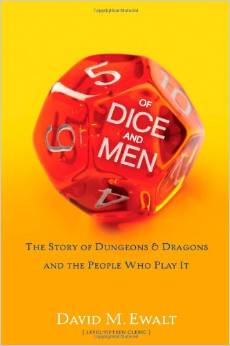 I had been hiding out in the library. We were selling our house, and we had to leave when prospective buyers wanted to come see it. So the dog (Prince Henry the Navigator) got a walk, then had to stay in his crate in the back of the SUV. Alison (my wife and editor) sat in the car and read, and I went into the library, to work on The Sun Below: Sleeping Lady.
Eventually I got up to stretch, and decided to look for books on game design. Nothing. So I did a search for role playing games, and Of Dice and Men showed up. Despite the glowing back blurb by Felicia Day, I picked it up with low expectations.
Two pages in I'm blown away by David Ewalt's writing. Then I find he's an editor at Forbes. He covers gaming as part of his job. I've read this guy on before, and liked him.
What you get is the history of roleplaying games, mostly D&D, told within a framing device of David's own campaign. From the earliest games found in Egyptian tombs to 5th Edition D&D, he covers a lot of ground. When he jumps back to his own campaign, it reads like mix of great swords and sorcery with post apocalyptic adventure. You want to know what happens next.
And then he cuts to the first GenCon, or the rise of D&D and the media attack on this "satanic" past-time. You want to keep going, but he's back to his campaign. Works really well.
Well done, even includes some great GM advice from Frank Mentzer, one of the original D&D designers. The way I figure it, if you can't game, at least you can read about gaming. Highly recommended.
Ringing Out the GM Changes
Game Masters’ Roundtable of Doom #3 This month's topic comes to us courtesy of Scott Robinson, who asks, "How has your gaming and/or GMing changed over time?"
So many things have changed. We're more diverse, we play different kinds of games, and we're older if not wiser. I'll focus on how my GMing has changed.
 To start with, I was a simulationst GM. What I was trying to simulate was an epic fantasy or sf novel. Without the character development. I threw in some jokes, used random die rolls to create encounters, and killed a bunch of PCs. White box D&D to 2nd Edition and a little Traveller. Good times.
Slowly I started to bring in the bare bones of plot into my games. Now there was a reason my players were clearing out a dungeon. Not much, maybe they were geased to do so, but it was something.
 I got into goal based, rather than encounter based, gaming starting with Call of Cthulhu. Story based gaming had arrived, and I was hooked. Wild adventures with characters who had professions, not classes. Simple, not complex, rules. I will never forget running Masks of Nyarlathotep or Horror on the Orient Express.
I played a lot of systems since then, but the idea the game was about a goal, rather than a series of encounters, really struck home with me. I enjoy both kinds of games, but when I first tried a goal based game, it was like a breath of fresh air. Walt Ciechanowski did a nice post about the differences over in Gnome Stew.
 For a while, I equated games with story to goal based games, but games like 13th Age have changed my mind. 13th Age is a wonderful mix of storytelling and encounter based fun.
 Setting has become more important to me. I used to hand-wave setting in my early D&D games. "It's like Tolkien, Leiber, and Moorcock" I'd tell my players, and then run fairly unconnected adventures. These days, a great setting really makes me want to play in that world. I had more fun than the law will allow with Rogue Trader, just because of the setting. Numenera's setting is so awesome I want to play it all the time.
 I got another eye opener when I read Robin's Laws of Good Game Mastering. Shockingly enough, not everyone played rpgs for the reasons I played them! Who knew? I started to pay more attention to everybody's fun. Instead of the game mechanics creating all the fun, I worked on giving players spotlights and letting them take control of the narrative.
Which reminds me, at some point I started to read books, blogs (like Gnome Stew), and the like about how to be a better games master. I watched my friends GM and copied the things that worked for me. Before, I just focused on the rules, now I'm more focused on the table.
These days, I'm much more comfortable improv. When I pick up a published adventure to save time, I still do a lot of improvisation. Even when I'm not playing an indie improv game like Fiasco, I'm always twisting and turning the game based on what the others at the table are saying. And my players do the same.
Now that I'm designing adventures for publication, I try to think more about how others who aren't me would run my adventure. And how players who aren't my players would play it. Playtester feedback can be real humbling when something that was effortless at my table becomes a confusing stumbling block at theirs.
It's been a fun ride. I can't wait to find out what happens next!
Plans that Come to Naught by John Clayton
The Evolution of My GM-Style by Scott Robinson
My Evolution as a GM by Lex Starwalker
Home Grown Gaming by James Walls
Evolution of GMing Style by by Peter Smits
The Game Masters’ Roundtable of Doom is a meeting of the minds of tabletop RPG bloggers and GMs. Every GM has his or her favorite system, but in these articles we endeavor to transcend a particular system or game and discuss topics that are relevant to GMs and players of all roleplaying games.
If you are a blogger, and you’d like to participate in the Game Master’s Roundtable of Doom, or if you have a suggestion for a topic, send an email to Lex Starwalker at gamemastersjourney@gmail.com.