

D&D Adventurer’s League
I’m new to the Dungeons and Dragons Adventurer’s League, and guess what? I’m having fun. In my hometown of Spokane, WA, there are AL games all over the area. Most Sunday afternoons you can find me at Merlyn’s Comics Games and Books.
Gaming in the RAW
There are some rules to make organized play work. If you are the DM you must run the game using Fifth Edition Rules As Written (RAW) and run the adventure pretty much as written. While you are encouraged to improvise a bit to make the game fun for everyone, you must run AL adventures from the DM’s Guild or adventures from the hardback books from Wizards.
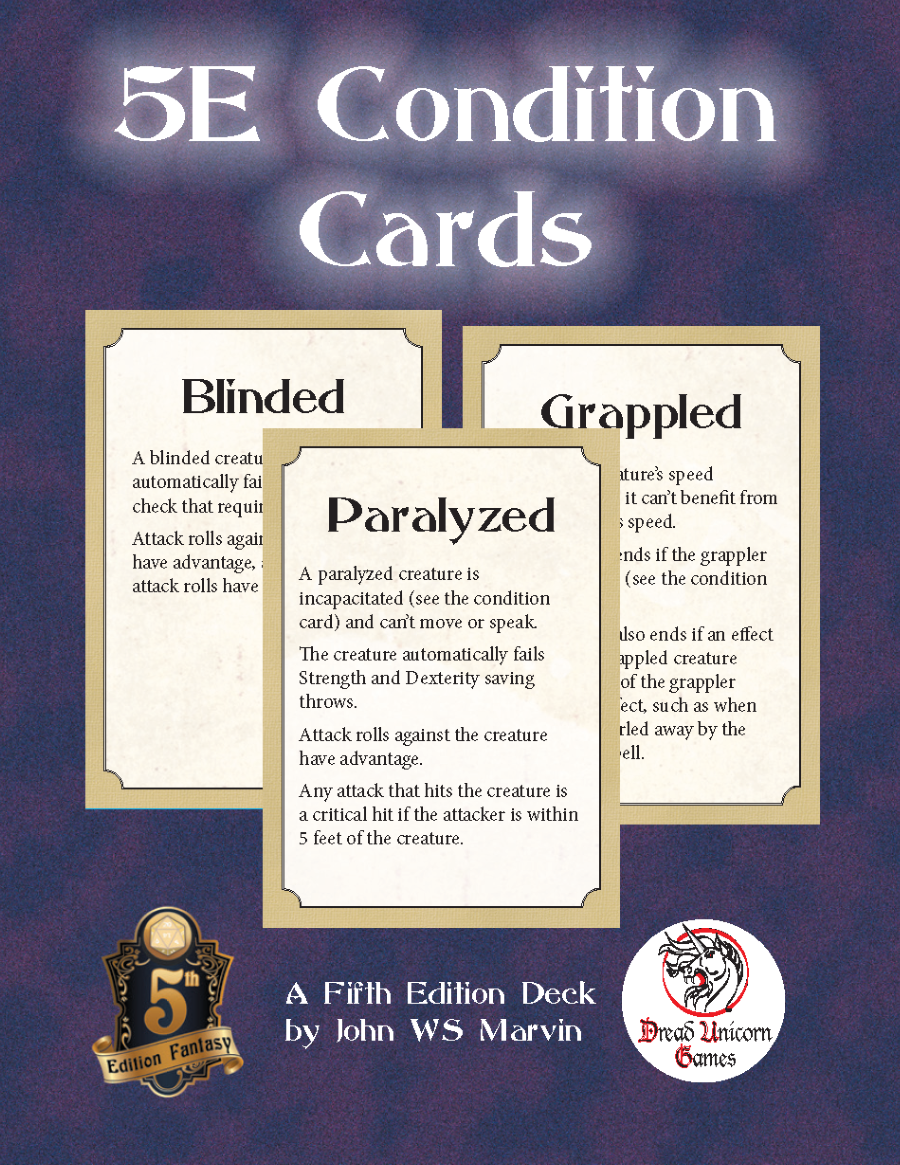
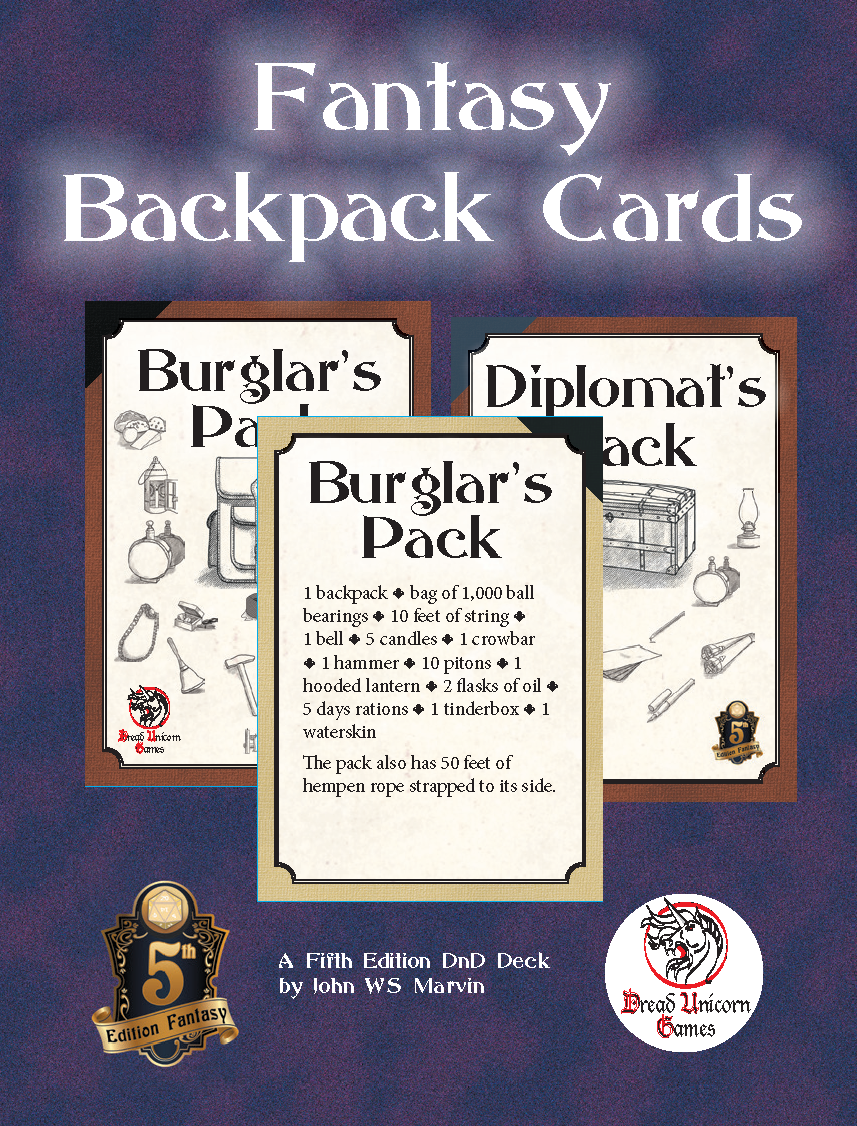
You can use third party materials that stick to the SRD, such as 5E Condition Cards and Fantasy Backpack Cards.
If you are a player you must use point-buy for attributes, stick to official material (the list of books does not include new material presented in Unearthed Arcana), and keep yourself within the gold and magic limits of the season you’re playing in.
Roll for Surprise
When you walk into a game store, library, or wherever your local AL adventures are hosted, expect to be surprised. You won’t know who you are playing with, what adventure you will play in, or even what character you will play (most players have more than one AL characters). For Dungeon Masters, you might have an adventure ready to run, but there might not be enough players to run it. Most Dungeon Masters also have AL characters they can play, so they walk in not knowing if they will DM or play.
AL adventures are based on the tiers of play from Dungeons and Dragons, so you may hear “Tier two table has room for three more!” Players with higher tier characters often create lower tier ones in case all the adventures that day are lower tier.
Hardback Difficulties
Running a long running adventure from a hardback book from Wizards presents some interesting problems you don’t run into when using the AL one-shots from the DM’s Guild. Since you have random players each game, you can’t count on anyone knowing what happened before. You need to end a session at a place you can start with a new group of players next week. Mid-battle cliff hangers probably should be avoided.
Walk Right In
With all the standardization, organized play makes it easy to walk in, sit down, and play with people you may never have met before. It’s the D&D equivalent of bridge night at the Lion’s Club for a previous generation. Everyone I’ve encountered have been quite welcoming, and more than willing to help new players.
From the Dragon’s Mouth
Find out more from the official Adventurers League site.
More Fun
It’s not just D&D. You can play Numenera and other Cypher System games through Cypher Play. The Pathfinder Society is organized play for Pathfinder. For Call of Cthulhu and other Chaosium games we have the Cult of Chaos. 13th Age has the 13th Age Organized Play program. Vampire and other Modiphius games have the Modiphius Organized Play program.
I’m sure there’s a lot of other organized play options out there. Know a good one you’d like to recommend? Leave a link in the comments.
Best of All
It’s great fun. I’ve been surprised at how enjoyable it is. If you’ve ever played games at a convention, it’s like that, every week. For me, it doesn’t hit all the bases of a long running home brewed campaign with a close group, but I know it’s fun because I keep going back.

Piggybacking Part II

Before we steal Piggybacking from GUMSHOE, check out how it works there in Piggybacking Part I.
The Noisy Cleric Problem
The problem piggybacking solves can be found in all sorts of roleplaying games with all sorts of skills, but the example that comes to mind is sneaking into a castle in a fantasy game like Dungeons and Dragons. In fantasy books and movies, the heroes sneaking into places is a staple of the genre. In D&D games, sneaking is left to the rogue and the ranger for scouting. Once the GM tells the entire table to roll dice to see if they sneak into the castle, somebody always misses, and the exciting infiltration turns into a frontal assault.
GUMSHOE Roots
In games like TimeWatch, Nights Black Agents, or Trail of Cthulhu, the whole spend resources to piggyback fits perfectly, since they are all GUMSHOE games. Most of my players have points to spend in Infiltration, but some have zeros. Every general skill is like that. You aren't giving the party something for free, they are spending resources they might need later to succeed now.
Let's look at other systems. I haven't tested these, but I will.
Cypher System Piggybacking
In games like Numenera, Predation, and The Strange, GUMSHOE style piggybacking is easy, since you're already spending the resources of Might, Speed, and Intellect to do anything.
The expert spends from their pool as normal, but the difficulty is harder because they are pulling the rest of the party with them. For a sneak into the castle test, the expert has their difficulty raised (+2 sounds good, +1 for less than 3 followers) and uses Speed. While the expert can use their Edge to lower their costs, the followers can not. They each spend one point, no discount.
If the expert succeeds, everyone sneaks in. Move on with the adventure.
Nothing to Spend Piggybacking
In games as varied as Call of Cthulhu, 13th Age, and Dungeons and Dragons, you don't have resources to spend to sneak into castles or climb up icy cliffs. You've got hit points, and while spending those might make sense in a few cases, usually not. Same with Sanity, Recoveries, or Spell Slots. These games are not about spending resources on skill tests, so it seems wrong to try and force them do that just for piggybacking.
In these games I'd boost the difficulty for the expert (+5 for d20, +25% for Call of Cthulhu), but then I'd require the rest of the party to roll just to assist. And if someone fumbles, well then, we're right back where we started from. That's the cost right there, the more players rolling, the greater the chance of a fumble. :)